

There are still places capable of surprising even seasoned travelers on their very first visit.
Living in Turin, we’re always looking for lesser-known corners of Piedmont to explore. That’s exactly why Lenta and Rovasenda left us genuinely amazed. Their beauty is something we’ll talk about throughout this article, but what impressed us most was a simple question: how had we never heard of them before?
These are places with authentic charm, where centuries of history unfold against ever-changing rural landscapes. Rice paddies give way to heathlands, irrigation canals flow alongside medieval castles, and peaceful villages preserve stories that deserve to be told.
They are the kind of destinations you immediately want to recommend to everyone.
In fact, they make you want to shout:
“Look, the Vercelli area is so much more than rice fields!”
Here you’ll discover ancient villages, castles, monasteries, Romanesque churches, historic pilgrimage routes such as the Via Francigena, and cycling trails immersed in unexpectedly beautiful landscapes.
Above all, you’ll find hidden treasures that local communities are working tirelessly to restore, protect and share with visitors.
Behind this revival are not only local municipalities and institutions, but also volunteers, cultural associations and passionate residents who dedicate their time and energy to preserving a heritage that deserves far greater recognition.
Rediscovering Piedmont Through the Borghi delle Vie d’Acqua
Exploring this part of Piedmont, it quickly becomes clear how important the work of the Borghi delle Vie d’Acqua Association has become.
Founded in 2022, the association was created to promote one of the most fascinating, and still largely undiscovered, areas of northern Italy.
Today it brings together 56 municipalities, all connected by a history deeply intertwined with water and rice cultivation.
This is a landscape shaped by human ingenuity over centuries. Through land reclamation projects, irrigation canals and remarkable hydraulic engineering, vast wetlands were transformed into one of Europe’s most important rice-growing regions.
Here, water is everywhere.
It is life and identity.
It flows through streams, feeds countless irrigation channels and runs along monumental canals such as the famous Cavour Canal, one of Italy’s greatest engineering achievements and still essential for irrigating the surrounding rice fields today.
Yet these communities are now telling a broader story—one that goes beyond rice cultivation itself.
Alongside agriculture, there is a growing commitment to showcasing the area’s cultural, historical and natural heritage. Medieval castles, ancient abbeys, fortified villages and impressive hydraulic structures are increasingly recognized as invaluable resources that deserve protection and renewed appreciation.
Preserving this legacy is not simply about remembering the past. It is about creating new opportunities for the future.

Lenta, the Monastery Village That Feels Like Stepping Into a History Book
The moment you arrive in Lenta, you immediately sense that you’ve reached somewhere special.
The atmosphere is peaceful.
Silence fills the narrow streets.
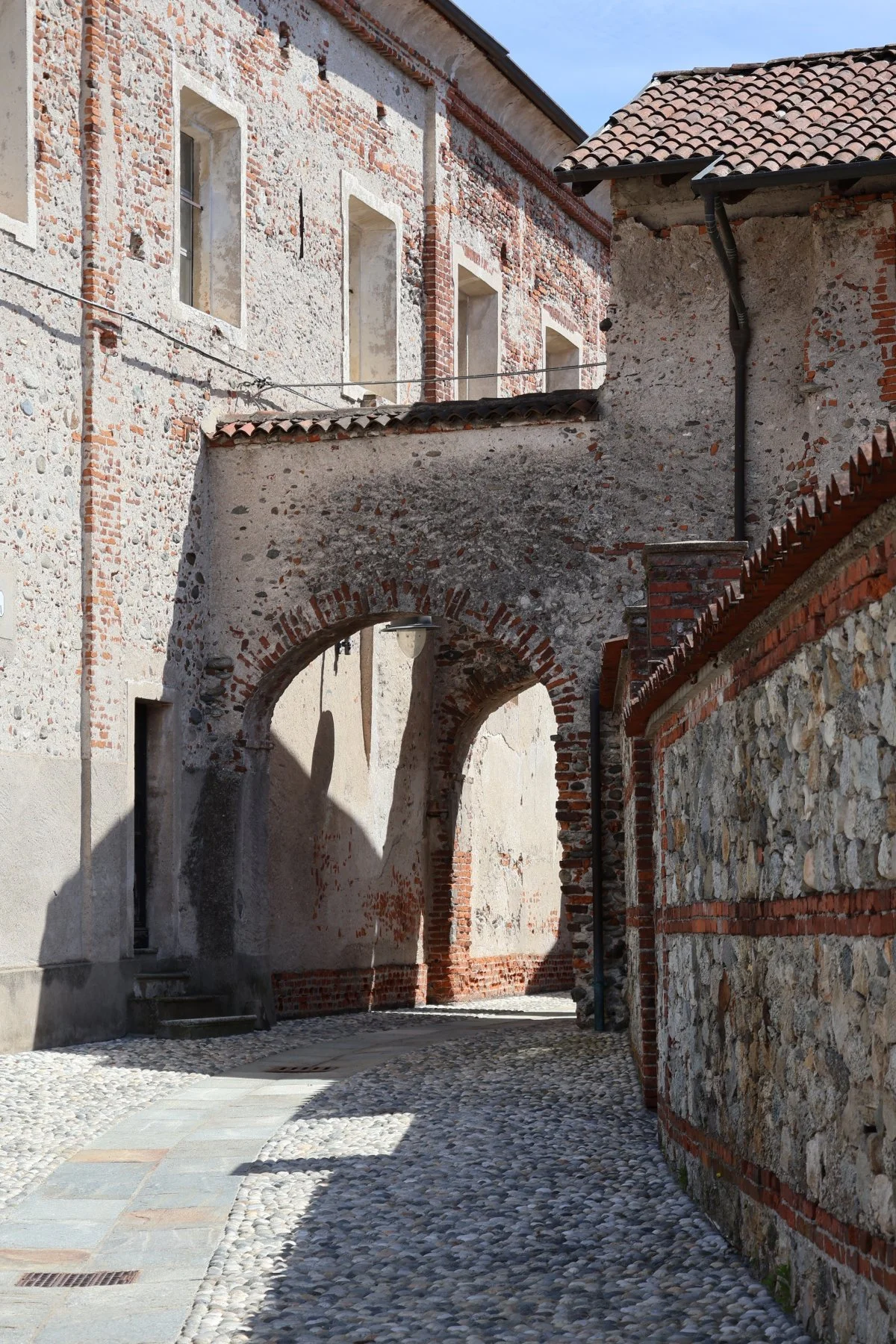
Freshly restored cobblestone lanes invite you to slow down and simply wander.
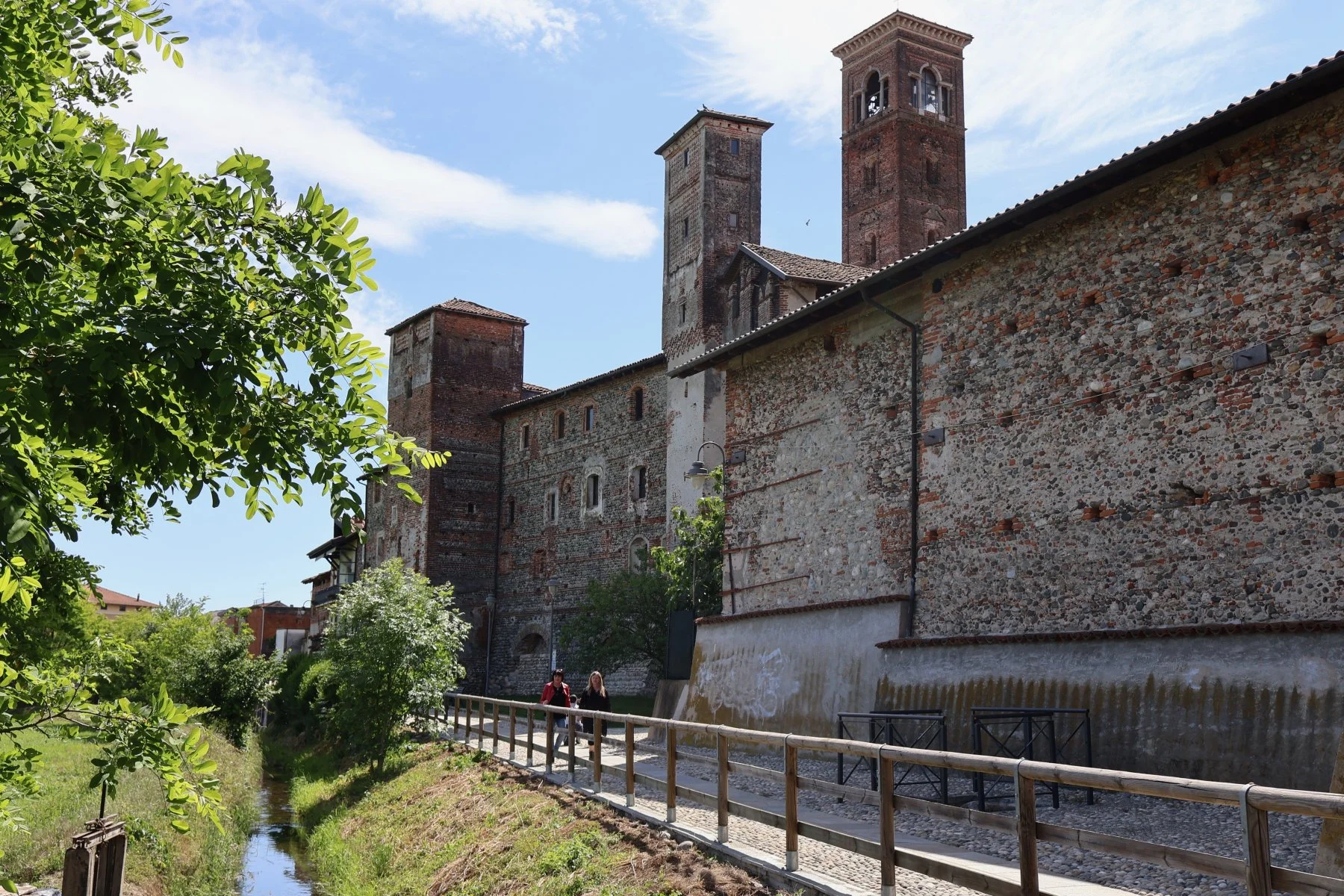
Lenta’s castle is unlike the medieval fortresses most visitors imagine. Rather than standing alone as a military stronghold, it is deeply intertwined with the story of an important Benedictine convent, inhabited by nuns until 1573.
The first documented reference to the castle dates back to 1178, but the origins of the site are even older.
In 1127, Alberto di Andrate sponsored the foundation of the Monastery of Saint Peter, laying the foundations for what would become one of the area’s most significant religious centers.
During the Middle Ages, the monastery gradually evolved into a fortified complex.
Its defensive walls enclosed not only religious buildings but also part of the village itself. Even today, visitors can still recognize the original square-shaped defensive perimeter, distinguished by beautiful pebble masonry laid in the characteristic herringbone pattern.
The complex is now open to visitors thanks to local volunteers, who welcome guests with genuine enthusiasm and obvious pride.
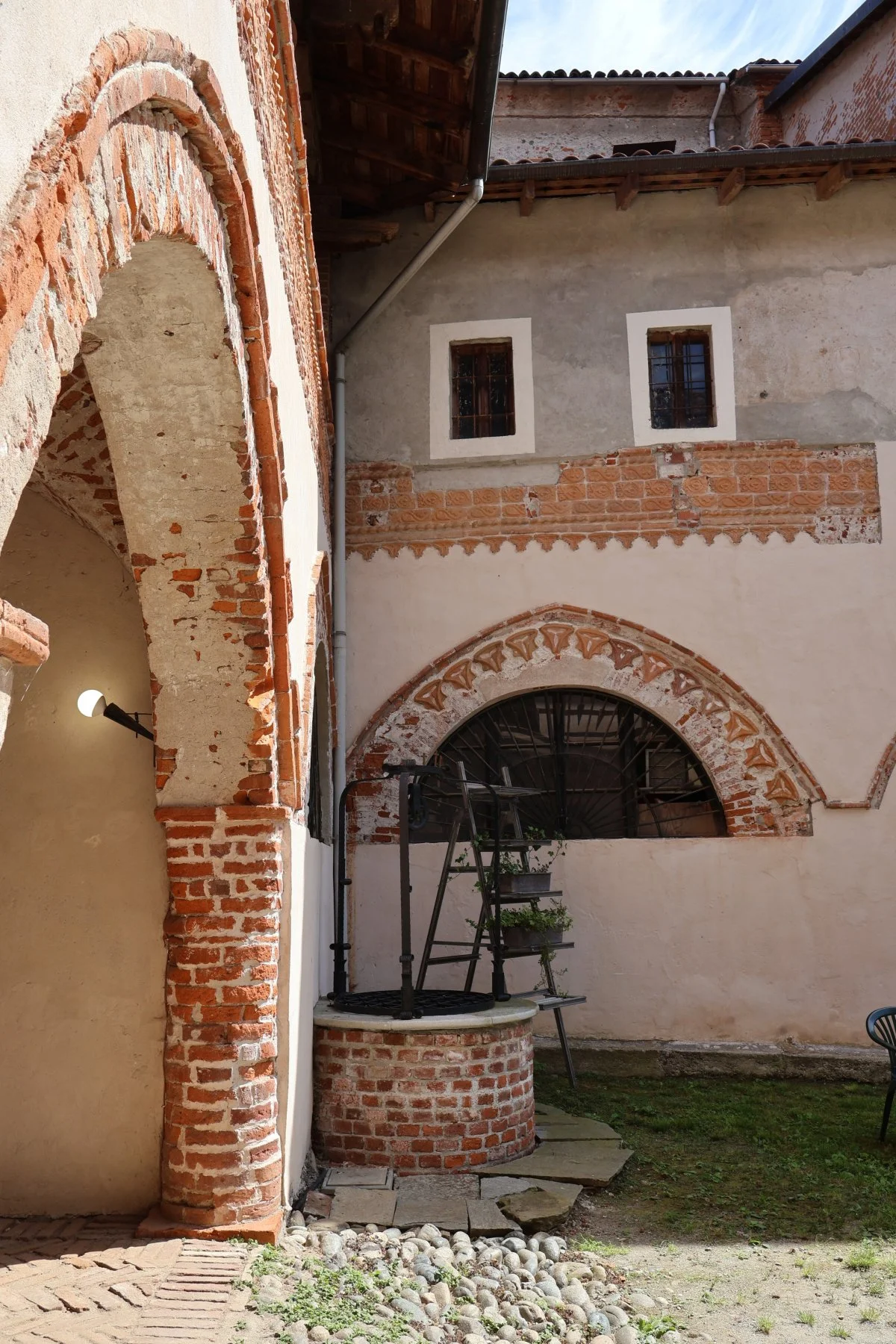
As soon as you step through the entrance, you find yourself in the ancient cloister courtyard.
A historic well still occupies the center of the space, while elegant brick arcades frame the surrounding buildings.
Inside the former chapter house, several medieval frescoes have survived the centuries, bearing witness to the wealth and importance once enjoyed by the Benedictine community of Lenta.
According to local tradition, many of the nuns came from wealthy noble families and gradually accumulated considerable landholdings.
Their prosperity inevitably attracted envy and criticism, fueled by rumors of an allegedly extravagant lifestyle.
Throughout the sixteenth century, repeated attempts were made to remove the nuns from Lenta.
Eventually, in 1573, the entire community was transferred to Vercelli, bringing nearly four centuries of monastic life to an end.
Next to the castle stands the Parish Church of Sant’Olimpio, rebuilt toward the end of the seventeenth century.
Inside, visitors can admire frescoes by the painter Peracino and descend into the fascinating Crypt of Saint Blaise, one of the few surviving remains of the original medieval church.
Parking in Lenta is simple.
The village is small enough that you can comfortably leave your car along one of the nearby streets before walking to the monastery entrance on Via Santa Marta.
The Baraggia Vercellese: Piedmont’s Last Savannah
If Lenta’s history leaves a lasting impression, the surrounding landscape is equally unforgettable.
Lenta lies within the Baragge Nature Reserve, one of the most extraordinary natural environments in Italy and one of the least known even among Italian travelers.
But what exactly is the Baraggia?
Imagine a vast landscape of heathland, open grasslands and scattered woodlands stretching toward the horizon. At first glance, it feels surprisingly similar to an African savannah—so much so that the Baraggia is often called “Piedmont’s last savannah.”
It is a unique ecosystem where bracken ferns, heather, oak trees and silver birches thrive together, creating a landscape unlike anywhere else in the region.
Centuries ago, this habitat covered a much larger area between Biella, Vercelli and the Ticino River. Today, only a handful of protected areas preserve what remains of this extraordinary environment.
Walking, cycling or horseback riding through the Baraggia is much more than an outdoor activity.
It is an invitation to slow down, reconnect with nature and experience a form of sustainable tourism that feels authentic rather than curated.
For us, this landscape alone was worth the trip.
Rovasenda, the Castle That Watches Over the Plain
While Lenta enchants visitors with its quiet monastic atmosphere, Rovasenda makes a dramatic first impression.
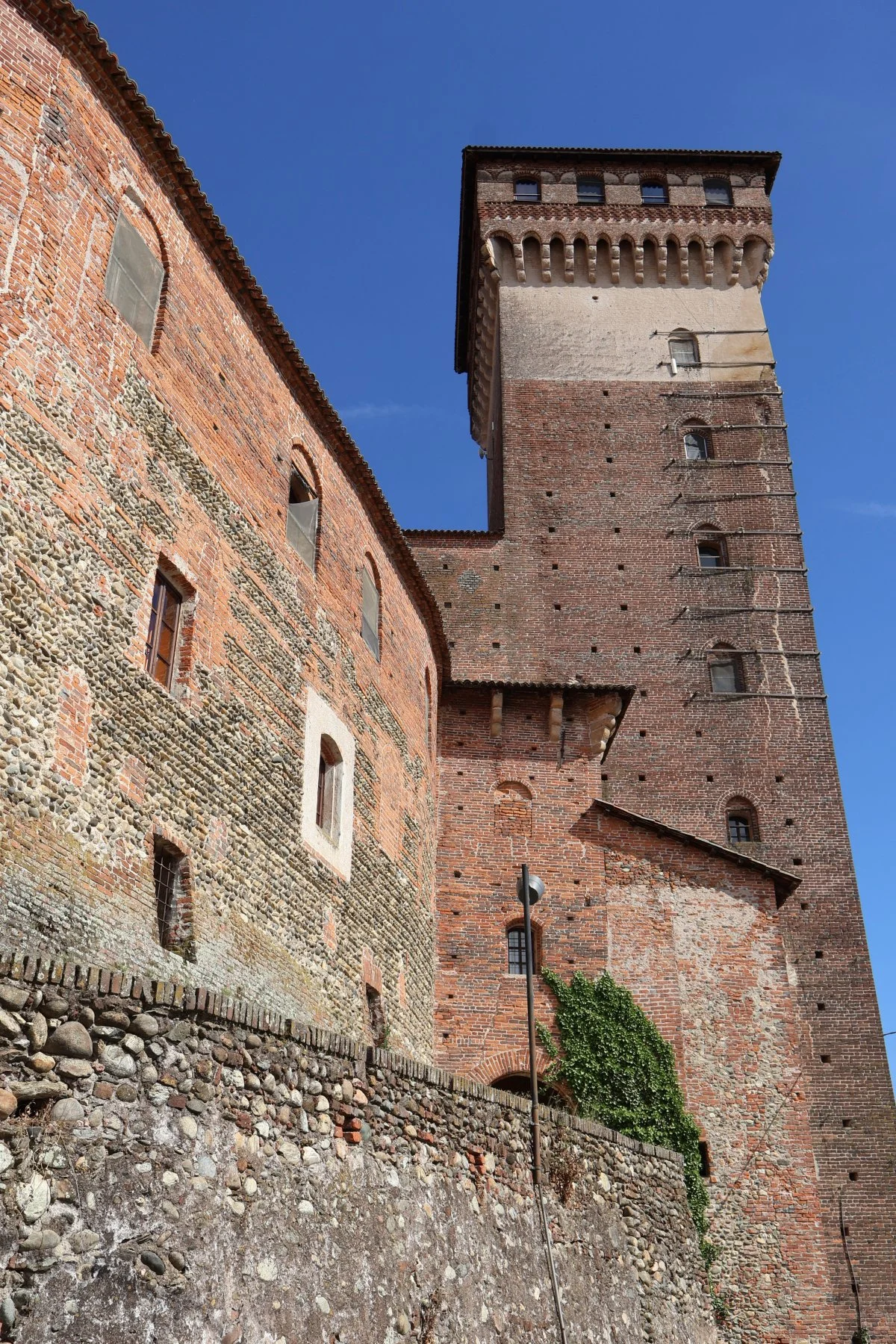
Long before reaching the village, its imposing medieval tower rises above the flat landscape, becoming an unmistakable landmark visible from miles away.
Standing 48 meters (157 feet) high, the tower was commissioned in 1461 by Antonio di Rovasenda and remains the undisputed symbol of the village.
Elegant yet imposing, it dominates the surrounding countryside and tells the story of centuries of feudal power, military defense and local history.
The castle itself dates back to the 12th century, when Alberto di Rovasenda ordered the construction of the first fortified residence.
Over the following centuries, the complex expanded considerably, becoming the political and economic heart of the surrounding territory.
Its walls have witnessed the lives of noble families, farmers, administrators and—even during World War II—Italian partisans involved in the Resistance.
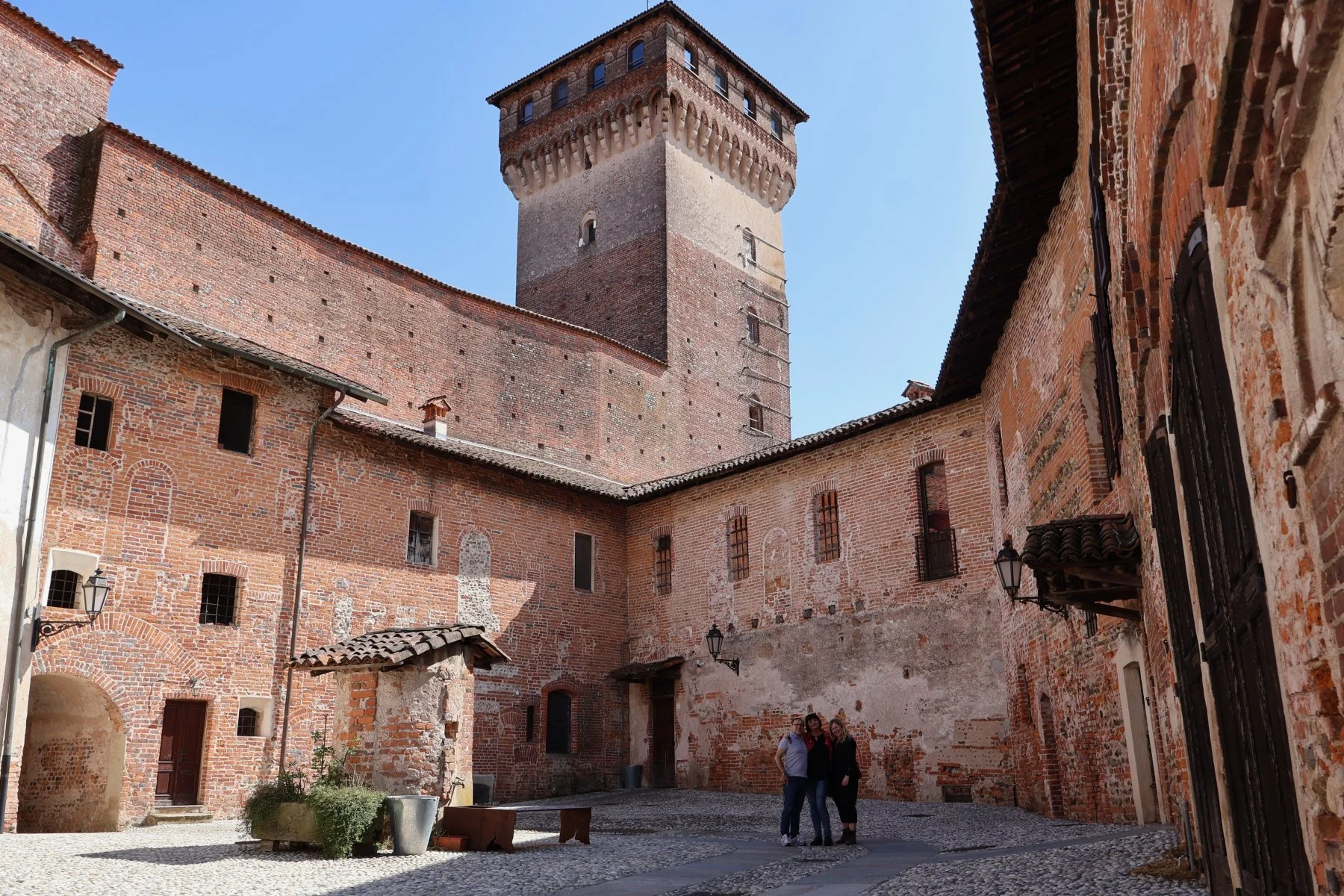
Access to the castle courtyard is through a short covered passage guarded by two impressive wooden knights.
Crossing the entrance almost feels like stepping back into the Middle Ages.
Inside, the fortress retains an extraordinary sense of authenticity.
The massive tower appears even more imposing from within the courtyard. Its square structure rises toward a projecting crown of machicolations—eleven on each side—once used to defend the fortress against attackers.
If you’re planning a visit, be aware that Rovasenda has two castles.
The original medieval castle is the historic fortress described above.
A second castle, built in the early twentieth century by architect Carlo Nigra, was designed as a faithful revival of the medieval structure.
Many visitors accidentally head to the newer building first, so it’s worth checking your destination before setting off.
The village itself also deserves a leisurely stroll.
The Church of Santa Maria Assunta, the Oratory of the Madonnina and several other religious buildings reveal an unexpectedly rich cultural heritage for such a small community.
Every corner reflects centuries of local history, making Rovasenda feel much larger than its size would suggest.
The Guardians of the Waterways: Art That Tells the Story of a Landscape
As we wandered through Rovasenda, one artwork immediately caught our attention.
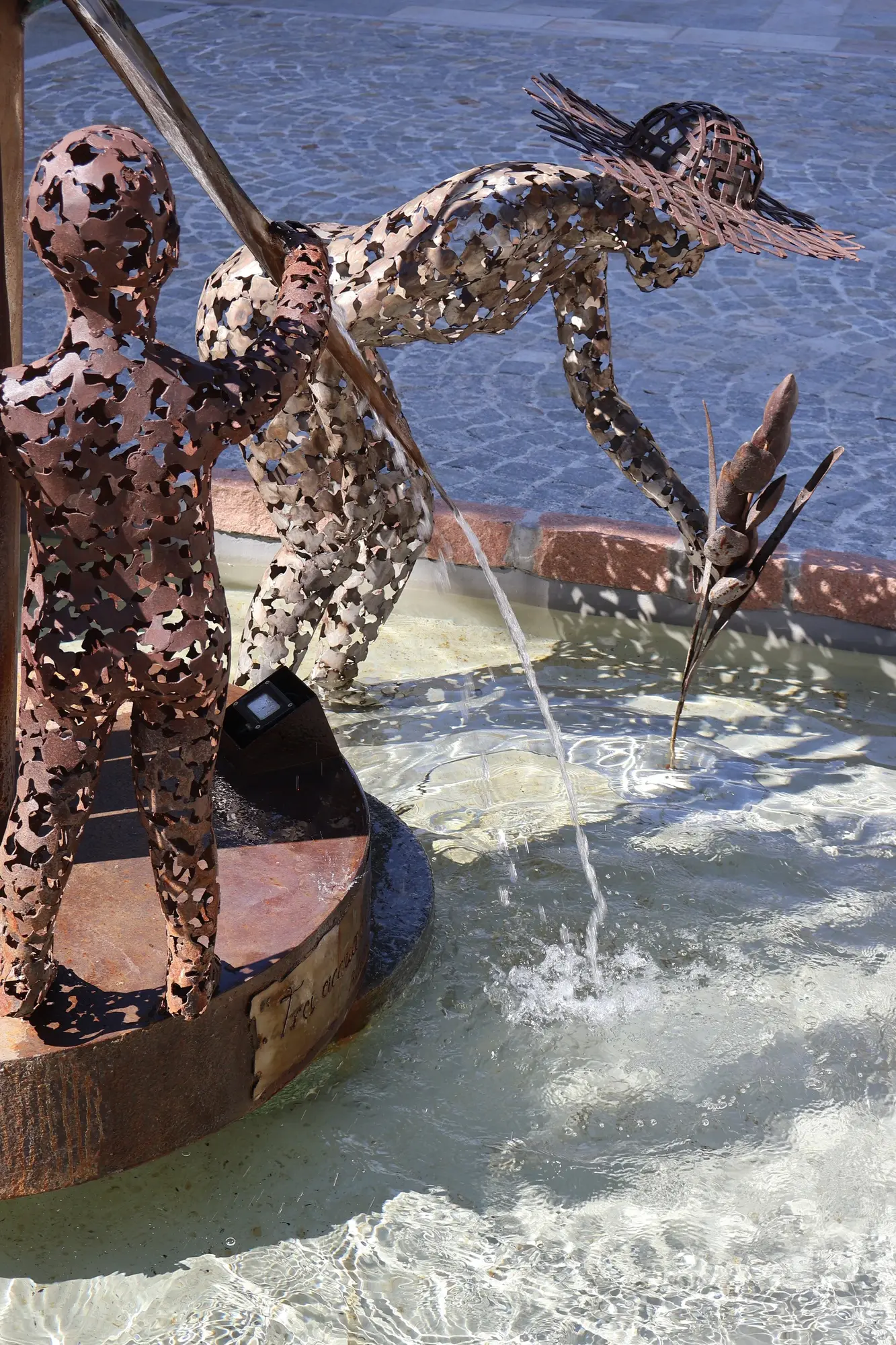
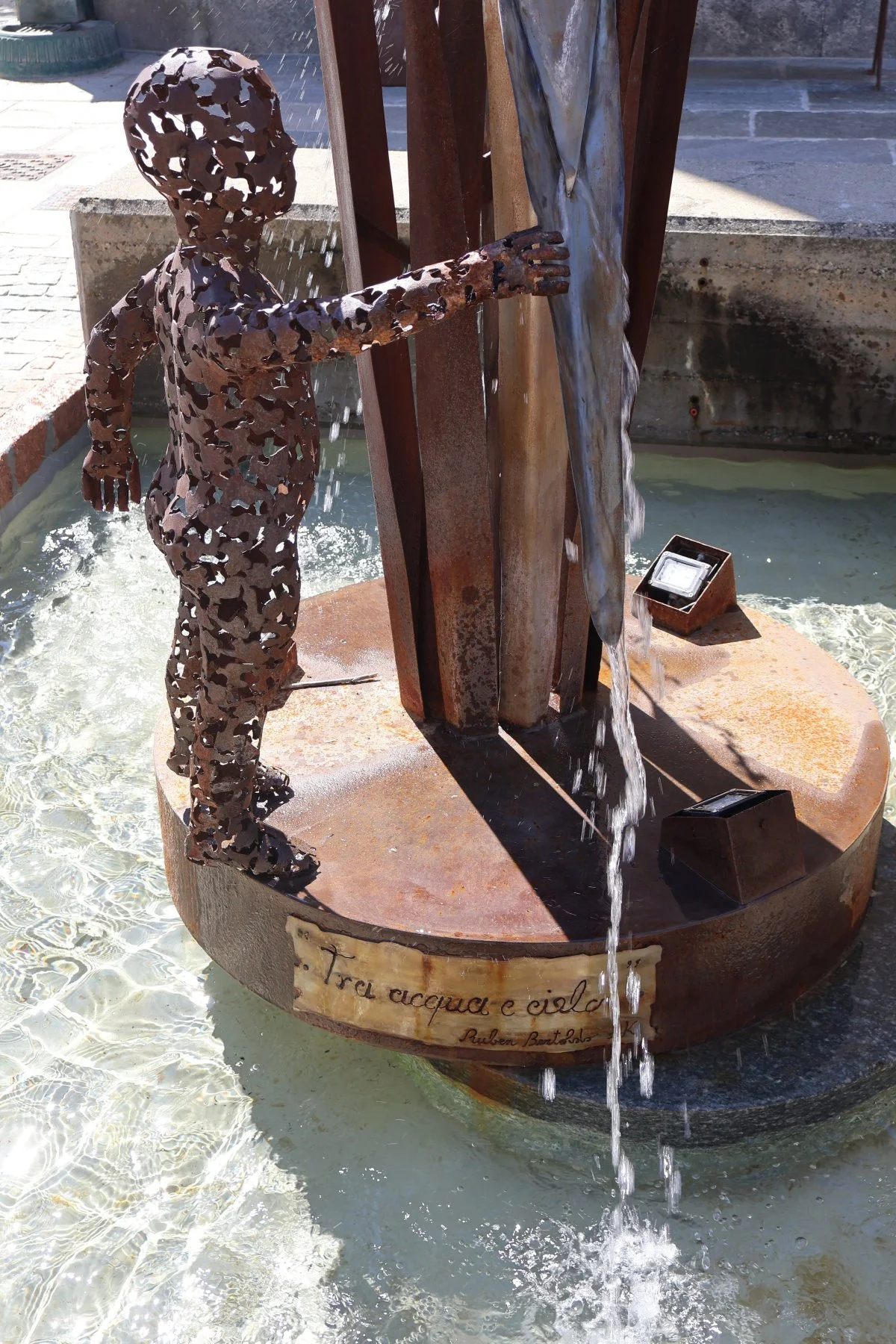
In Piazza Libertà, directly in front of the Town Hall, stands the striking fountain-sculpture “Vehra 00 – Between Water and Sky.”
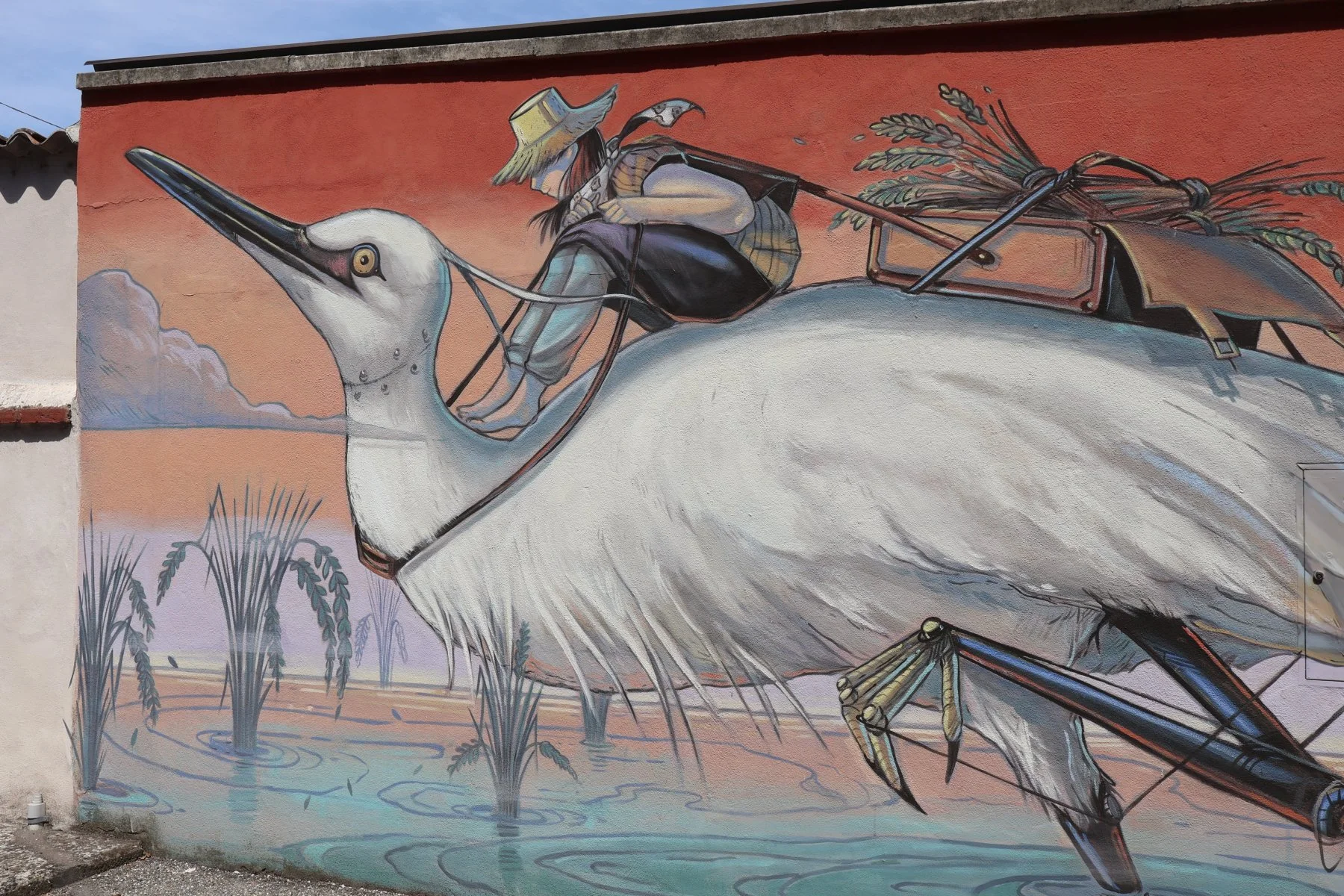
Water flows around stylized ears of rice, celebrating the agricultural identity that has shaped this territory for centuries.
Yet this is far more than an isolated public artwork.
It is part of a much larger artistic and cultural initiative known as The Guardians of the Waterways, created in 2023 by metal artist Ruben Bertoldo.
Originally from nearby Gattinara, Bertoldo began working with metal when he was only sixteen years old.
Since 2005, he has crafted sculptures, furniture, railings and artistic installations in his workshop, earning the prestigious Master Artisan Excellence recognition awarded by the Piedmont Region.
His own words perfectly summarize his artistic philosophy:
A skilled craftsman creates something useful. An artist communicates an emotion. I live on the border between those two worlds and feel that I belong to both..
Reading that quote while standing in front of his sculpture was genuinely moving.
For centuries, hands have shaped this land—digging canals, cultivating rice fields and building villages.
Today, Bertoldo’s hands shape metal to tell those same stories in a completely different language.
The project places the female figure at its center.
Bertoldo imagined three symbolic sisters—Vehra, Bianca and Giulia—each representing one of the three major landscapes of Upper Piedmont.
Vehra is the guardian of canals.
Her unusual name derives from Vehre-Cel, the ancient name of the city of Vercelli.
The first sculpture in the series, Vehra 01, was installed in Ronsecco in August 2023.
Bianca represents rivers.
Her first sculpture, Bianca 01, can be found in Cellio con Breia, surrounded by mountain landscapes and the headwaters that feed the region’s waterways.
Giulia watches over the lakes.
She protects the waters of Lake Orta and Lake Maggiore, although the first two sculptures—Giulia 01 and Giulia 02—are currently located on private property in Verbania and can only be visited during special events.
The project continued to grow in 2025 with the arrival of a fourth sister.
Named Lomilla, she became the guardian of the waters of Lomellina, the neighboring region famous for its rice cultivation.
Her first sculpture, Lomilla 01, was unveiled in Gambolò in October 2025, marking the project’s first installation outside Piedmont.
Although the initiative is still evolving, numerous sculptures can already be discovered throughout the region.
One of the most inspiring aspects of the project is that anyone can become part of it.
Through the official website, visitors, associations and local communities can support the initiative and help spread its message.
After all, water belongs to everyone.
And in one way or another, we are all its guardians.
How to Get to Lenta and Rovasenda from Turin or Milan
If you’re wondering where to go in Piedmont for an off-the-beaten-path day trip or weekend escape, a Lenta and Rovasenda itinerary is an excellent choice.
Despite feeling wonderfully remote, both villages are surprisingly easy to reach.
By car, simply take the A4 motorway toward Milan and then follow the provincial roads into the Vercelli countryside. Whether you’re leaving from Turin or Milan, the journey takes just over an hour, making these hidden gems perfect for either a full-day excursion or a relaxing weekend.
One of the great advantages of visiting this area is that you can combine history, nature and local traditions without spending hours on the road.
Discover the Area During RISÒ – The Rice Festival
Travelers who want a deeper understanding of the region should consider planning their visit during RISÒ – The Rice Festival, held every September.
The festival celebrates not only the area’s famous rice production but also its remarkable cultural and natural heritage.
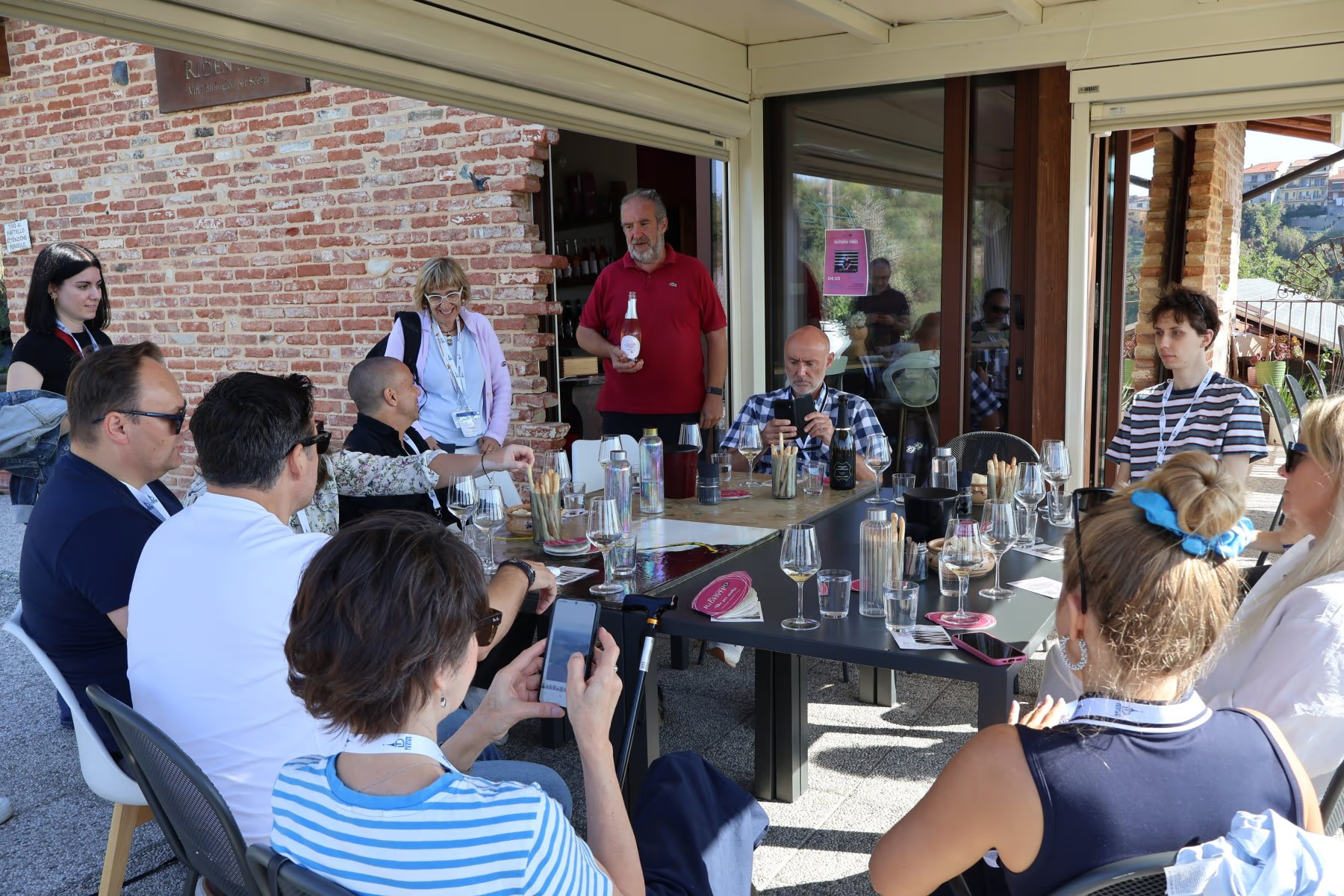
During the event, Somewhere Tour & Events organizes guided day trips departing from Turin, allowing visitors to explore the Baraggia Vercellese, medieval castles, monasteries and historic villages with experienced local guides.
It’s a wonderful opportunity to discover places that are often inaccessible or difficult to appreciate without historical context.
Whether you’re passionate about history, architecture, photography or slow travel, these guided experiences offer a richer perspective on one of Piedmont’s least-known destinations.

Why You Should Visit Lenta and Rovasenda
As we drove back toward Turin at the end of the day, one feeling stayed with us above all others:
Wonder.
Wonder at discovering such an extraordinary heritage so close to home, yet almost completely unknown.
Wonder at the beauty of the Baraggia Vercellese, where landscapes that resemble an African savannah meet centuries-old rice fields.
Wonder at castles rising unexpectedly above the plain, monasteries that have silently witnessed nearly a thousand years of history, and villages where every stone seems to have a story to tell.
And, perhaps most unexpectedly, wonder at discovering The Guardians of the Waterways, an artistic project that transforms local identity into something tangible, emotional and deeply contemporary.
It reminded us that heritage is not only preserved inside museums or behind castle walls.
It also lives through the people who choose to protect it, reinterpret it and pass it on to future generations.
If you’re looking for an authentic Lenta and Rovasenda itinerary away from Piedmont’s busiest tourist routes, this corner of the Vercelli province deserves a place on your travel list.
Here you’ll find medieval architecture, peaceful countryside, unique natural landscapes, fascinating stories and welcoming communities that genuinely care about sharing their heritage.
It’s proof that some of the most memorable journeys don’t require crossing oceans or flying to the other side of the world.
Sometimes, the greatest surprises are waiting just around the corner.
And the Vercelli countryside has far more to offer than its beautiful rice fields.
It offers history, nature and, most of all, authenticity: the kind of travel experience that stays with you long after you’ve returned home.




Leave a Reply