
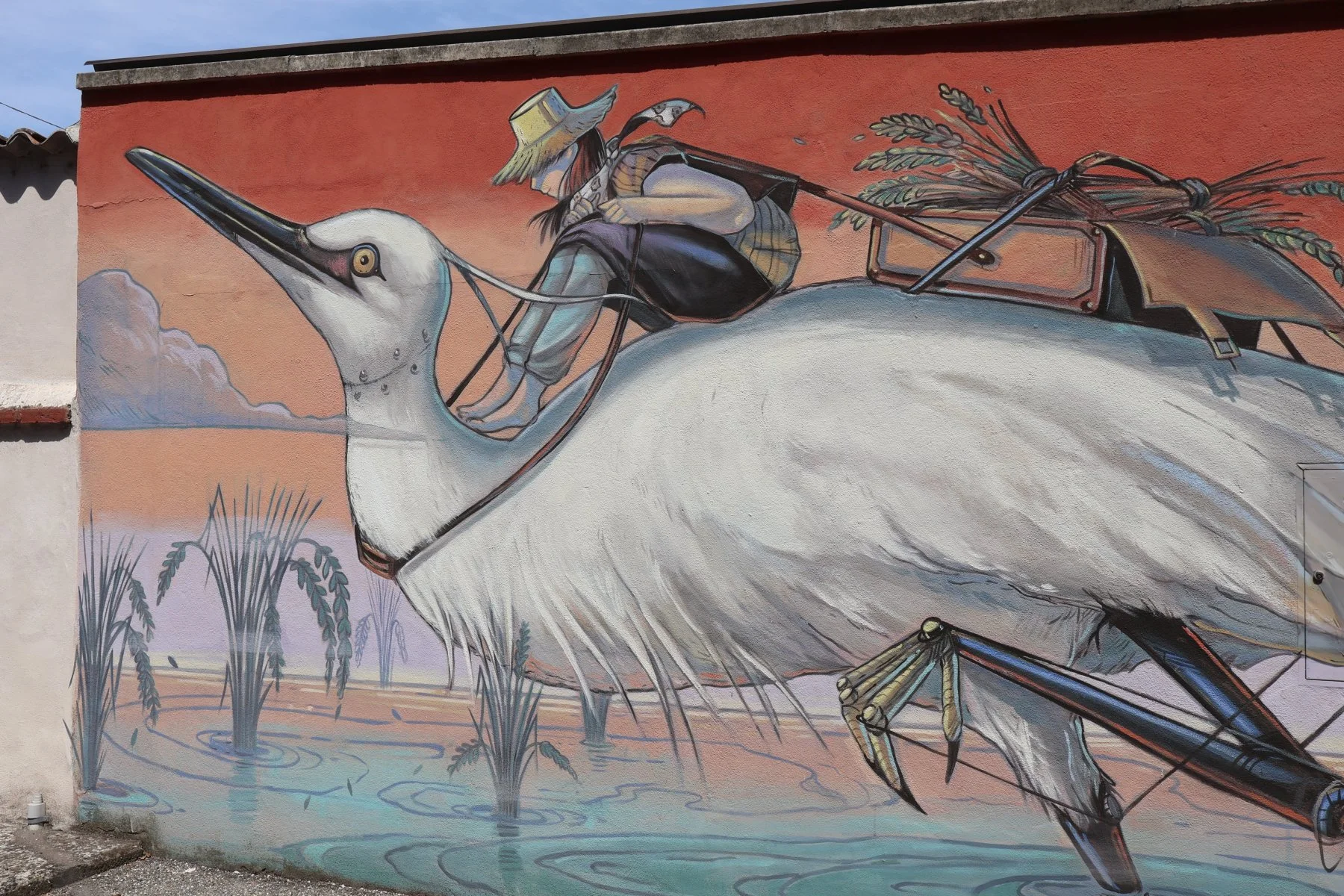
If you love street art, there is a small village in the Vercelli rice fields that you should not miss.
Rive is one of the most interesting examples of how a rural landscape can be reinterpreted through contemporary art.
Here, among rice fields, farmhouses and country roads, the façades of houses have become canvases telling the story of a community.
And the surprising thing is that we are not in a large city.
We are in a small village in the Vercelli area of Piedmont.
Rive and street art: when a village tells its own story
The idea of transforming Rive through street art grew from the community’s desire to give new visibility to its agricultural identity, not by using the traditional language of memory, but through a visual expression that is immediate, accessible and deeply connected to the present.
The walls of houses, streets and public spaces have become storytelling canvases, featuring murals dedicated to rural life, rice cultivation, the mondine — the women who once worked in the rice fields — farm work and the everyday gestures that have always shaped this landscape.
The aim is to rethink the village in a contemporary way without losing its connection with history, turning it into a place that can speak to people passing through it today.
What we see in it is a strong will to remain. To be seen. To continue to exist as time changes.
Street art therefore becomes a tool for territorial regeneration, giving new life to the village’s spaces and attracting visitors interested in slow, authentic tourism rooted in the places they discover.
Walking through the village, it is now easy to come across visitors carrying a list of murals to find. And there is something genuinely beautiful about seeing this community become a space for communication.
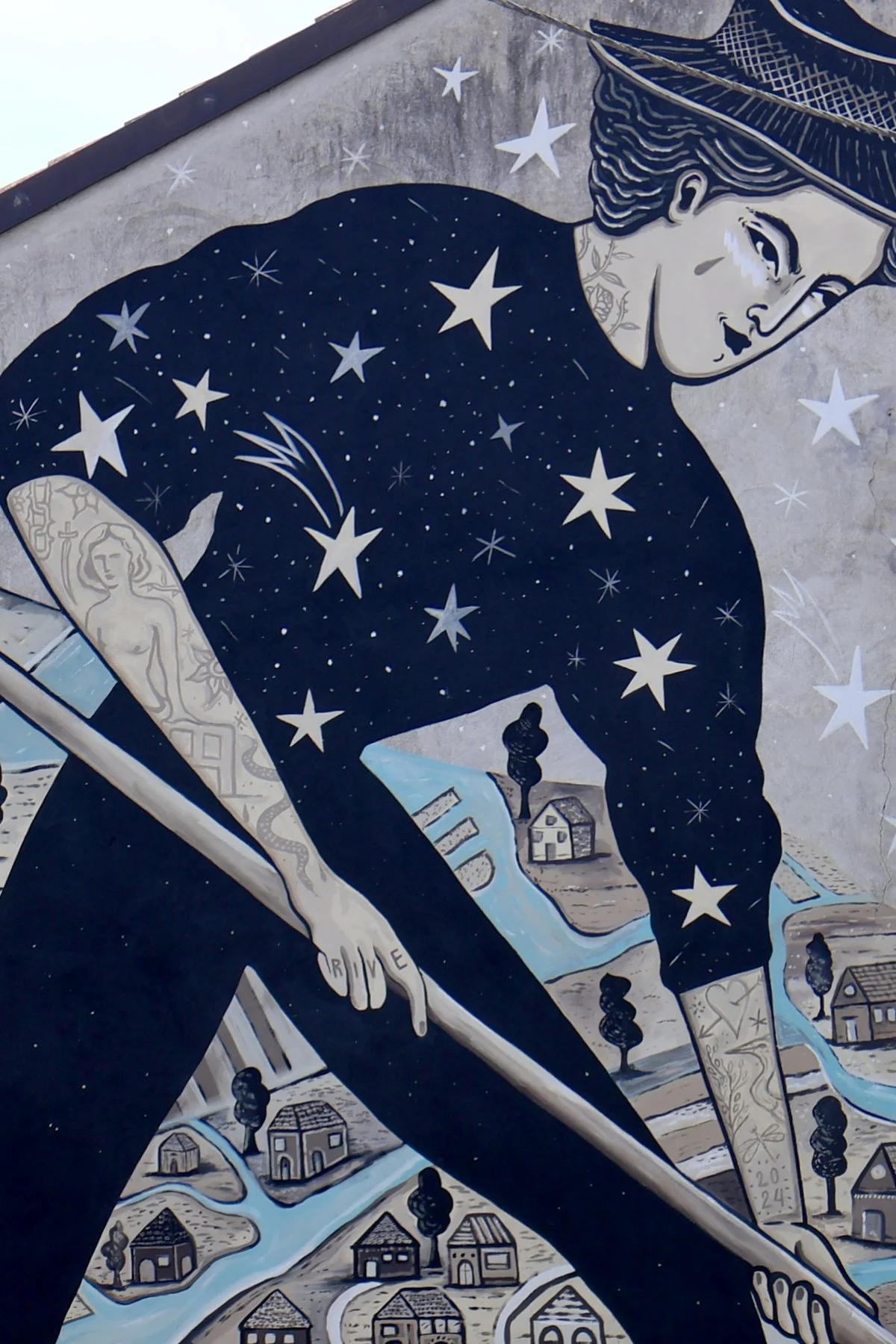
DeRIVE: quando l’arte incontra il paesaggio rurale
The project began in 2020 with DeRIVE – Arte Pubblica nello spazio rurale, bringing contemporary art directly onto the walls of the village. Over the different editions, artists from Italy and abroad have come to Rive, asked to engage not with just any blank canvas, but with a very specific territory made of rice fields, water, farmhouses, agricultural work and memory.
This is perhaps the most interesting aspect of the project. It is not simply about decorating a small village with large colourful images. Artists are invited to observe Rive and transform elements of its identity into a contemporary story.
The result is an open-air museum with no ticket office, exhibition rooms or strictly defined route. The murals are part of the streets, the houses and everyday life in the village.
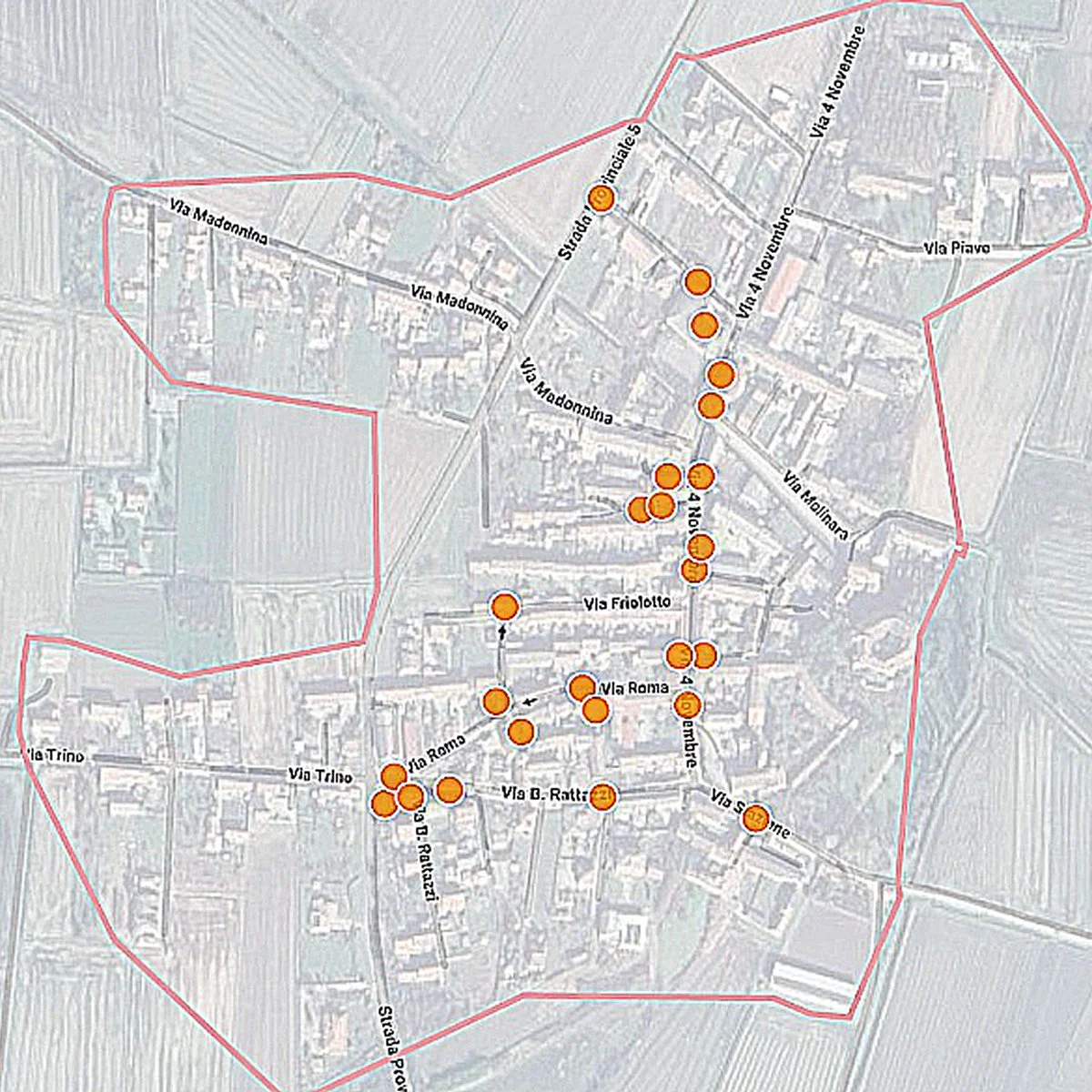
On the map beside this section, you can see the different points around the village where a wall has stopped being silent.
The murals of Rive tell the story of rice and the people who grew it
Walking through Rive, you find the elements that have shaped the identity of the Vercelli plain.
Rice is naturally one of the protagonists, together with the water that makes cultivation possible and the rice fields surrounding the village. But the murals also portray the people who have lived and worked on this land for generations, turning agricultural labour into a fundamental part of local history.
Among the subjects represented are the mondine, figures deeply rooted in the collective imagination of the rice fields, here reinterpreted through contemporary artistic languages and sensibilities.
This dialogue between past and present is what makes the street art in Rive Vercelli so interesting: memory is not simply celebrated, but reinterpreted.
L’acqua, elemento indispensabile della pianura
In a landscape built around rice cultivation, water naturally plays a central role.
One of the works created in Rive brings back the figure of the acquaiolo, the person responsible for controlling and distributing the water needed by the rice fields. It belongs to an agricultural world that may seem distant today, but this role was fundamental to the organisation of the Vercelli countryside.
In Rive’s project, this memory returns to the walls of the village through a completely different visual language from the one once used to tell these stories.
It is a reminder that the landscape we see today, with its rice fields and canals, is not simply natural. It is the result of centuries of work, water management and the relationship between people and the land.
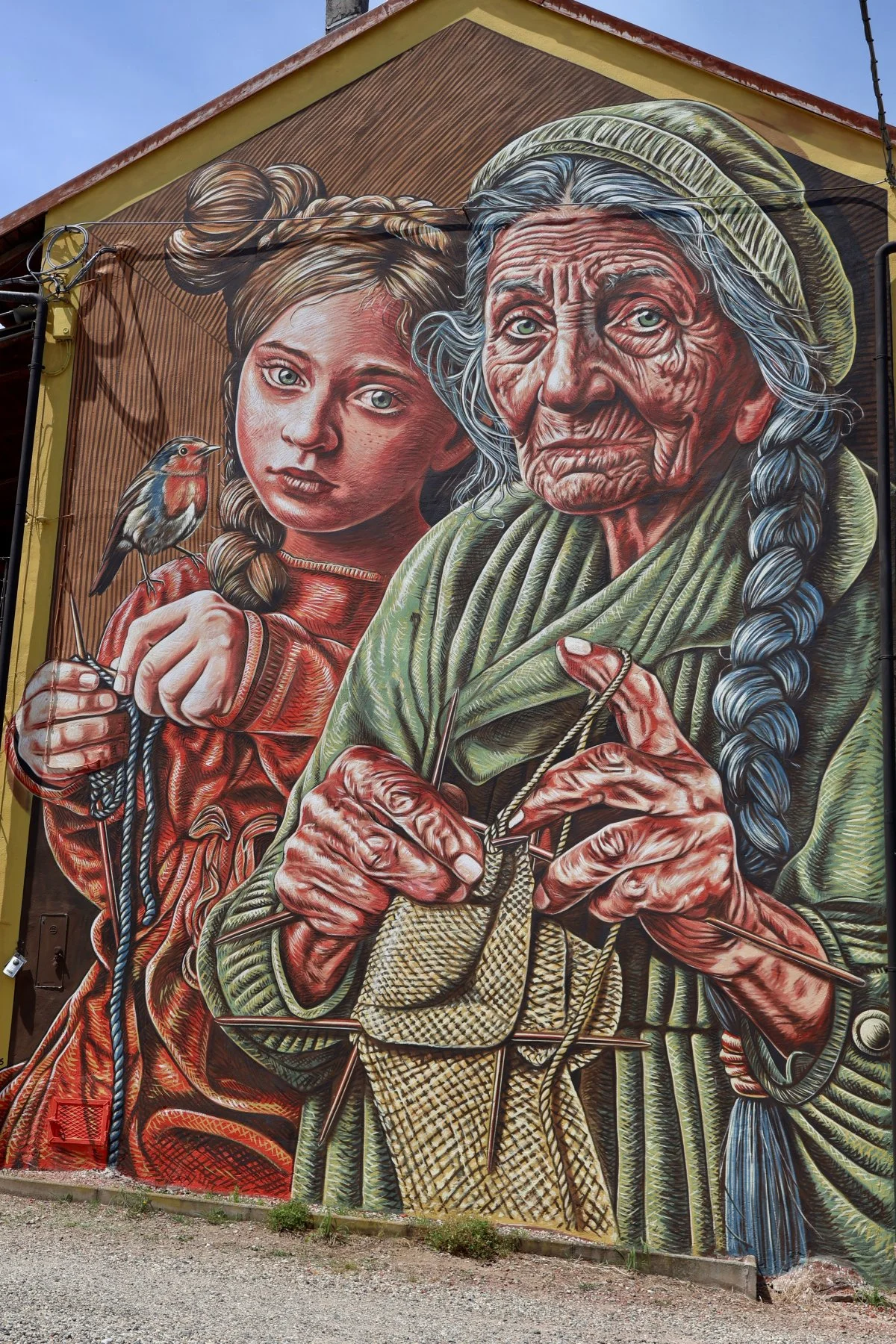
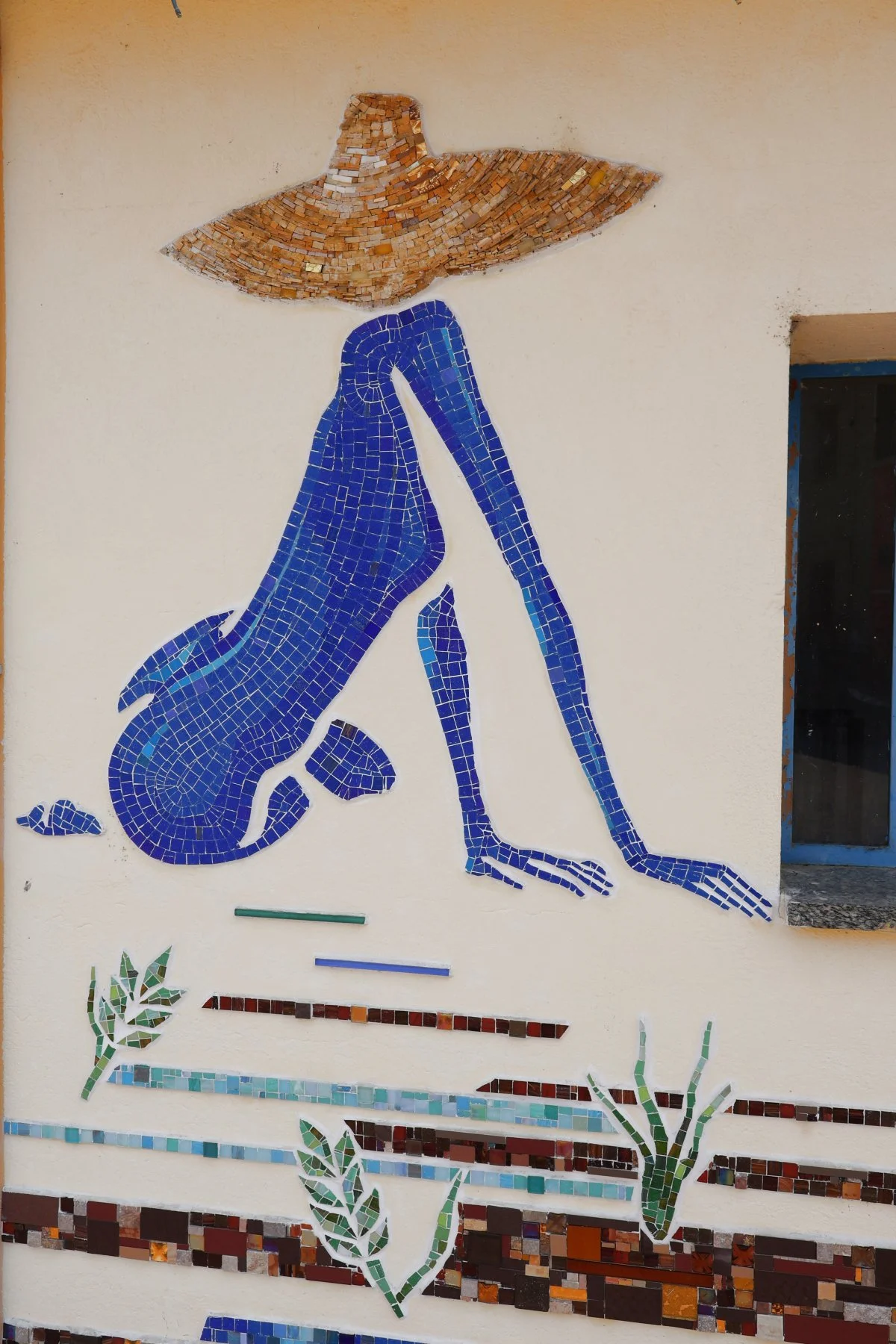
Local legends become murals too
Not everything told on the walls of Rive belongs to its agricultural history.
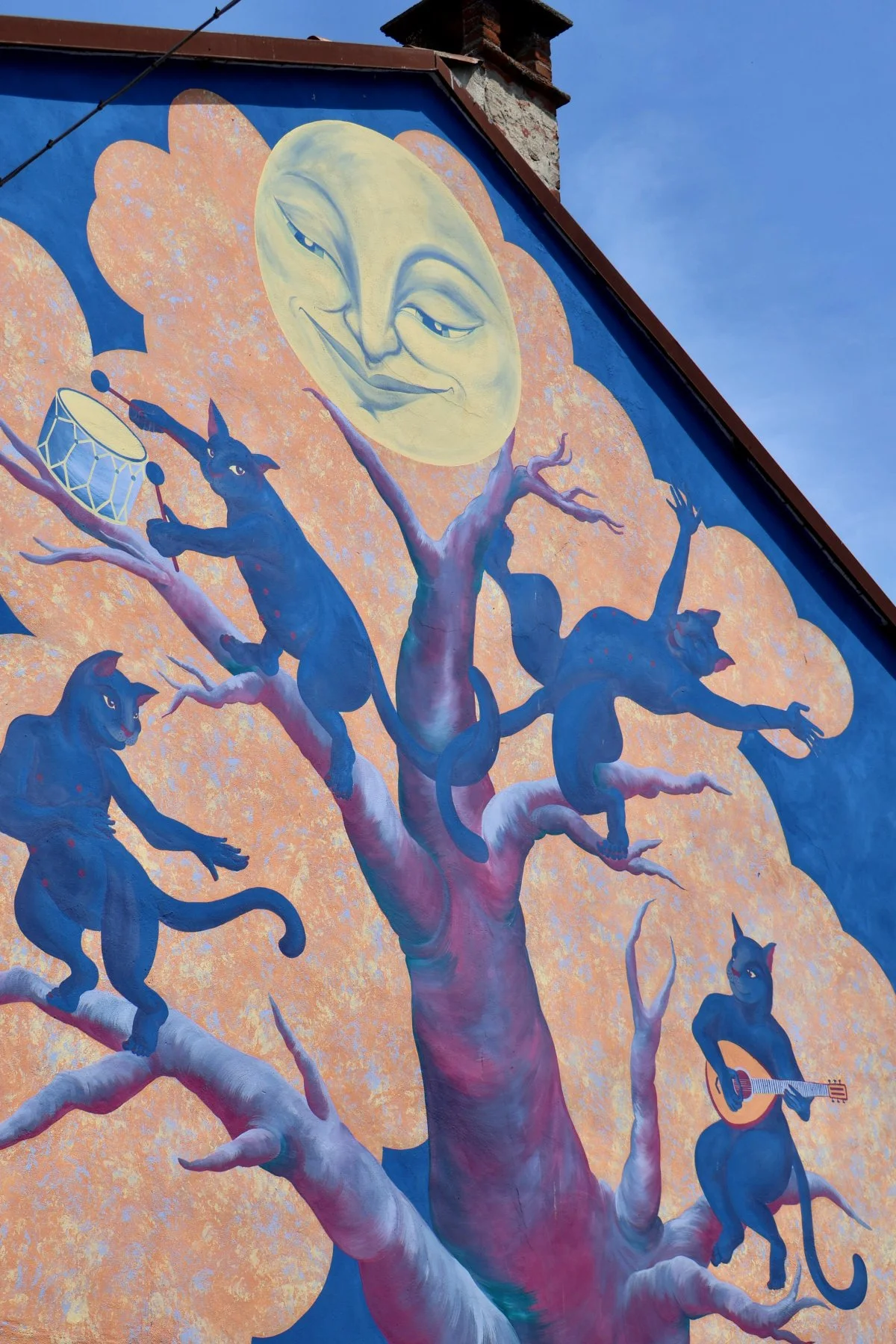
The murals also leave room for local legends, including the story of Villa Chioso and the masche, the witches of Piedmontese folklore.
According to the legend, these figures would meet at night and could be seen dancing. It is a popular story that risks disappearing as generations change, and through public art it becomes part of the village’s story once again.
This is one of the aspects we like most about the project: it does not only tell us what Rive once was, but also brings back stories that might otherwise be forgotten.
Cartogramma: Rive trasformata in una mappa
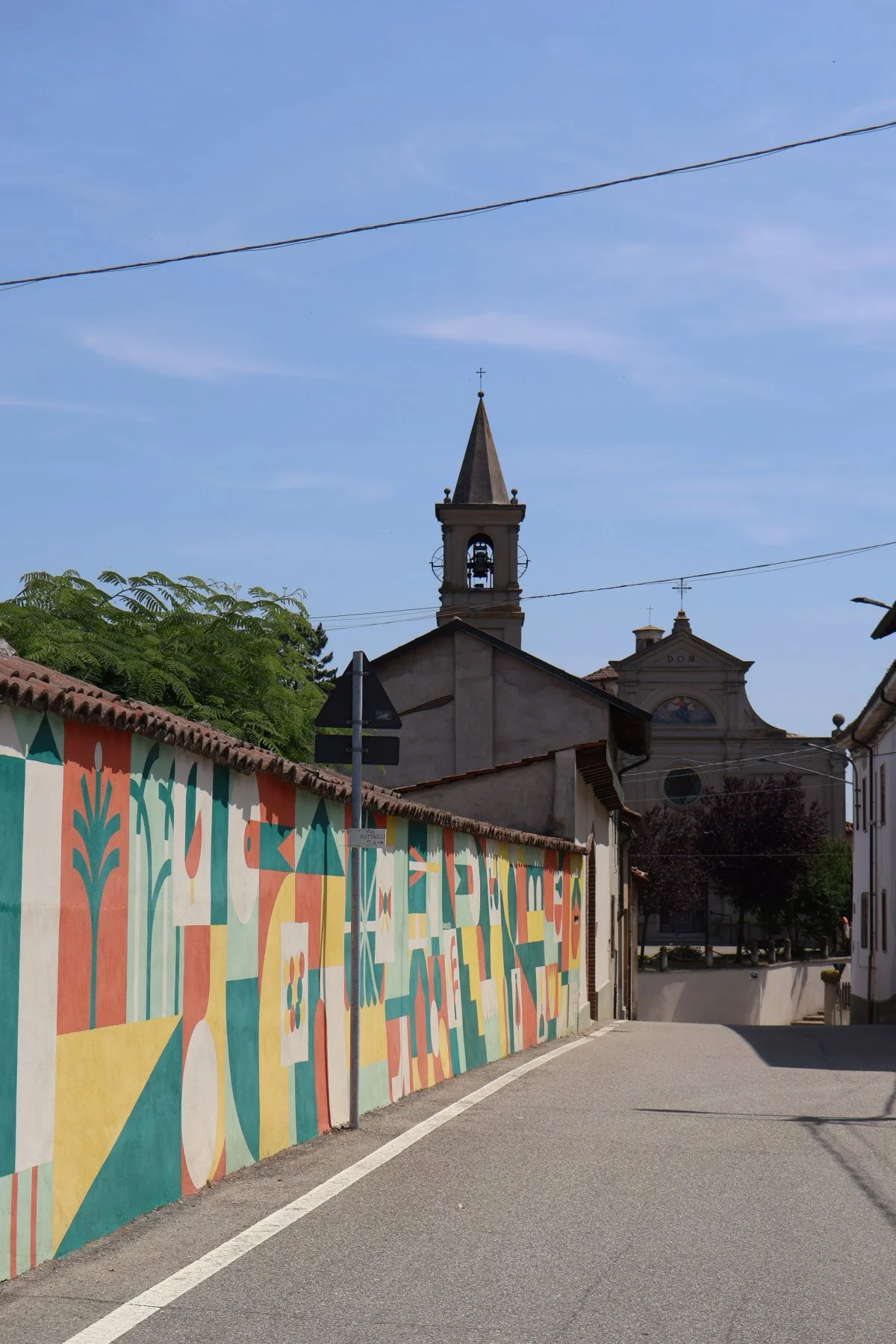
One of the murals worth looking for is Cartogramma, created in 2023 by Sardinian artist CRISA, whose real name is Federico Carta.
The work interprets the Vercelli landscape as a kind of contemporary map, transforming the water of the rice fields and the vegetation of the plain into shapes and colours. It also includes a reference to the Cistercian tradition through the column of an abbey, together with an eye that seems to observe the landscape.
It is a work that makes clear how much the Rive project goes beyond simple urban decoration: the territory itself becomes the material of the art.
How many murals are there in Rive?
Rive currently has 25 murals, and the village has become a genuine open-air museum of street art in the Vercelli area.
And the project continues to grow.
New works are created during the different editions of DeRIVE, keeping the village in a constant state of transformation. In the September 2026 edition, for example, four new international artists arrived in Rive to create new works.
Among them were:
- Refreshink, whose real name is Giovanni Magnoli, a graphic designer born in Arona in 1971. His work for DeRIVE is dedicated to the traditional game of Lippa, an old popular game played with a small pointed wooden stick and a larger stick.
- Agus Rùcula, an urban artist, teacher and illustrator born in Argentina.
- Fabio Petani, born in Pinerolo in 1987, with a degree in Cultural Heritage and a thesis on urban art. His DeRIVE work is dedicated to the four seasons of rice.
- Antonio Sena, an artist from Naples, who created a mural recalling the events of 7 May 1859, when Garibaldi and King Victor Emmanuel II were in Rive at Casa Foro, an eighteenth-century former convent on Via Roma.
This means that returning to Rive in the future could mean finding a different village from the one you saw a few years earlier.
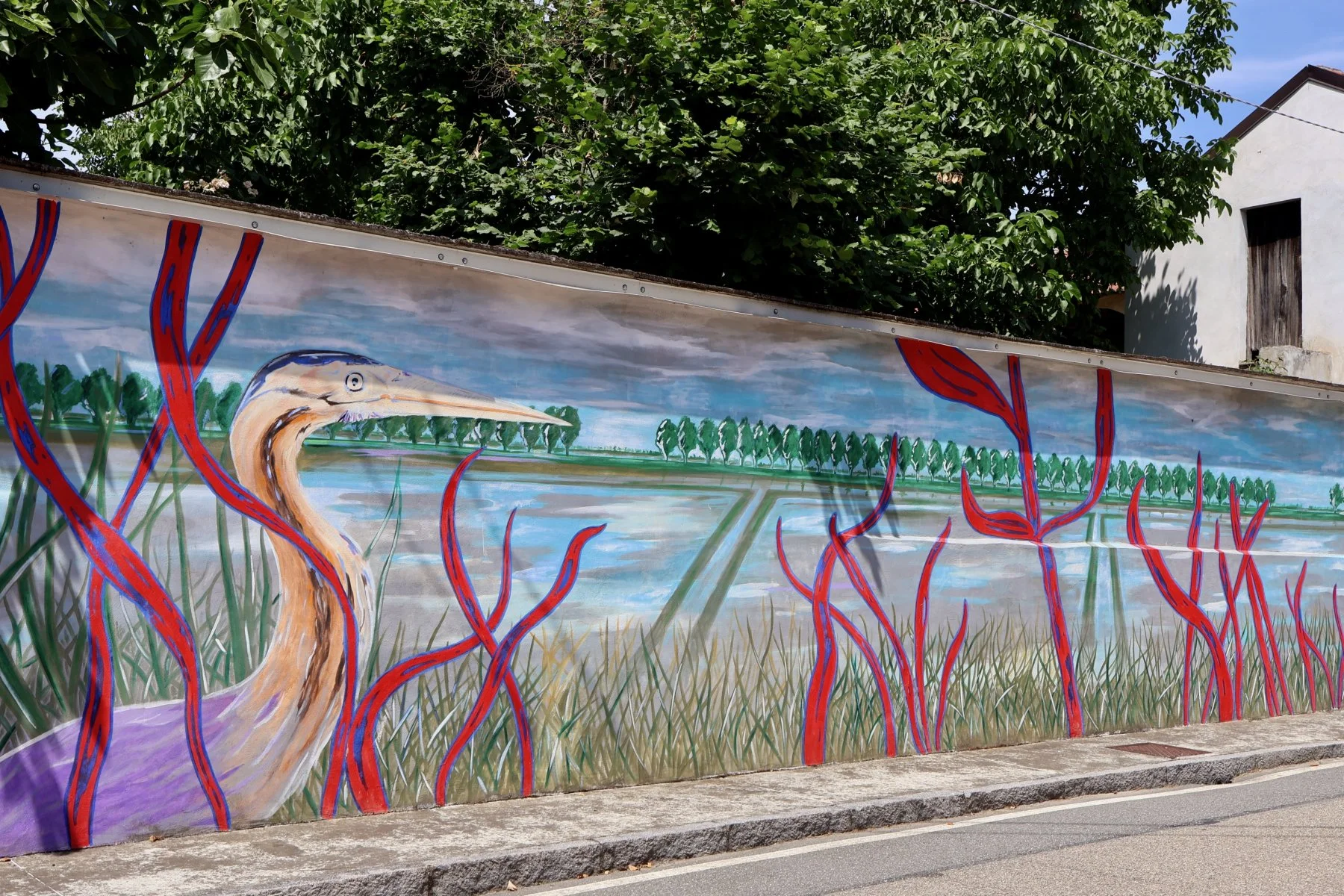
How to visit Rive and see the murals
The easiest thing to do is simply arrive in Rive and start walking.
There is no museum entrance and no need to follow a complicated route. The works are scattered throughout the village and form part of its streets.
Our advice is not to rush. Look at the walls, but also at everything around them: the houses, the streets, the countryside and, just beyond the village, the rice fields that explain better than any information panel why these murals belong here.
Guided tours are also organised at certain times of the year, allowing visitors to discover both the older murals and the new works being created.
Rive is more than street art
Perhaps this is the real point.
Coming to Rive simply to photograph the murals would be reductive. The street art works because it is embedded in a landscape that remains what it has always been: agricultural, rural, shaped by water and rice cultivation.
The contrast between the large contemporary artworks and the simplicity of the village is part of the experience.
As you walk from one mural to another, you move beyond the idea of a simple street art village and into the landscape of the Grange Vercellesi, where rice fields, farmhouses, canals and abbeys tell a much older story.
This is where, in our opinion, the project becomes particularly meaningful: art does not hide the landscape. It makes you look at it differently.
When to visit Rive
Rive can be visited throughout the year, but there is one moment when the surrounding landscape becomes particularly beautiful.
September, when the rice fields turn golden before the harvest, creates a special setting for discovering the village.
It is also traditionally the time when DeRIVE brings new artists and new works to the village, making the relationship between contemporary art and the rural landscape even more visible.
Rive, rice fields, murals and abbeys
If you would like to discover Rive without organising the entire itinerary yourself, there is a day trip dedicated to this part of the Vercelli area on 27 September 2026.
The tour “Una giornata tra riso, murales e abbazie” leaves from Turin and takes participants through rice fields, historic mills, a rice estate and lunch at a farmhouse, before visiting the murals of Rive and continuing to the Principato di Lucedio and its bell tower.
It is an interesting way to bring together, in a single journey, some of the elements that make this part of Piedmont so distinctive: rice, water, rural architecture, abbeys and, today, contemporary art.
Rive: a small village that chose to tell its story
Some villages try to attract attention by building something new.
Rive chose instead to tell the story of what it already had, through a contemporary language.
It took its landscape, agricultural history, traditions, legends and relationship with water and entrusted them to contemporary artists.
Perhaps that is why, more than simply a collection of murals, Rive feels to us like the story of a community that does not want to become something different from what it is.
It simply wants to continue to exist.
And that will to remain, painted across the colourful walls of its houses, is something you can see.




Leave a Reply