

There is a time of year when Cocconato seems to change its face.
The streets of this beautiful village fill with colours, medieval costumes, musicians, historical figures and, above all, passionate cheering that reveals just how strong the sense of belonging is in this small village in the Asti area of Monferrato.
This is the time of the Palio degli Asini in Cocconato, one of the most distinctive traditional festivals in Piedmont, where historical reenactment, folklore, competition and community life come together.
In 2026, the Palio degli Asini in Cocconato celebrates its 57th edition, taking place on Saturday 26 and Sunday 27 September. The donkey race is the highlight of a wider program that also includes a medieval dinner and the Medieval Fair held the weekend before.
Cocconato is known as the “Riviera of Monferrato” because of its particularly mild climate and its rolling vineyard-covered hills. During the Palio, the village becomes the stage for a celebration involving practically the entire local community.
And if you think a donkey race can only be a curious piece of folklore, wait until you hear the cheering from the different borghi.
The Donkey Race: History and Spectacle
The Palio degli Asini in Cocconato was born in 1970 as a competition between the local borghi, inspired by the medieval history of the area.
According to the tradition recalled by the municipality, around the 13th century a fire hit the castle of the Radicati family. The inhabitants carried water from the valley with the help of donkeys to help put out the flames.
This story became the symbolic inspiration for the donkey race, which over the years has grown into one of Cocconato’s most beloved traditions.
Since 2002, the Palio has also been officially part of the Federazione Nazionale Giochi Storici, confirming its historical and cultural importance.
Medieval history is therefore the common thread running through the event, but the race itself is anything but a simple historical reenactment.
The real star of the Palio is, of course, the donkeys.
They are not ridden. Instead, they are led and encouraged by representatives of the different borghi, making the race wonderfully unpredictable.
A donkey may suddenly stop, change direction or simply decide not to cooperate at precisely the wrong moment.
And that is when the real spectacle begins.
Laughter, shouting, encouragement and unexpected twists make this race very different from the better-known horse palios in Italy.
Winning is not simply a matter of speed. You also need a good dose of luck and, above all, the ability to persuade your donkey to follow the team’s strategy.
The race takes place in the heart of the historic centre, between Piazza Melchiorre Giordano and Piazza Cavour, turning the village streets into the stage for the challenge between Cocconato’s seven borghi.
The 7 Borghi of the Palio in Cocconato
The heart of the Palio degli Asini in Cocconato lies in its borghi.
The competition is built around the rivalry between these different communities, a rivalry that is certainly playful but also deeply felt.
There were originally ten borghi. Over time, some disappeared, and today seven take part in the Palio: Airali, Brina, Colline Magre, Moransengo, San Carlo, Torre and Tuffo.
Each has its own colours, symbols and personality.
Colline Magre
Colline Magre stretches towards Maroero da Montecapra and is represented by yellow and green.
It is one of the most competitive borghi in the history of the Palio. In 2024, it won the race for the tenth time, reaching an important milestone in the Palio’s roll of honour.
Airali
Airali develops around the school area, in the shadow of the bell tower of the small church of San Sebastiano.
Its colours are red and blue, and the borgo has collected numerous victories throughout the history of the Palio.
Brina
Brina is the borgo associated with cool colours, its name immediately evoking the atmosphere of the hills in the early hours of the morning.
Its colours, symbols and identity make it instantly recognisable during both the historical parade and the race.
Tuffo
Tuffo stretches through the Sant’Anna area towards Robella and is the furthest borgo from the centre of Cocconato.
Its name comes from tufo, the characteristic tuff stone found in the local soil.
In 2025, Tuffo won the Palio, entering the 2026 edition as the reigning champion.
San Carlo
San Carlo occupies the lower part of Cocconato, around the village’s tree-lined avenues.
Like the other six borghi, it plays an important role in building the festival, from preparing the historical parade to getting ready for the race.
Torre
Torre occupies the upper part of Cocconato, beneath the tower from which it takes its name.
It is the only borgo to have taken part in every edition of the Palio.
Its colours are yellow and red, and its motto perfectly expresses the sense of belonging behind the competition:
“If we find ourselves in the same thrill, in the same horizon, in the same memory, then we belong to each other.”
Principato di Moransengo
Principato di Moransengo is the smallest of the borghi and the only one located outside the municipal boundaries of Cocconato. Its colours are pink and blue, and it has a strong independent spirit.
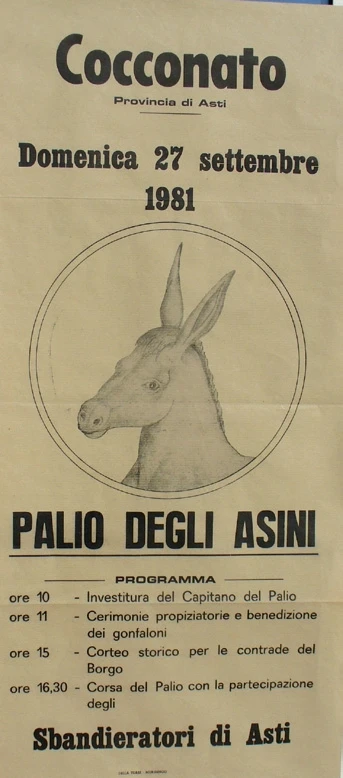
Every borgo takes part in both the historical parade and the race, bringing its own identity, colours and traditions to the event.
The rivalry may be playful, but it is very real. And it is precisely this passionate competition that creates the unique atmosphere of the Palio.
The Historical Parade of the Palio degli Asini
If the race is the most eagerly awaited moment, the historical parade is perhaps the best way to understand the soul of the Palio.
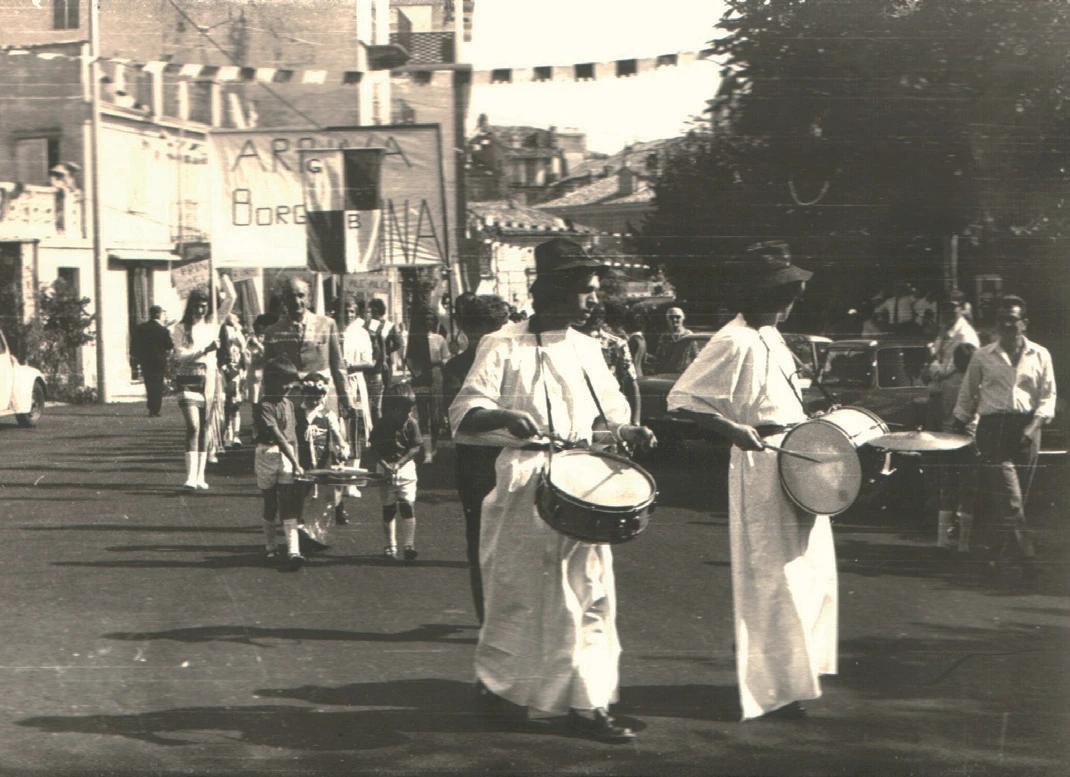
Hundreds of participants walk through the village streets wearing costumes inspired by the Middle Ages.
Nobles, knights, common people and characters from everyday life bring Cocconato back in time, recreating scenes and stories connected with the history of the village and Monferrato.
The parade is not simply an introduction to the race.
Each borgo spends months preparing its own representation, researching costumes, characters, scenery and historical details.
The result is almost a competition within the competition, where creativity and the ability to tell a story become an essential part of the Palio.
And perhaps this is where you really understand how deeply the event belongs to the local community.
The Palio degli Asini in Cocconato is, ultimately, a great workshop of collective memory: history becomes a spectacle, tradition becomes participation and the entire village becomes part of the story.
The Palio Drappi: Art and Local Identity
The prize for the winning borgo is the drappo, a textile work of art created each year by different artists who are invited to interpret the spirit of the Palio.
The drappo is much more than a trophy.
It is a tangible symbol of the continuity of the festival, a bridge between past and present, and a work that brings contemporary art together with historical roots.
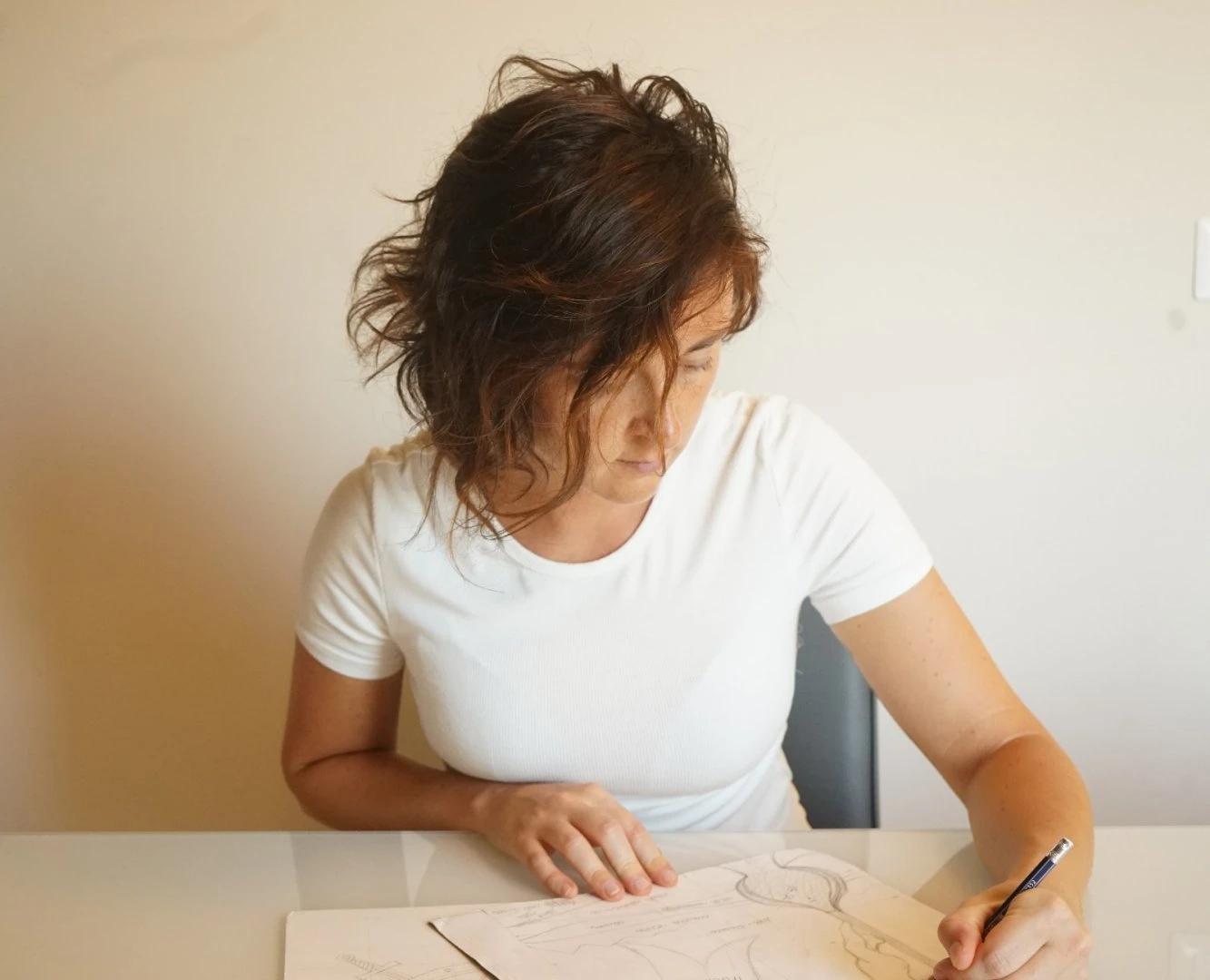
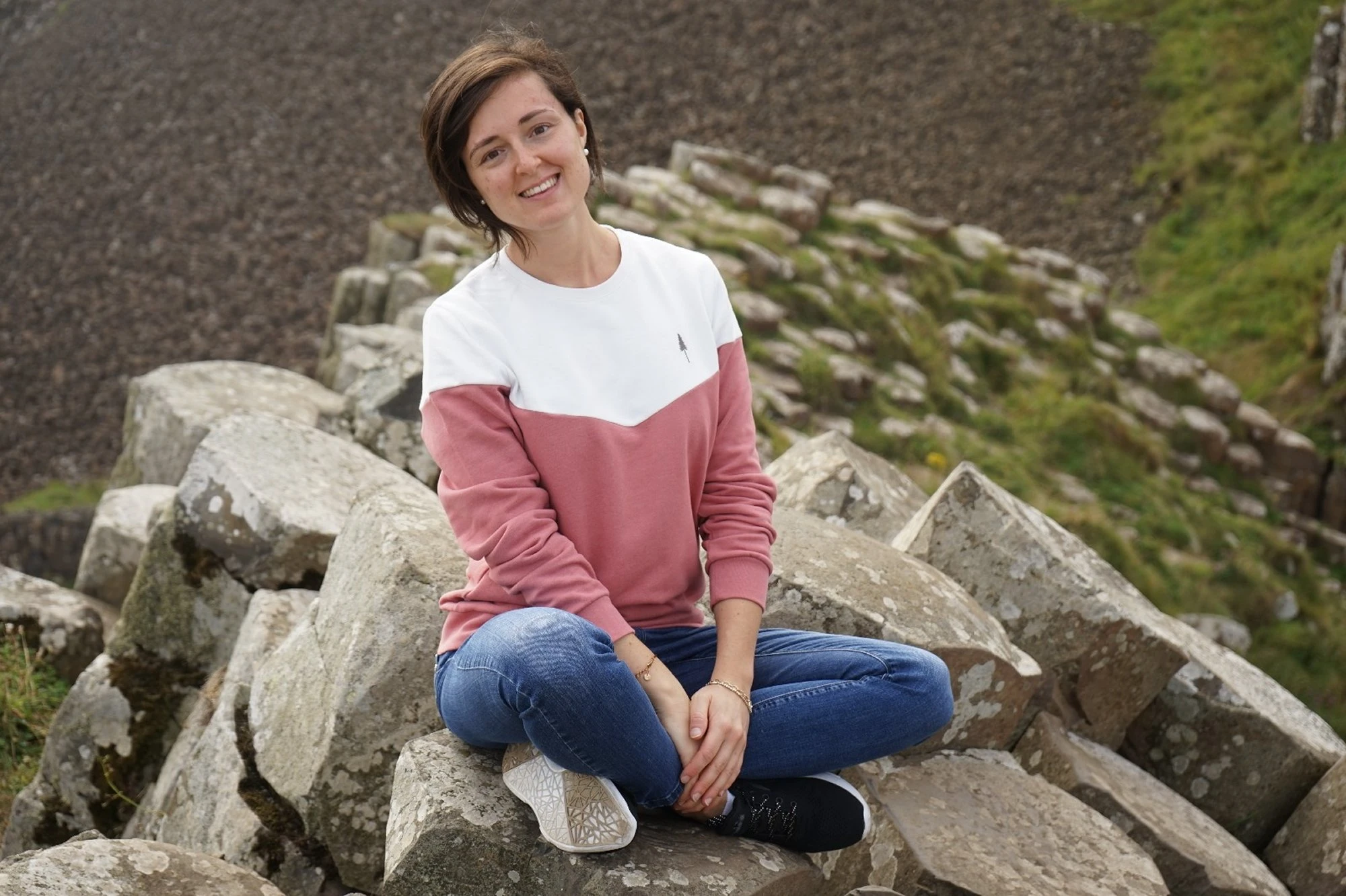
After the works created by Angela Bertiglia from the Moransengo borgo, eco-designer Chiara Tortia, from the Torre borgo, was chosen to create the drappi for the 2024 and 2025 editions.
Her deep connection with the local area has always made her particularly attentive to environmental, social and economic sustainability.
Chiara studied design at the Polytechnic University of Turin and later specialised in systemic design, an approach to design in which sustainability is considered an integral part of the project from the beginning.
She created Linfa Ecodesign, through which she develops various sustainability-focused projects connected to the local area.
She also brought her personal approach to the design of the Palio drappi.
Two drappi are created: one is the official drappo, which remains in the parish church, while the other is awarded to the winning borgo.
Throughout the history of the Palio, the drappi have been designed by local artists and have carried a strong historical and emotional meaning for the entire community.
Palio degli Asini Cocconato 2026: Dates and Program
The 57th edition of the Palio degli Asini in Cocconato will take place on Saturday 26 and Sunday 27 September 2026.
The main events will take place on Sunday 27 September, when the historic centre becomes the heart of the celebration.
Medieval Fair: 19 and 20 September 2026
The Palio atmosphere actually begins the previous weekend with the Medieval Fair, taking place on Saturday 19 and Sunday 20 September.
Along the historic streets of Cocconato, stalls, taverns and scenes inspired by medieval life recreate the atmosphere of another era.
On Saturday, the celebration begins in the late afternoon and continues after sunset, while on Sunday the fair continues throughout the day.
This is one of my favourite ways to experience the atmosphere of the Palio before the race itself takes place.
The village changes completely and, for a few hours, it genuinely feels as though you have stepped into another time.
Saturday 26 September: The Eve of the Palio
Saturday evening is dedicated to the eve of the Palio.
The program includes the historical parade of the nobles and the Captain of the Palio, leading visitors towards the Cortile del Collegio, where the medieval banquet will take place.
According to the 2026 program, the parade starts at 7:00 pm, followed by the medieval dinner at 8:00 pm.
Sunday 27 September: The Palio
Sunday is the day everyone has been waiting for.
From 2:00 pm, the village comes alive with the historical parade.
The seven borghi walk through the centre with their costumed participants and their own historical representations.
Then, at 4:00 pm, it is time for the donkey race.
Airali, Brina, Colline Magre, Moransengo, San Carlo, Torre and Tuffo will compete for the 2026 Palio drappo.
The winning borgo is not the only one recognised. The festival also rewards the quality of the historical reenactment, with prizes connected to the parade and historical characters.
And when you watch the costumes, scenery and performances, you quickly realise how much work goes into these few hours of celebration.
Behind the festival are months of preparation, rehearsals, meetings, ideas, discussions and countless hours volunteered by local residents.
Why Visit the Palio degli Asini in Cocconato?
For the people of Cocconato, the Palio is much more than an event.
It is a celebration that brings different generations together, a moment when the entire village comes together and recognises itself in a shared tradition.
For visitors, on the other hand, it is an opportunity to experience a deeply local way of celebrating history and community.
This is not a historical reenactment created solely for tourists.
You can feel it in the involvement of the borghi, in the cheering, in the attention paid to costumes and in the passion with which every group defends its colours.
If you want to watch the historical parade and the race, you can choose the stands in Piazza Giordano or look for a spot overlooking the square.
Another particularly appealing option is the terrace of Cannon D’Oro, the restaurant overlooking the square and the finish line.
In a world where many traditions risk becoming increasingly similar, the Palio degli Asini in Cocconato preserves something precious: the ability of a community to come together around its own history.
It is not simply folklore.
It is identity, memory, competition and, above all, the desire to be together and laugh together.
How to Get to the Palio degli Asini in Cocconato
Cocconato is easy to reach by car and can also be accessed by public transport.
By car
By car or motorcycle, the easiest route is along the A21 Turin–Piacenza motorway. Take the Asti Est exit and continue towards Casalborgone and Cocconato along the SS458.
The journey takes approximately 50 minutes from Turin, around 25 minutes from Asti and just over an hour and a half from Milan, depending on traffic.
By train
The closest railway stations are Asti and Chivasso.
From either station, you can continue towards Cocconato using local bus connections.
Additional shuttle services may be organised for the Palio, so it is worth checking the latest information from the Municipality of Cocconato or the local Pro Loco before travelling.
By bicycle or e-bike
For cycling enthusiasts, reaching Cocconato by bike can turn the visit into a broader Monferrato cycling experience.
The surrounding roads offer beautiful views across vineyards and rolling hills, although some sections include challenging climbs.
An e-bike makes the journey considerably more accessible, especially if you are not used to cycling in hilly terrain.
Where to park
During the Palio degli Asini, the historic centre becomes part of the event and parking is not allowed in Piazza Giordano, where the race finishes.
It is therefore best to leave your car in one of the designated parking areas outside the centre and continue on foot.
One of the available parking areas is near the Cocconato d’Asti cemetery, accessible from the SP18.
From there, the historic centre can be reached on foot in just over five minutes.
Before travelling, however, I recommend checking the latest traffic restrictions and parking arrangements for the 2026 edition.
Palio degli Asini Cocconato 2026: Is It Worth Visiting?
I would say yes, especially if you are looking for a Monferrato experience that goes beyond simply visiting a beautiful Italian hilltop village.
The Palio allows you to see Cocconato from a completely different perspective: not just as a village of rolling hills, wine and good food, but as a community capable of turning its history into a shared celebration.
My advice is not to come just for the donkey race.
If you have the time, dedicate at least a full day to the Palio. Even better, arrive earlier for the Medieval Fair on 19 and 20 September or join the events on the eve of the race.
Because the real experience of the Palio does not last only as long as the race.
It begins much earlier, when Cocconato slowly starts to become medieval again.



Leave a Reply