
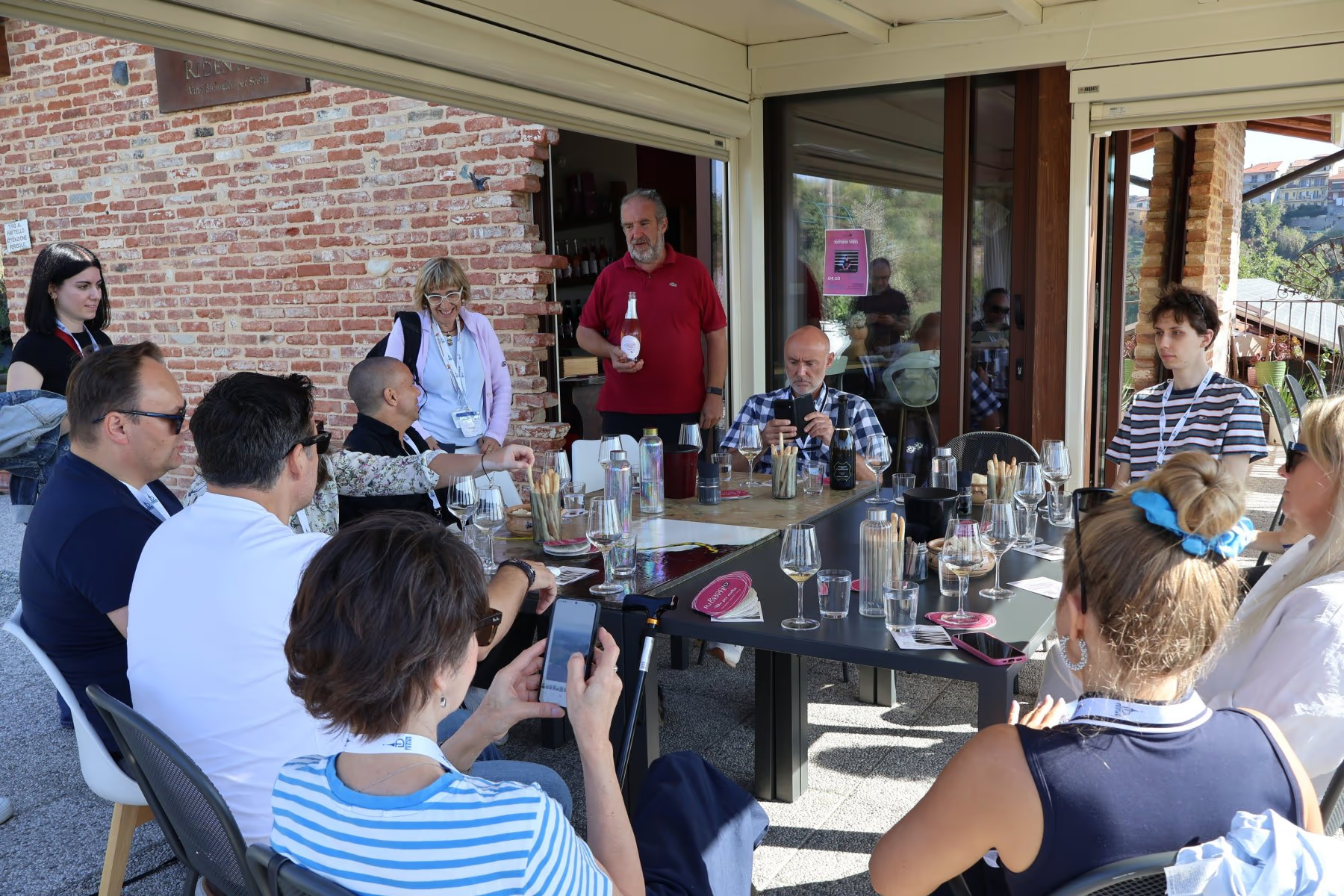
What happens behind a journey, even before someone boards a plane and chooses a destination?
There are people, relationships, meetings, phone calls and itineraries to build. There are hotels, restaurants, wineries, museums, transport providers, guides and tour operators. And above all, there are many different professionals who need to learn how to tell the story of a destination with a voice that is as consistent as possible.
This is the side of Piedmont tourism we had the opportunity to see up close when we took part in “Torino for Poland – Taste, Culture & Business Experience”, the first international educational trip organised by Destination Torino for the Polish market.
We were invited to accompany a delegation of Polish travel agents on their journey through Monferrato, with a task that comes naturally to us: visually documenting the experience and telling the story of what happens when two territories meet.
But this time, we photographed something that normally remains unseen.
The work behind a destination.
From Lower Silesia to Piedmont: the journey begins at the table
Our involvement in the project had already begun with the arrival of the institutional delegation from Lower Silesia, which came to Piedmont bringing not only its representatives, but also a taste of its identity.
Wines, cheeses, honey and fermented products became the most immediate way to introduce a region.
We listened to local producers talk about their products with a passion that felt very familiar to us.
Because, in the end, talking about a territory through what people eat and drink is one of the most powerful ways to make people discover it.
On one side, Lower Silesia was presenting its own local excellence. On the other, Piedmont was ready to do the same.
And around that table, we began to see the real scale of the project: not simply an educational trip, but a meeting between entire tourism supply chains.
When tourism becomes teamwork
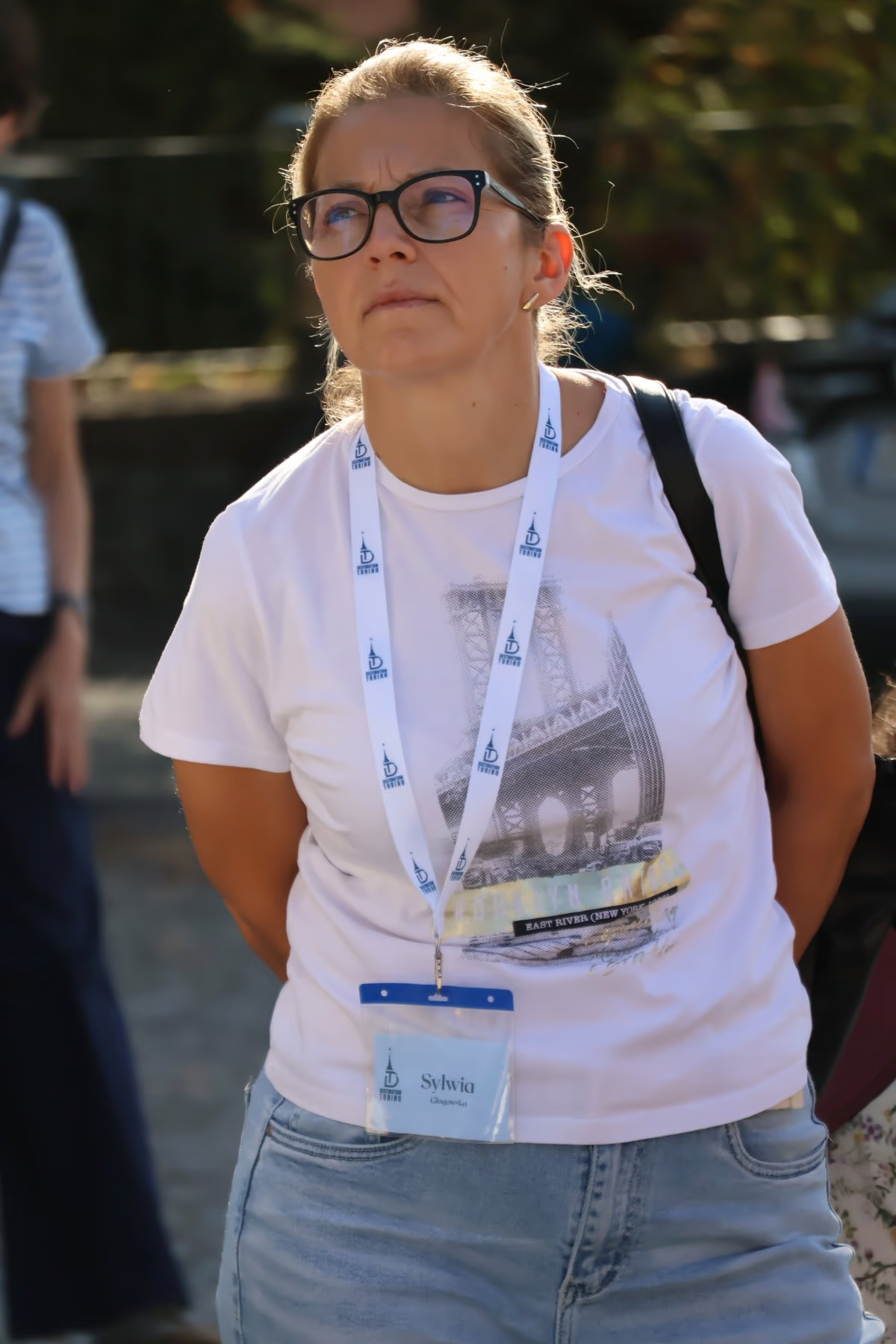
Many different professionals came together around the project: travel agents and tour operators, representatives of Turin Airport, hospitality businesses, food and wine operators, organisers and, of course, bloggers and content creators like us.
Destination Torino, a consortium promoted by Federalberghi Torino, has brought together more than 100 members, including accommodation providers, travel agencies and tour operators, venues, event organisers, transport companies, restaurants and other local businesses. Together, they represent more than 8,500 beds across the province of Turin.
Numbers like these help explain something important:
A destination is not a place. It is a network.
And the more we observed it from the inside, the more this was the aspect that interested us.
We are used to telling a journey from the perspective of the traveller: we choose a place, explore it, photograph what catches our attention and try to convey its atmosphere.
Here, instead, we had the chance to look from the other side of the lens.
We saw the behind-the-scenes work required to connect international demand with local supply, build B2B relationships and bring together experiences that, taken individually, tell only one part of the story.
It is a work of weaving.
And this time, we found ourselves inside that fabric too.
From Poland to Turin, and from Turin to Piedmont
This educational trip for Polish tourism professionals was created for a very concrete reason: to strengthen the connection between an international market and a destination with a great deal to offer.
The programme brings 11 Polish tour operators and travel agencies to Piedmont and combines experiential visits with B2B meetings with local tourism professionals.
In Turin, the programme includes the Egyptian Museum, Royal Palace, MAUTO, Casa Martini, Pinacoteca Agnelli and Museo Lavazza, together with workshops, professional meetings and food experiences.
But the project does not stop in Turin.
Because its real potential lies precisely in connecting the city with the territory that surrounds it.
Turin as the gateway. Piedmont as the experience.
And this is where Monferrato and the Langhe come into the picture.
Monferrato: a territory to experience, not simply cross
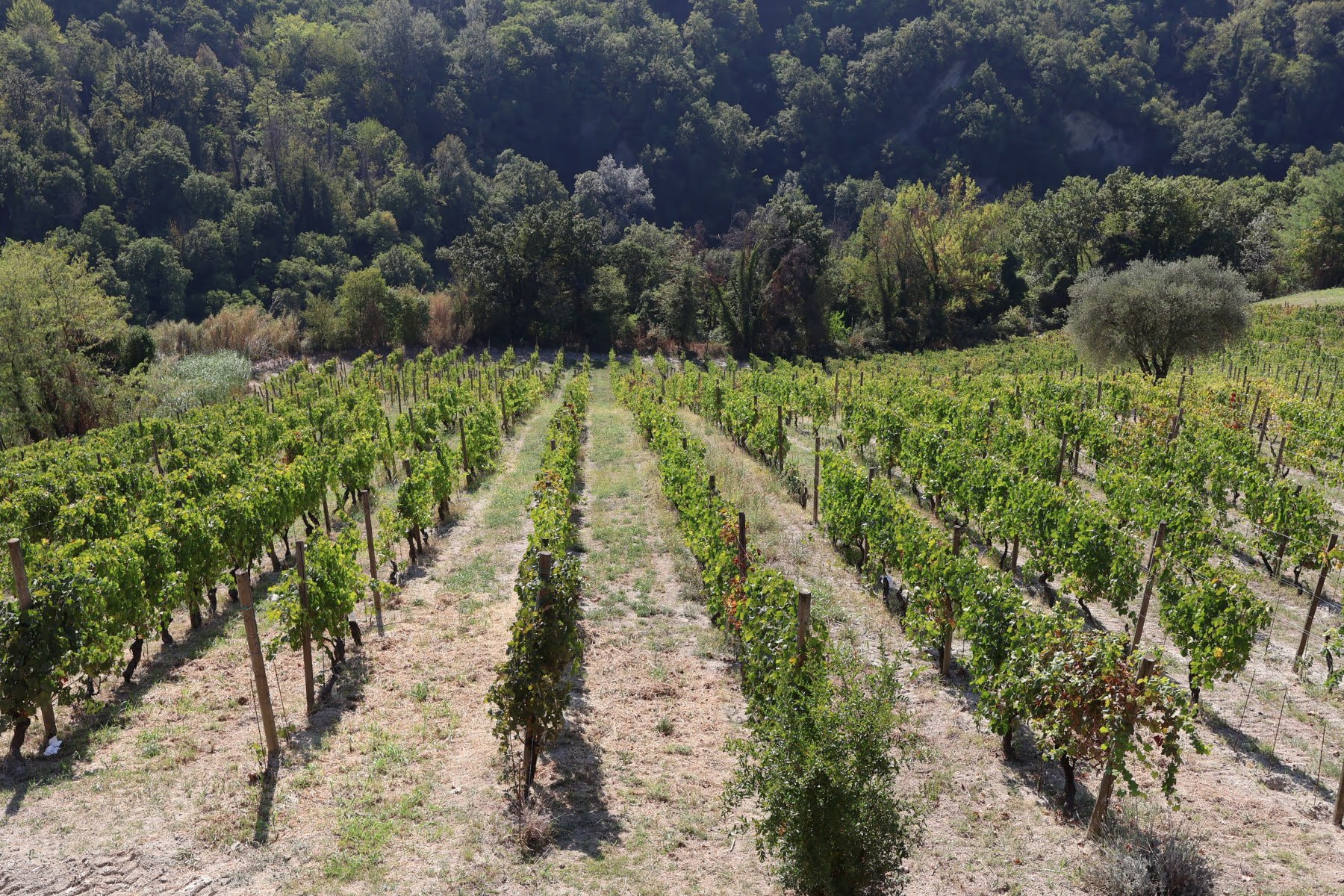
Our first stop of the day was Cocconato d’Asti, a beautiful hilltop village in Monferrato, less than an hour from Turin.
Here, the Polish operators had the opportunity to discover some of the experiences that make this area interesting for international tourism.
They tasted local wines and products, visited hospitality businesses and discovered experiences they could potentially offer their clients, from vineyard picnics to e-bike tours.
But above all, they experienced the rhythm of this territory.
Sitting on a natural terrace in the breeze of the Riviera Monferrina, looking across the hills where woods and vineyards alternate, and tasting local products.
This combination of landscape, food and wine, and quality time is what can turn a simple visit into an experience that belongs in a carefully designed Piedmont tourism itinerary.
And there is another possibility that comes from knowing the territory from this perspective: choosing to stay longer.
The project also involves the real estate sector, showing tourism professionals the possibility of buying a property in Monferrato, either to create a private home or to develop a business.
It is another way of looking at a destination: not simply as a place to visit, but as a territory in which you might imagine a future.
The Langhe: a landscape shaped by wine
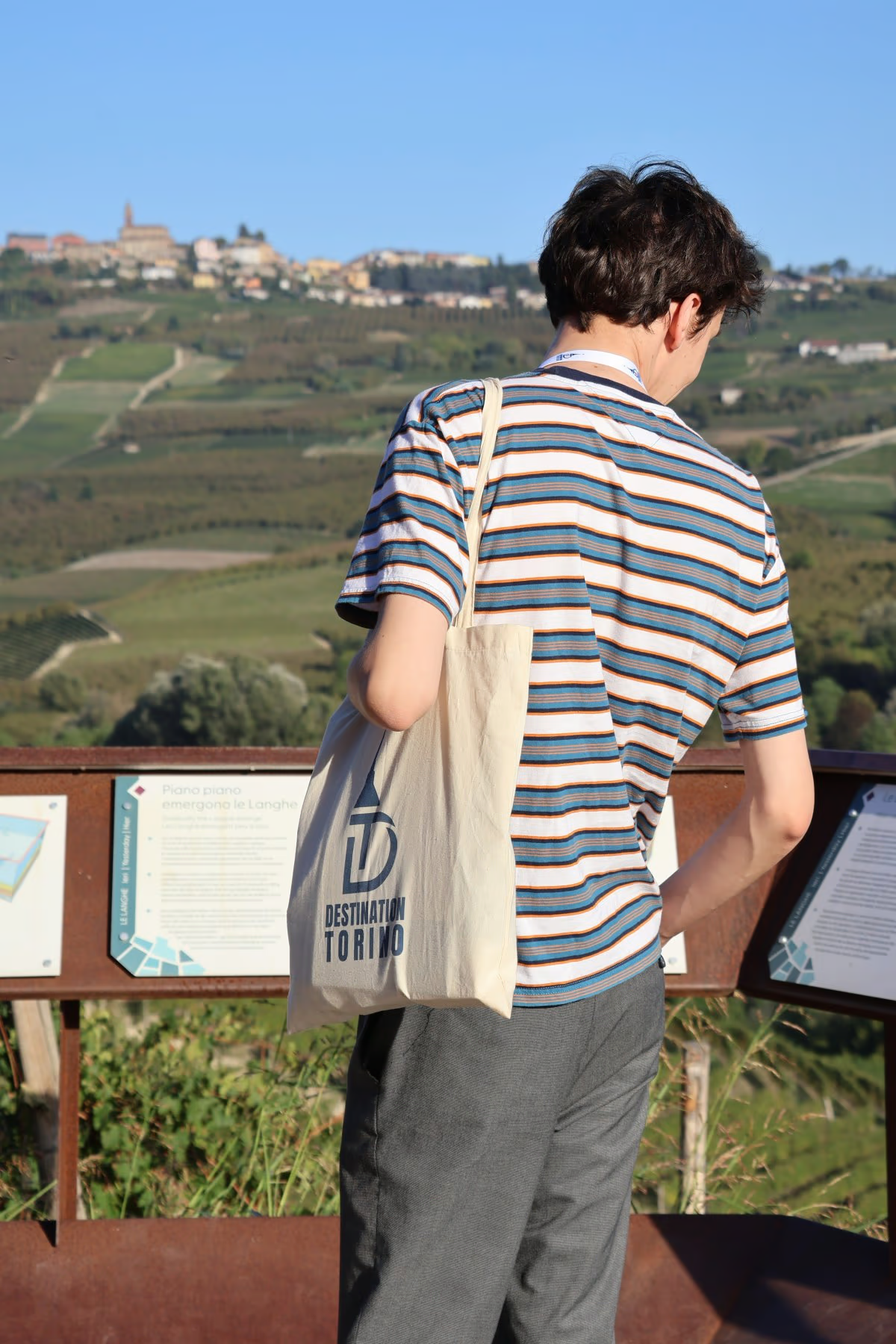
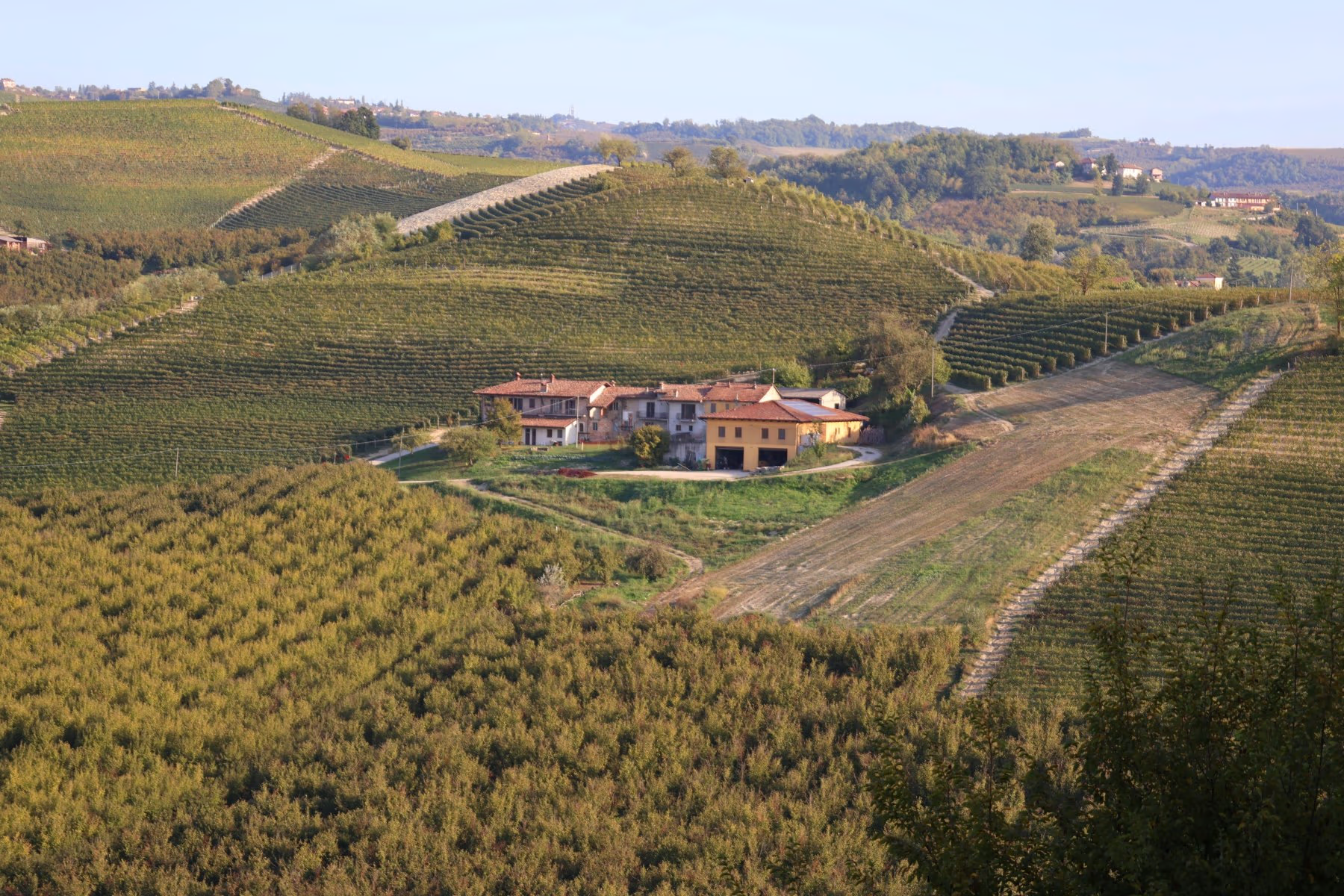
From the hills of Monferrato, we moved on to the Langhe, reaching Grinzane Cavour Castle, one of the most iconic places in Piedmont’s wine landscape.
Here, the Polish operators were able to visit the castle and learn more about the history of this territory, but above all, to stop and take in one of its most spectacular views:
vineyard-covered hills stretching towards the horizon.
And, naturally, wine could not be missing.
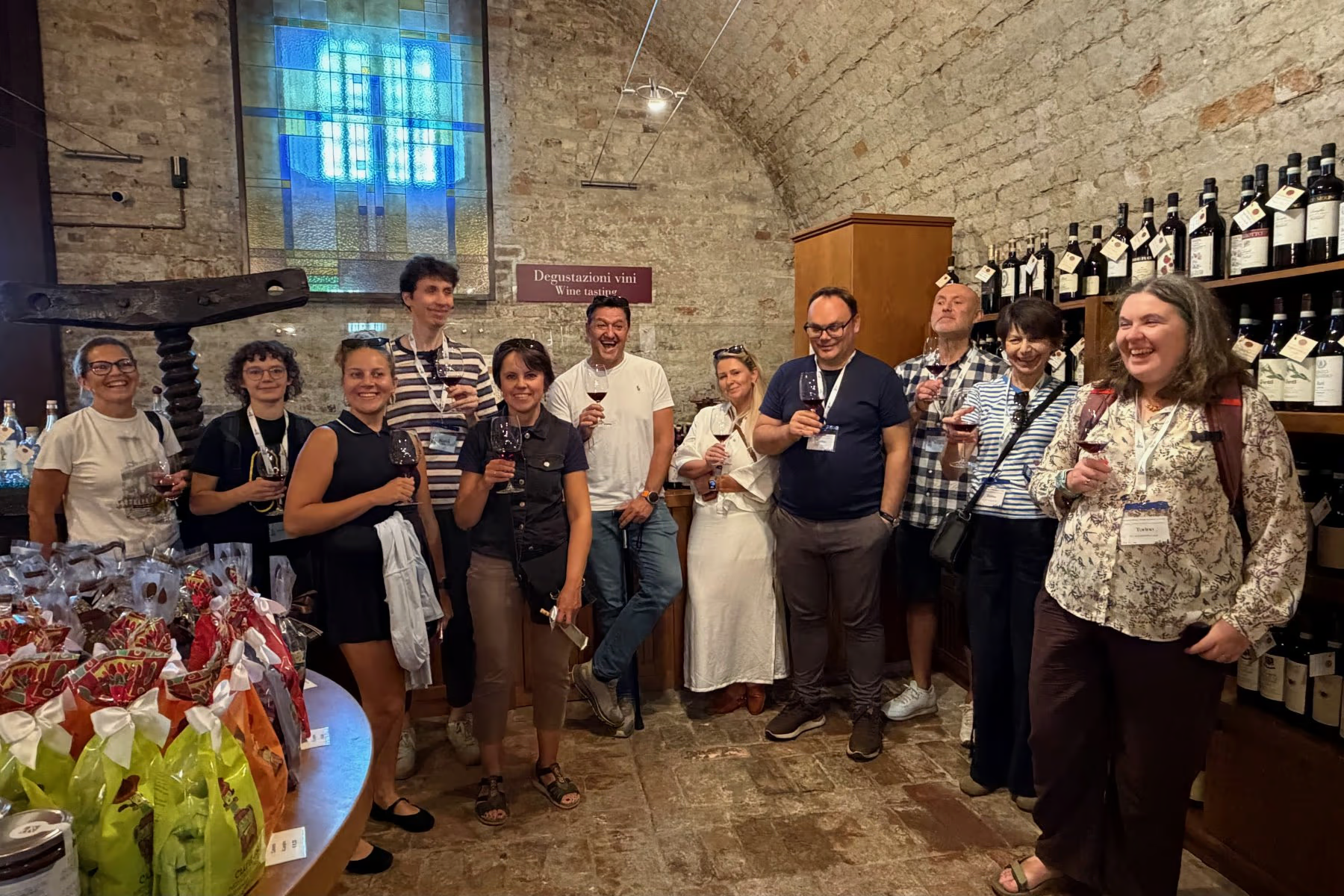
The visit included a Barolo wine tasting, an experience that brings together what you see and what you taste: the landscape of the Langhe, the culture of winemaking and one of Piedmont’s most internationally recognised wines.
For the Polish operators, it was therefore an opportunity to discover a tourism proposal in which history, landscape, wine and gastronomy coexist within the same experience.
Another piece to add to itineraries for travellers who want to discover Piedmont through its different territories and local excellence.
The final stop: Casa Martini, where vermouth becomes an experience
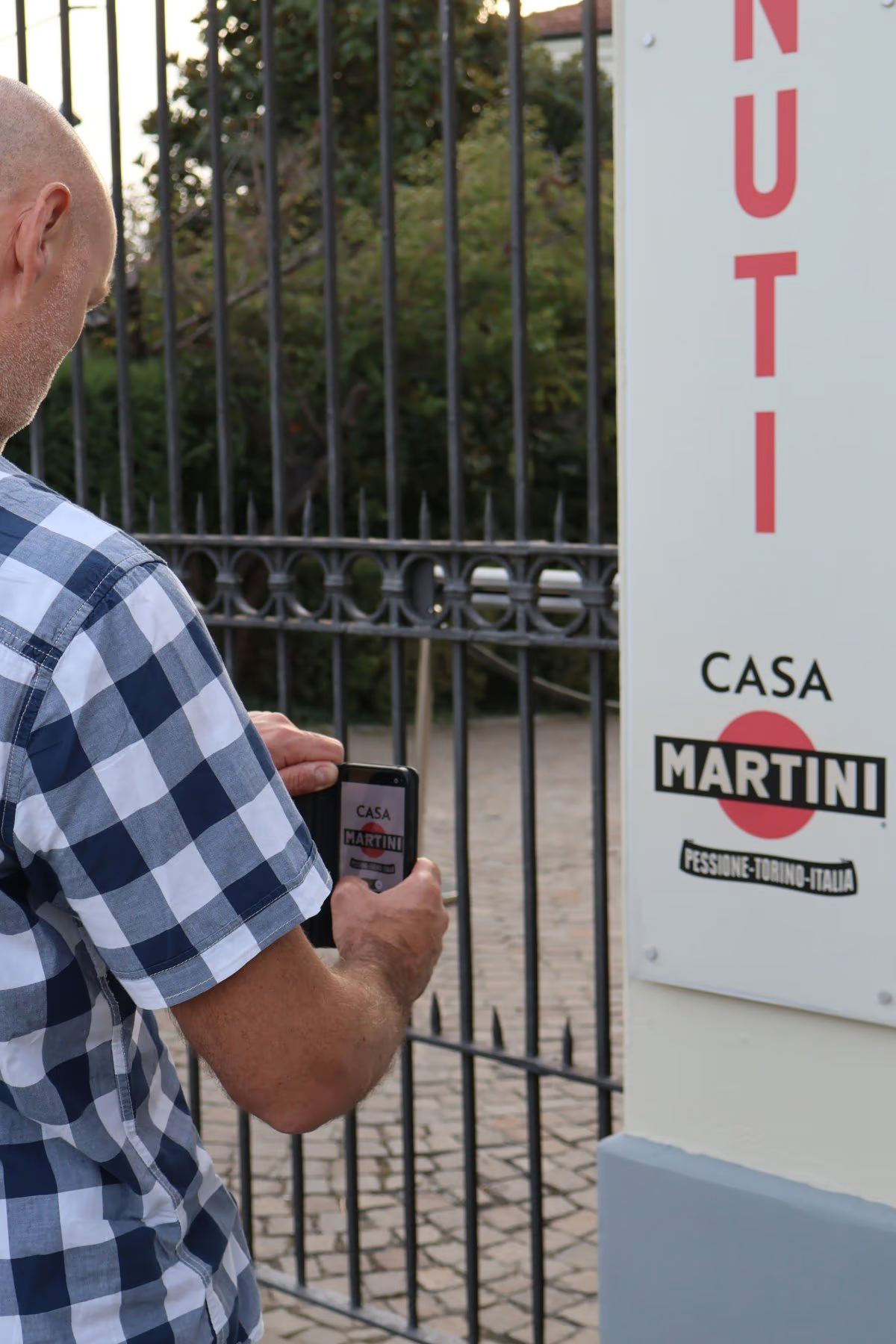
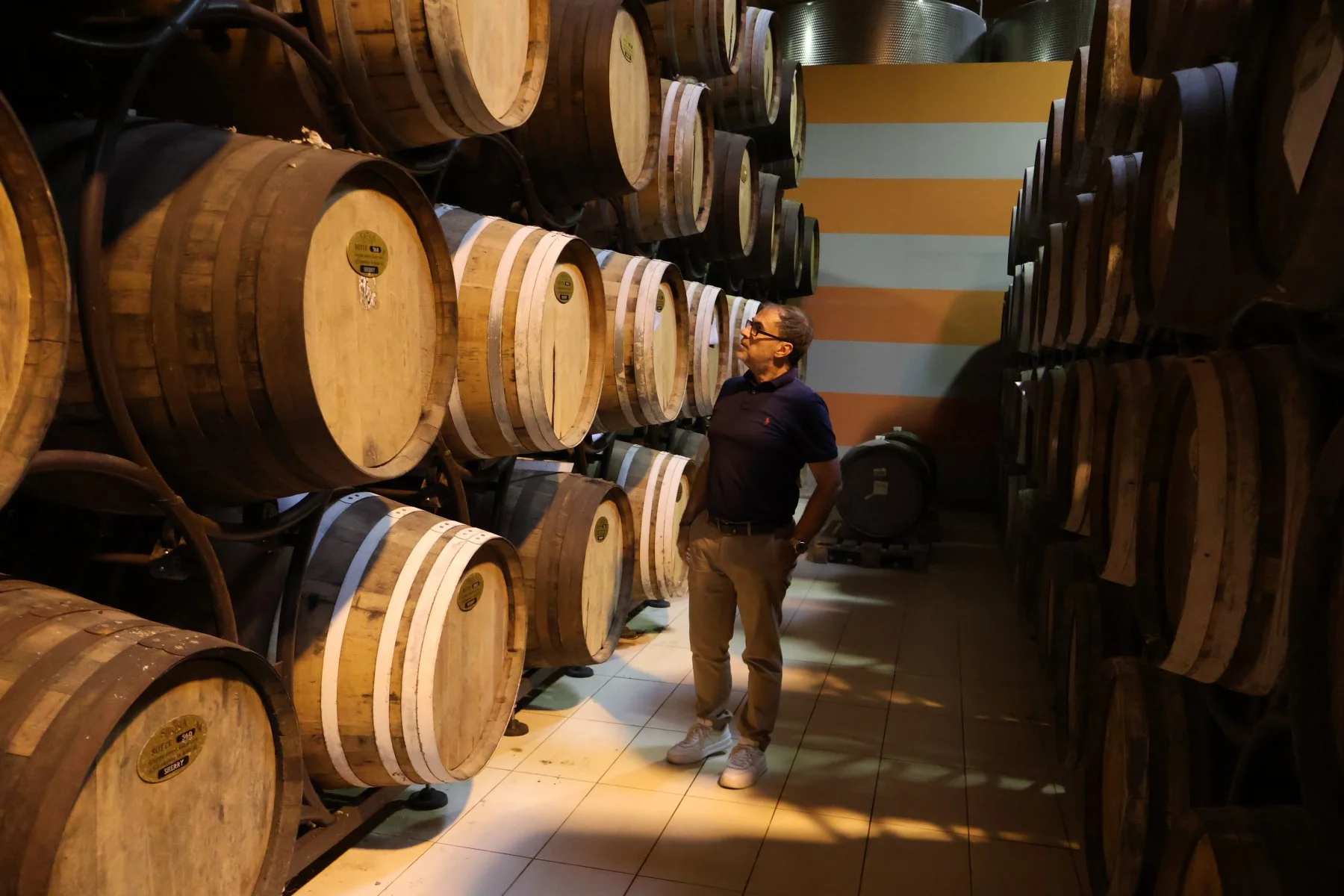
From the hills of the Langhe, we headed back towards Turin for the final stop of the day: Casa Martini in Pessione, where the history of one of Piedmont’s best-known brands becomes an experience to live.
The Polish operators began with a visit to the Martini Museum, retracing the history of the brand and discovering how vermouth has become an icon of Italian lifestyle over time.
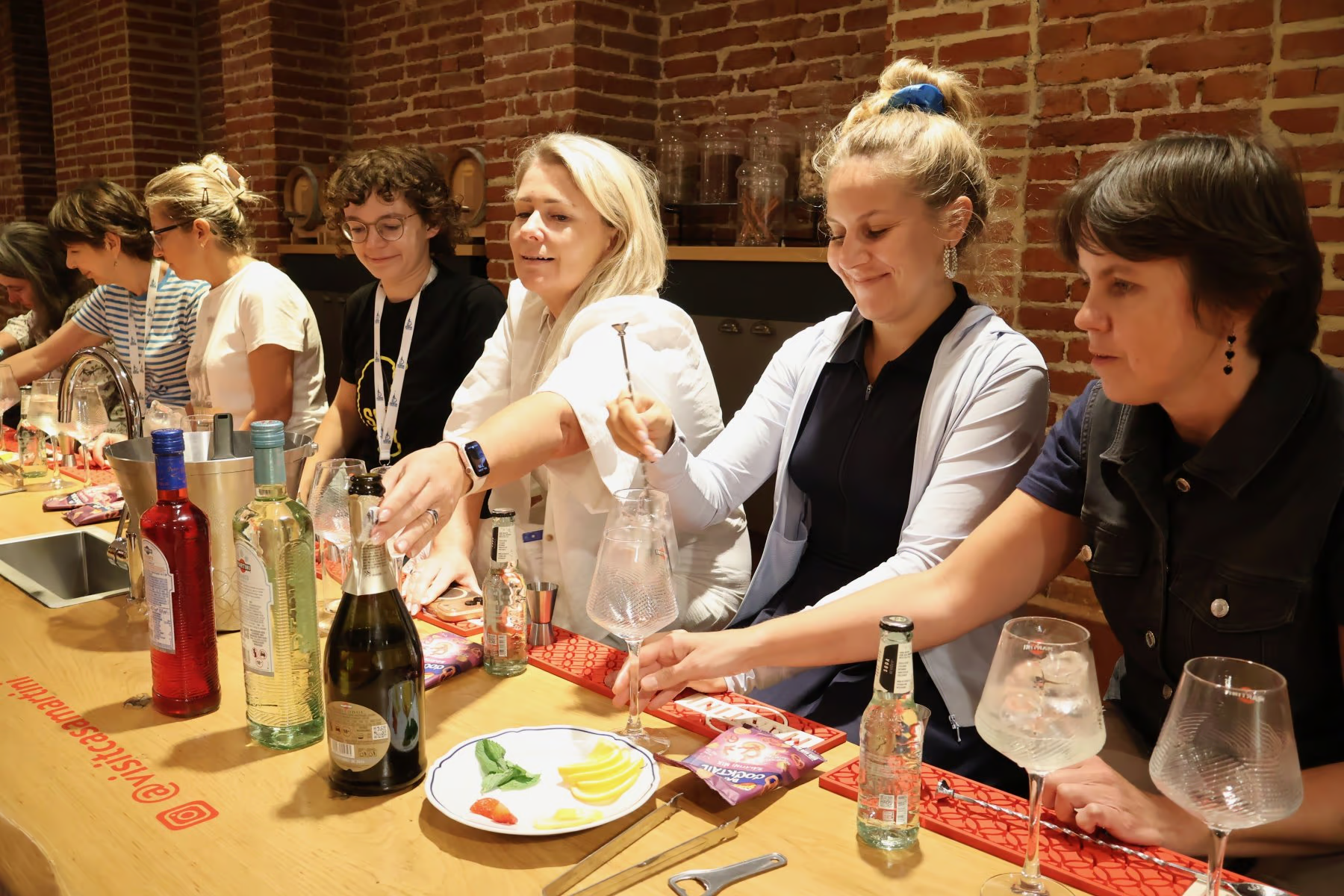
Then came the chance to get hands-on with the Cocktail Academy.
Guests could create their own cocktails, both alcoholic and non-alcoholic, experimenting directly with the world of mixology and the taste of vermouth, including MARTINI Vibrante in the alcohol-free version.
The day ended with an apericena on the Martini terrace, in an atmosphere that offered another perspective on Piedmontese hospitality.
This stop also says something important about tourism: a product can become an experience.
The history of a brand, the culture of vermouth, mixology and hospitality can become a concrete activity that a tour operator can discover, experience and eventually propose to their clients.
Turin and Poland: shortening the distance
There is another element we cannot ignore when talking about international tourism: the possibility of actually getting here.
Air connectivity is one of the pillars of the project.
The Destination Torino press release highlights the direct connections with Poland and, in particular, Ryanair routes to Kraków and Warsaw and Wizz Air routes to Katowice and Wrocław.
The educational programme itself also underlines the importance of connectivity between Poland and Turin in developing new leisure and MICE tourism flows.
Because an international destination also needs an accessible gateway.
And Turin, from this point of view, can become the starting point for discovering much more than the city itself.
Destination Torino: building a destination together
It was Destination Torino that created this meeting between Piedmont and Poland, bringing together tourism operators, hospitality businesses, food and wine experiences and professionals from across the industry.
We had the privilege of taking part as content creators and bloggers, documenting the journey and observing it, this time, from a different perspective.
We are used to travelling, searching for places, experiences and stories, and photographing what happens in front of our eyes.
Here, we were able to see what happens before that: the work, relationships and collaboration needed to build a destination and present it to an international market.
And we could not help noticing the Polish operators taking notes, asking questions, tasting, observing and exchanging ideas at every stop.
They were not simply visiting Piedmont.
They were trying to understand how to turn what they were experiencing into experiences they could offer to their own clients.
And perhaps this is what made this journey particularly interesting for us.
Because behind every destination that looks effortless to the traveller, there is a network of people working to make that experience possible.




Leave a Reply