

Scilla and its enchanting district of Chianalea are among the most picturesque villages along the Costa Viola, a symbol of authentic Calabria where history, myth, and breathtaking landscapes blend seamlessly.
Visiting these villages means stepping into a calming atmosphere where locals still greet each other by name, where conversations flow naturally in narrow alleys, and where colorful houses open directly onto the Strait of Messina.
This stretch of coastline is famous not only for its natural beauty but also for the ancient myth of Scylla and Charybdis, which continues to fascinate travelers from all over the world.
What to See in Scilla
Scilla is one of the most scenic villages on the Costa Viola, perched dramatically above the Strait of Messina.
Why is it called Costa Viola?
The Costa Viola is the coastal stretch between Villa San Giovanni and Scilla. Its name comes from the violet shades that appear at sunset, when light blends sea and mountains into deep blue and purple tones.
The town is divided into three main areas:
- Marina Grande, the sandy beach area
- The historic center with Ruffo Castle
- Chianalea, the ancient fishing village built directly on the sea
Marina Grande is the most popular beach area, with sand and pebbles, beach clubs, restaurants, and cafés—perfect for a relaxing day with a stunning view of the castle above.


Ruffo Castle of Scilla
Dominating the entire promontory, Ruffo Castle of Scilla dates back to Norman times and once served as a strategic military fortress.
Entry is through a stone bridge crossing the moat, leading to a vaulted entrance topped by the Ruffo family crest. The castle is open daily, and the ticket costs around €2.
Inside, a corridor leads to an inner courtyard, from where a staircase climbs to the noble halls of the ancient residence.
The Statue of Scylla and the Strait Viewpoint
A short walk uphill from the castle brings you to one of the most iconic viewpoints in Scilla: the terrace with the statue of Scylla, depicted as a sea creature.
This is one of the most photographed spots in the village and the perfect place to watch the sunset over the Strait of Messina.


The Strait of Messina Pylons
Looking out across the sea, you cannot miss two massive steel pylons rising on both sides of the strait.
They are part of an old high-voltage power line connecting Calabria and Sicily. One stands in Torre Faro (Messina side), the other in Santa Trada (Calabria side).
They became globally known in 2024 when slackliner Jaan Roose, part of the Red Bull team, attempted a record walk across the 3.5 km cable suspended over 200 meters above sea level. Although he slipped near the end and the record was not validated, the attempt remains legendary.
Chianalea: the village on the sea
From Marina Grande, you can reach Chianalea on foot through a tunnel carved into the rock.
Once you exit, you find yourself in a small harbor surrounded by narrow pedestrian alleys, where colorful houses sit directly on the water.
This is Chianalea, often called the “Little Venice of the South”—although its identity goes far beyond any nickname.
It is a fishing village filled with cats, sea views, quiet corners, and poetic details that need no filters.
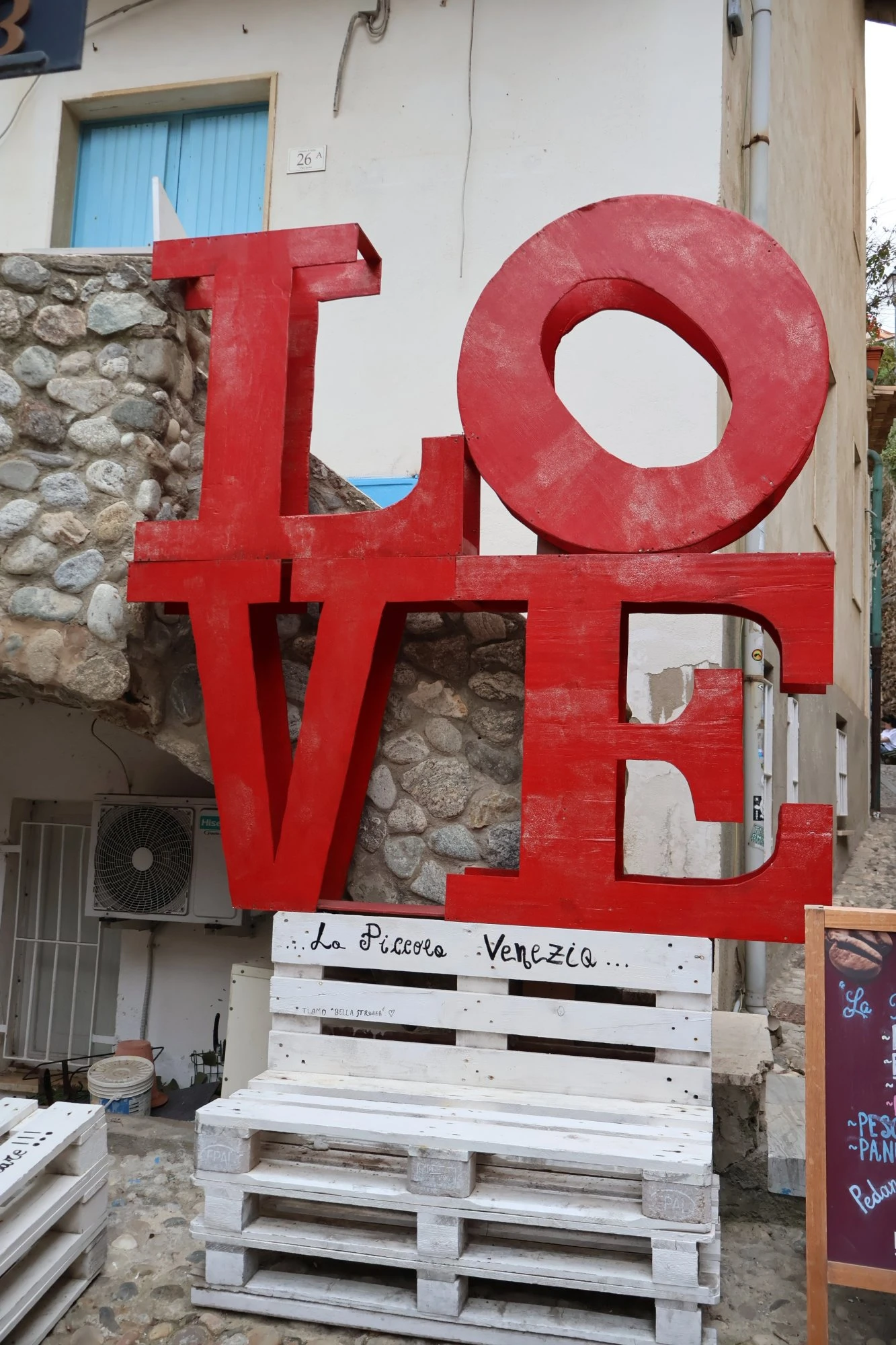
Walk freely through its alleys, look for the “LOVE” sign, and find the bench overlooking the sea—a reminder that light and joy come from within.
Shopping in Chianalea
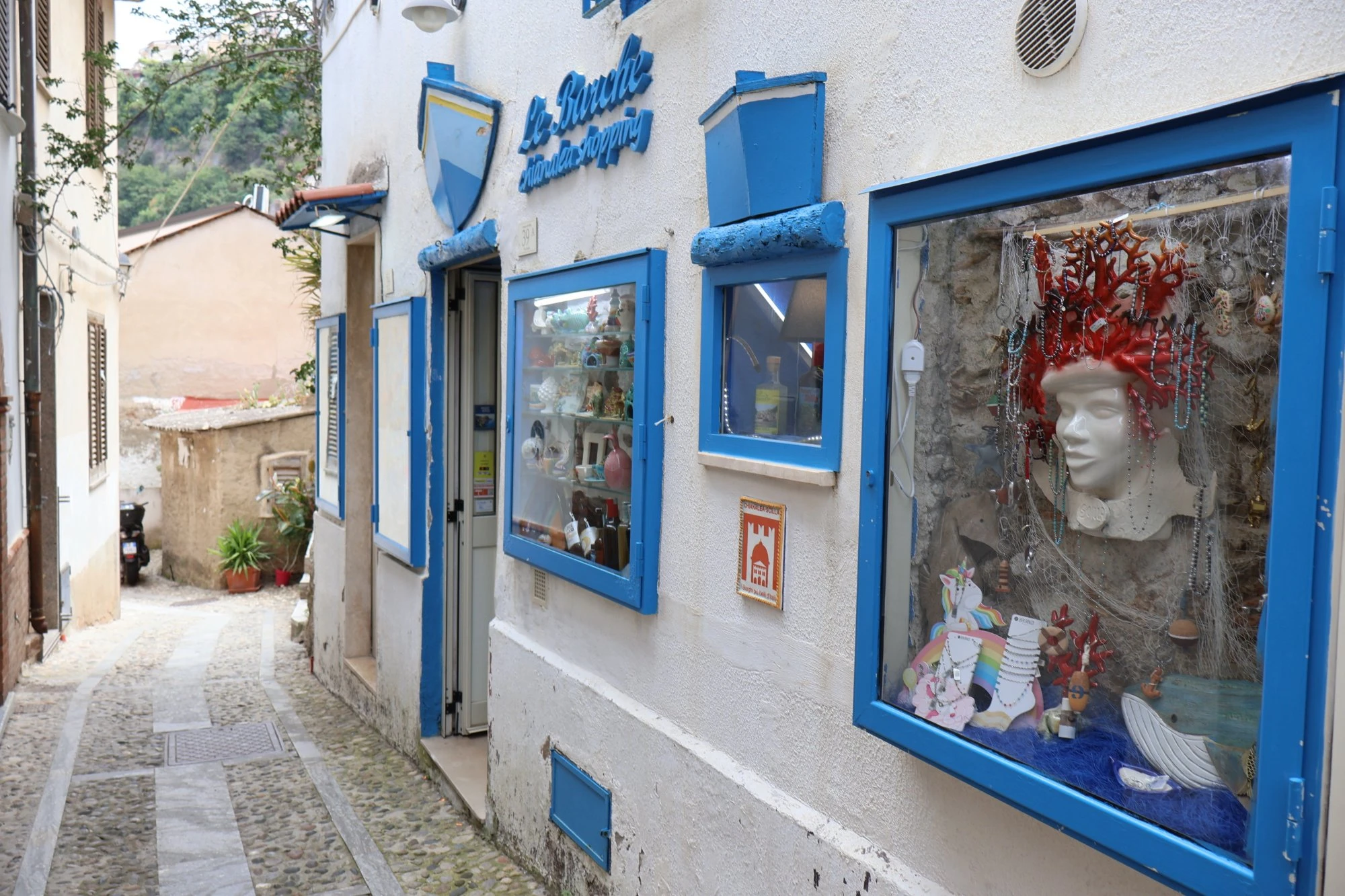
If you want a meaningful souvenir, visit Le Barche Chianalea Shopping, a small local shop where you can find handmade sea-inspired jewelry.
Beyond the objects, what stays with you is the story of the family behind it—migration, distance, and the emotional return of generations during summer holidays.




Where to Eat in Chianalea
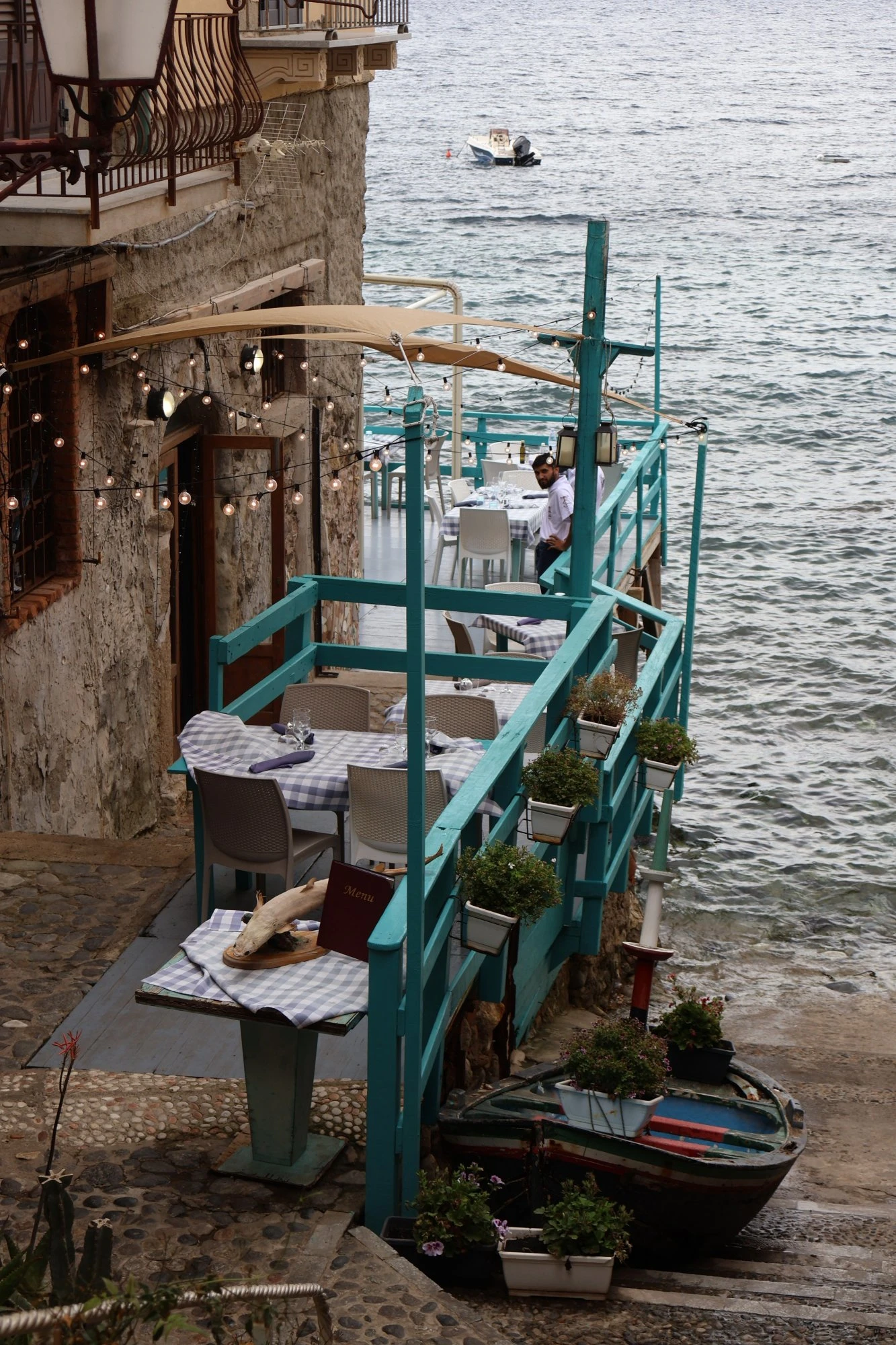
One of the best experiences in Chianalea is dining on terraces overlooking the sea, listening to the waves while enjoying fresh seafood.
The signature dish of Scilla is swordfish, thanks to the rich plankton-filled waters of the Strait of Messina, which give the meat a unique texture and flavor.
A great local stop is Civico 5, known for its street-food-style sandwiches filled with traditional Calabrian flavors, especially the swordfish sandwich.
Per approfondire, leggi il nostro articolo dedicato Civico 5: l’esperienza gastronomica imperdibile a Chianalea.
Where to Park in Scilla and Chianalea
The streets of Scilla and Chianalea are narrow and often inaccessible by car.
The best option is to park near Scilla train station, just a few minutes’ walk from the historic center. It is paid parking but very convenient.
Alternative options include:
Chianalea parking along SS18 near the old tunnel area
San Giuseppe parking area (Via Annunziata, Chianalea side)
How to Get to Scilla
The nearest airport is Reggio Calabria Tito Minniti Airport.
From there:
- Rent a car and reach Scilla in about 30 minutes via SS18
- Or take a taxi
- Or reach Reggio Calabria city and take a regional train (about 20 minutes to Scilla)
The Myth of Scylla and Charybdis
Scylla and Charybdis are two mythological sea monsters rooted in ancient Greek tradition.
According to legend, Scylla was once a beautiful nymph transformed into a six-headed monster by a jealous sorceress. She lived in the cliffs where today the village of Scilla stands.
On the opposite side of the Strait of Messina lived Charybdis, a sea monster that swallowed and released water three times a day, creating deadly whirlpools.
Sailors were forced to choose between two dangers, giving birth to the expression “between Scylla and Charybdis,” still used today to describe an impossible choice between two risks.
We sailed on, in sorrow and distress,
along the narrow passage: Scylla on one side,
and on the other the terrible Charybdis,
who devoured the foaming waters of the sea.
[Homer, Odyssey, Book XII]
From this passage comes the expression “between Scylla and Charybdis”, still used today as a symbol of unavoidable danger and difficult choices—situations where one is forced to choose between two risks.
Today, Scilla Still Feels Like a Myth
Today, Scilla preserves the magic of its legend. With its cliffside castle, crystal-clear waters, and timeless atmosphere, it remains one of the most enchanting coastal destinations in southern Italy.
A place where myth, history, and nature still live side by side.



Leave a Reply