

Portugal, with its stunning coastal cities and record-breaking Atlantic waves, is also a true paradise for food lovers.
To enrich your next trip to Portugal, discover what to eat across iconic cities like Porto and Lisbon, including some hidden culinary gems and traditional drinks.
Portuguese cuisine is a full sensory experience, shaped by centuries of tradition and a wide variety of bold, comforting flavors.
From sweet to savory, traditional dishes are always rich in character—and most of them are absolutely worth trying at least once.
Ovos Moles from Aveiro: Traditional Portuguese Sweet
In the charming city of Aveiro, one of the most iconic sweets is Ovos Moles.
The name literally means “soft eggs,” which already gives you a hint of what to expect. And yes—it’s as rich as it sounds.
When we first tried them, we bought such a large bag that we nearly went into a sugar coma. Delicious, but definitely indulgent!
These small treats are made from egg yolks, sugar, and water, and their origins date back to the 16th century, when nuns from the Convent of Jesus in Aveiro created them.
The creamy egg mixture is wrapped in thin wafers shaped like seashells or small boats—an homage to the city’s strong connection with its canals.
They pair perfectly with coffee and, since 2008, Ovos Moles de Aveiro have held the EU Protected Geographical Indication (PGI) status.
Ovos Moles Workshop Experience
At Oficina do Doce in Aveiro, visitors can join a hands-on workshop to learn how to make Ovos Moles.
This 30-minute experience includes:
- The history of Ovos Moles
- Step-by-step production process
- Hands-on filling and shaping
- Final tasting session
The workshop is available in Portuguese and English and is often combined with a 45-minute boat tour on a traditional Moliceiro boat, exploring Aveiro’s canals.
A truly immersive cultural and food experience.

Ginjinha of Óbidos: A Medieval Sweet Liqueur
In the medieval town of Óbidos, you’ll find one of Portugal’s most beloved traditional drinks: Ginjinha (or Ginja liqueur).
This cherry-based liqueur is made by macerating sour cherries in alcohol with sugar, cinnamon, and spices.
Walking through the cobbled streets of Óbidos, it’s common to be offered a small tasting served in edible chocolate cups—an unforgettable combination that tastes like a mix between a cherry liqueur and a chocolate praline.
Its origins trace back to Benedictine monasteries in the region, where monks began producing the drink in the 17th century.
The cherries must infuse for at least one year, with no preservatives or additives.
Today you can find:
- Classic Ginjinha liqueur
- Versions with whole cherries inside
Both are worth trying—but the experience in Óbidos is truly special.


Pastel de Nata: The King of Portuguese Desserts
No discussion of Portuguese food is complete without the legendary Pastel de Nata, Portugal’s most famous pastry.
These creamy custard tarts, wrapped in flaky puff pastry, are loved worldwide—but the most authentic version comes from Lisbon.
In fact, the original recipe comes from the monks of the Jerónimos Monastery in the Belém district of Lisbon.
The story goes that monks used egg whites to starch their clothes and were left with surplus yolks, which they turned into pastries. When the monastery closed in 1834, the recipe was sold to the famous Fábrica de Pastéis de Belém, still producing them today since 1837.
The result?
A crispy top, creamy interior, and slightly caramelized flavor that makes them completely addictive.
You’ll find them all over Portugal, but Lisbon remains the ultimate place to try them.


Bifanas & Francesinha: Portuguese Street Food Classics
If you’re wondering where to eat in Porto, street food is a must.
Bifana: The iconic pork sandwich
The bifana is one of Portugal’s most beloved sandwiches.
It consists of:
- Thinly sliced pork marinated in garlic, white wine, paprika, and spices
- Served in a soft bread roll soaked in flavorful juices
It’s messy, juicy, and absolutely delicious.
We tried it at Conga – Casa das Bifanas in Porto, a legendary spot serving this sandwich since 1976. The atmosphere is chaotic but lively, filled with locals and great energy.
Francesinha: Porto’s ultimate comfort food
Also in Porto, you’ll find the Francesinha, a rich and indulgent sandwich made with:
- Bread
- Various meats and ham
- Melted cheese
- Fried egg on top
- Covered in thick sauce
It’s intense, heavy, and unforgettable—definitely not a light meal!
After two bifanas, we honestly couldn’t manage more, but it’s a must-try in Porto.
Bacalhau: Il Re dei Piatti tipici Portoghesi

IIf there is one ingredient that truly captures the soul of traditional Portuguese cuisine, it is bacalhau—salted cod. In Portugal, it is far more than just food; it is a cultural symbol that appears on family tables, in local taverns, and in countless regional recipes passed down through generations.
There is a famous saying that Portugal has a bacalhau recipe for every day of the year, and once you start traveling through the country, it does not sound like an exaggeration at all.
One of the simplest yet most unforgettable ways to try it is bacalhau na brasa—grilled cod. It arrives almost humbly on the plate, dressed only with olive oil, garlic, and parsley. But the first bite tells a different story: tender, flavorful, and perfectly balanced, it melts in your mouth in a way that feels both rustic and refined at the same time.
Then there is the beloved pastel de bacalhau, one of the most popular street food snacks in Portugal. You will find it in cafés, bakeries, and local bars, often served warm and eaten in just a few bites. Crispy on the outside and soft inside, it combines shredded cod with potatoes, onion, and parsley. It is simple, comforting, and deeply satisfying—the kind of food you grab while wandering through the streets without even thinking twice.
A more modern and surprising interpretation can be found at Casa Portuguesa do Pastel de Bacalhau, where tradition meets creativity. Here, the classic cod croquette is elevated with a molten heart of Serra da Estrela cheese, one of Portugal’s most iconic dairy products. The result is rich, indulgent, and completely unexpected.
Stepping inside one of their stores is part of the experience itself. It does not feel like a typical food shop at all. Instead, you are surrounded by dramatic chandeliers, elegant interiors, and a design that feels closer to a cultural space than a snack bar. It turns a humble ingredient like bacalhau into something theatrical and memorable, without ever losing its roots.
Even if you are not a big fish lover, this is one of those places in Portugal that is worth visiting anyway. Because here, bacalhau is not just a dish—it is a story of tradition, identity, and reinvention.
Sardinhas like a Star
Along the Atlantic coast, sardinhas (sardines) are much more than just a simple fish—they are a true symbol of Portuguese food culture and summer traditions in Portugal.
When the warmer months arrive, especially in coastal cities, the smell of sardines grilling over open flames fills the streets. Served fresh off the grill, usually with just a drizzle of olive oil and a pinch of salt, they are as simple as food can get—and yet incredibly flavorful. Often paired with rustic bread, salad, or boiled potatoes, sardines represent the essence of Mediterranean-Atlantic cooking: honest, fresh, and deeply connected to the sea.
In some regions of Portugal, sardines are also preserved in olive oil, tomato sauce, or vinegar, creating richer and more intense versions of this coastal staple.
But sardines in Portugal have also evolved into something surprisingly creative. One of the most iconic modern interpretations comes from Sardinha Portuguesa, a brand that transformed canned sardines into colorful collectible items. Each tin is beautifully designed with vibrant illustrations, often inspired by Portuguese culture, cities, and even historical moments.
You can even find tins dedicated to specific years of birth or major events, making them one of the most popular souvenirs from Portugal. What was once a humble preserved food has now become a design object—and yes, a delicious one too.
Port Wine: the iconic taste of the Douro Valley
No journey through food in Portugal would be complete without a glass of Port wine. Known locally as Vinho do Porto, this rich fortified wine is one of the country’s most famous exports and a true symbol of Portuguese tradition.
Its story begins in the breathtaking Douro Valley, where steep vineyard terraces follow the curves of the river. From there, the wine travels to the nearby cities of Porto and Vila Nova de Gaia, where centuries-old wine cellars line the riverbank, each one offering tastings and guided tours.
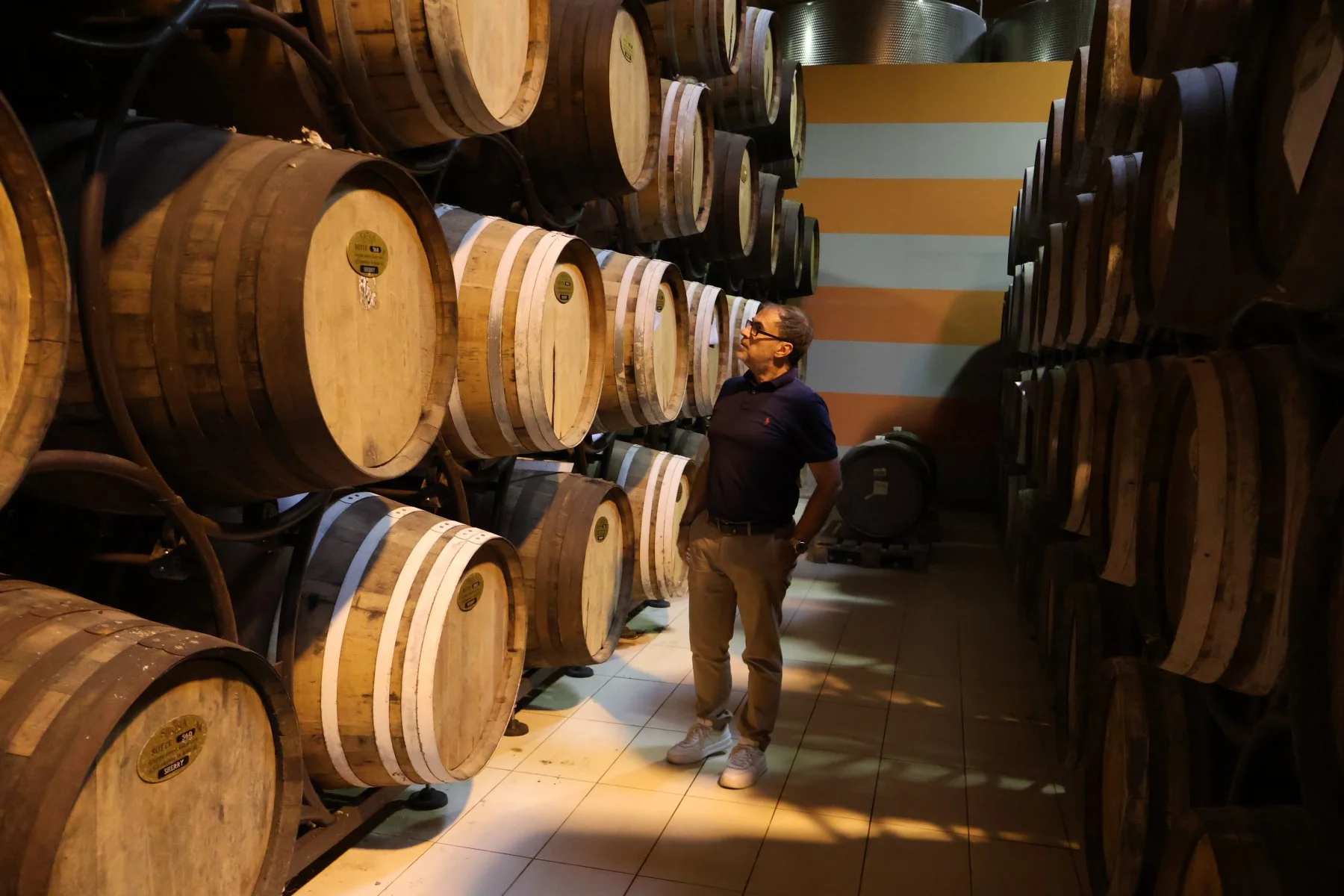
Crossing the bridge from Porto to Gaia feels like stepping into another world—one where time slows down and the air is filled with the scent of oak barrels and aged wine.
Inside the cellars, you are guided through the history and production of Port wine, from grape harvesting to aging and blending techniques that have been refined over generations.
The experience usually ends with a tasting session, where you can sample different styles, from ruby and tawny to more complex aged varieties.
We visited Taylor’s cellar, one of the most historic producers in the region, and it was one of the most memorable experiences of our trip. Sitting with a glass of Port wine while overlooking the city of Porto is one of those travel moments that stays with you long after you leave.
Port wine is not just something to drink—it is part of Portugal’s identity, shaped by landscape, tradition, and centuries of craftsmanship.

Final Thoughts on Portuguese Cuisine
Portuguese cuisine is a beautiful mix of tradition, simplicity, and bold flavor.
From bacalhau and bifanas to ovos moles and pastel de nata, every dish tells a story of history, culture, and passion for good food.
Each bite is a gateway into Portugal’s identity—authentic, warm, and unforgettable.
All that’s left to do is travel and taste it yourself.




Leave a Reply