

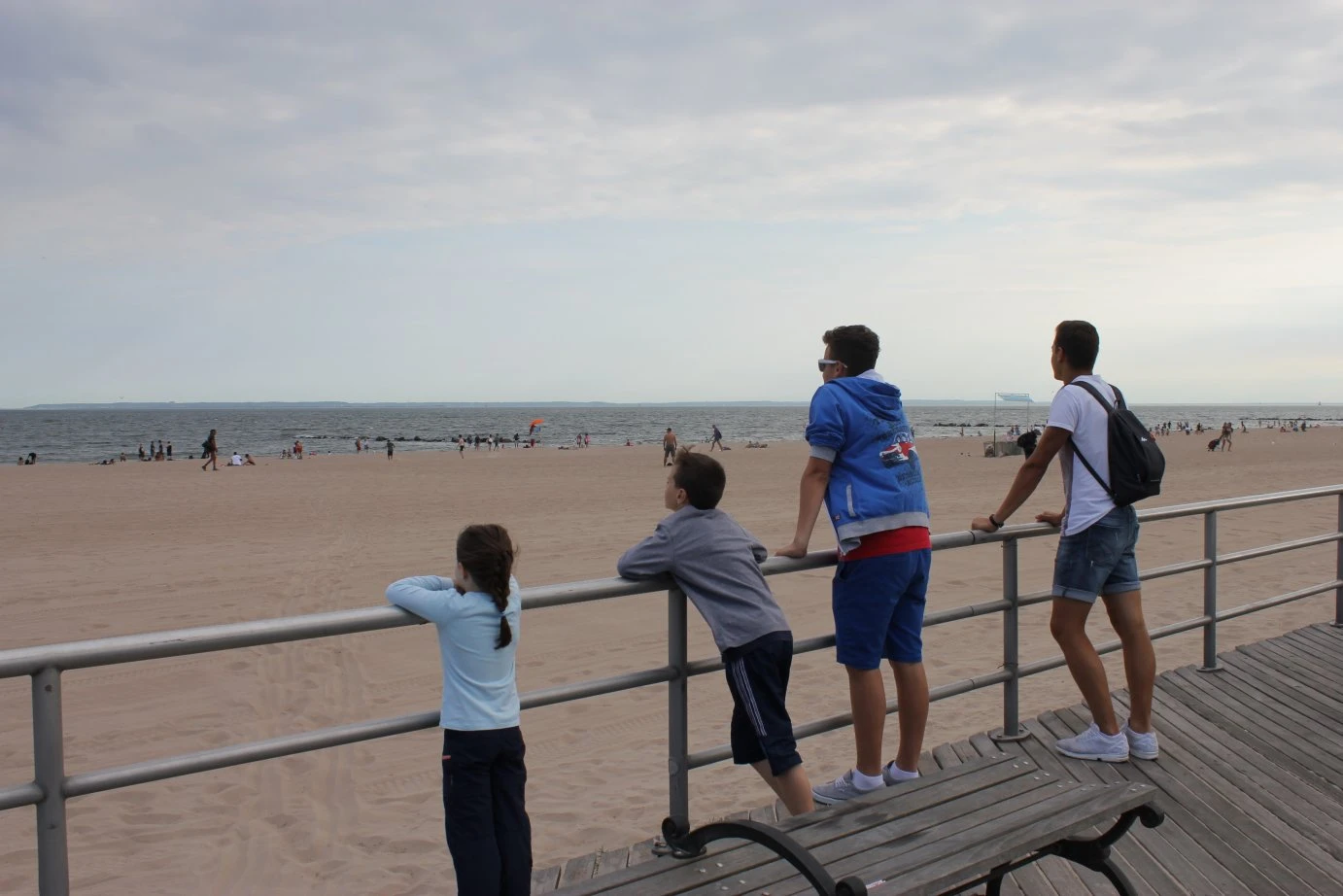
Just about 50 minutes from Manhattan by subway, Coney Island feels like stepping into a living legend. It’s one of the most iconic coastal destinations in New York City, immortalized in films, literature, and popular culture.
From arthouse cinema to everyday life, Coney Island is exactly what it has always been: a meeting point of stories, people, and cultures. On weekends especially, locals escape the routine of the city and head here to breathe, relax, and reconnect with the ocean.
In many ways, Coney Island is the people’s beach of New York.
| Quick Guide | Coney Island |
|---|---|
| Where it is | Brooklyn, New York |
| Distance | From Manhattan (45 min – 1 hour) |
| How to get there | Metro (linee D, F, N, Q fino a Coney Island-Stillwell Ave) |
| Average cost | Low/medium (beach is free, attractions are paid) |
| Time needed | Half-day / full-day visit |
| Best time to visit | May – September |
| Who it’s for | Families, couples, curious travelers |
| What to see | Luna Park, boardwalk, beach, aquarium |
| Practical tip | Perfect as an alternative getaway from Manhattan |
| Events | Mermaid Parade (June) |
The Birth of Luna Park: The Golden Age of Amusement
The history of Coney Island is deeply tied to the rise of American amusement parks.
In 1903, architect Frederick Thompson purchased around nine hectares of land overlooking the Atlantic Ocean—roughly the size of 13 football fields—to build a revolutionary entertainment complex. His vision included roller coasters, dance halls, circus-style attractions, and a giant Ferris wheel that symbolized the “age of wonders.”
Together with his partner Elmer “Skip” Dundy, Thompson had already created a famous attraction called “A Trip to the Moon”, where visitors experienced a simulated journey to space inside a themed ride. This early success, combined with a personal connection to the name “Luna,” inspired the creation of the legendary Luna Park.
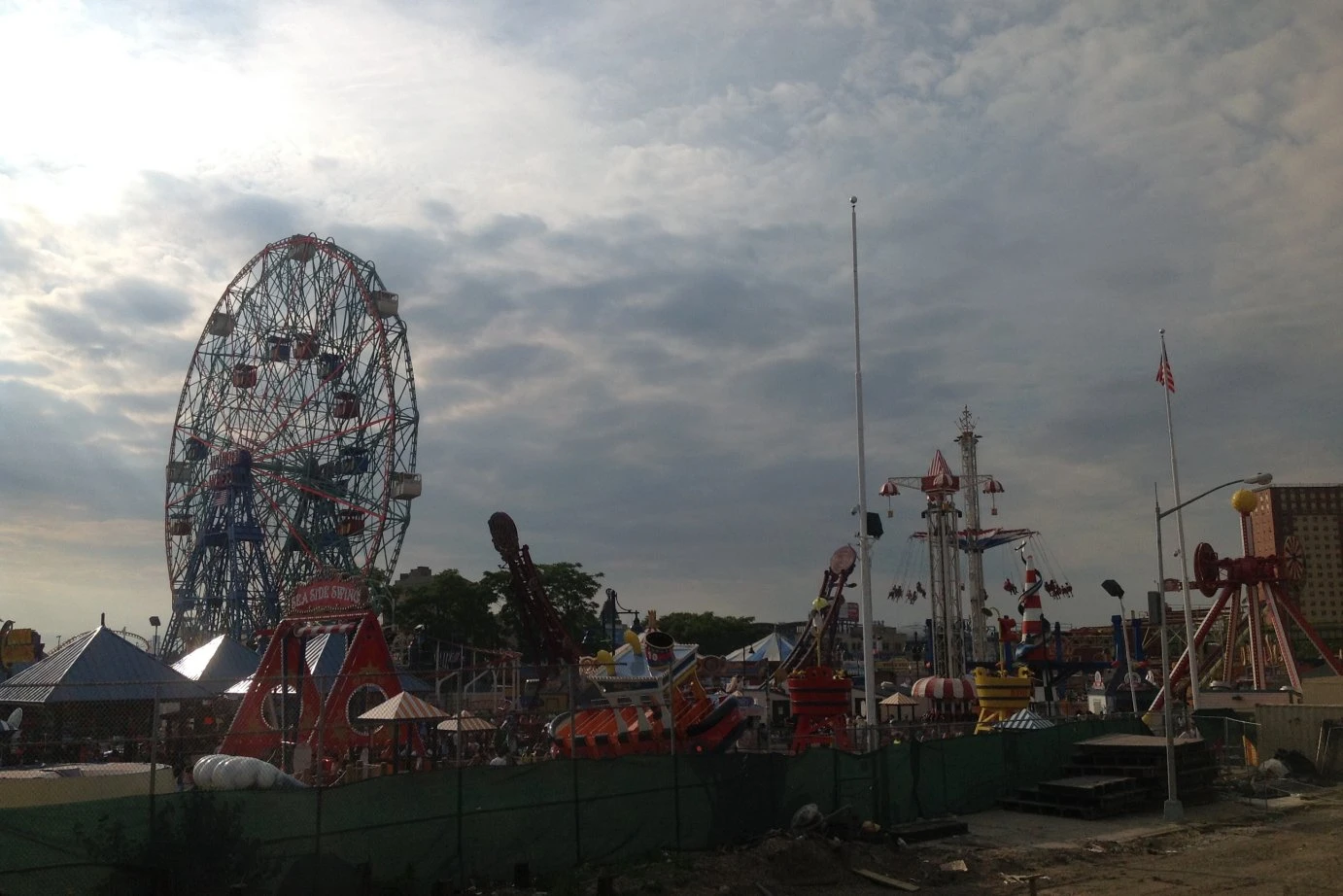
At its peak, Coney Island became a dazzling world of lights, rides, and crowds—but tragedy struck in 1911, when a massive fire destroyed much of the park. Despite this setback, it was rebuilt and quickly regained its place as one of America’s most beloved entertainment districts.
Nathan Handwerker and the Invention of the Modern Hot Dog
Coney Island is not only about rides and beaches—it’s also the birthplace of one of America’s most iconic foods: the hot dog empire of Nathan’s Famous.
In the early 1900s, Nathan Handwerker, a Polish Jewish immigrant, worked at a small seaside hot dog stand earning just $11 a week. He was known for his determination and hard work, even sleeping on the kitchen floor where sausages were prepared to save money.
With his savings, Nathan eventually opened his own stand and began selling hot dogs for just 5 cents—half the price of his former employer. His strategy was simple: better price, same quality, more customers.
It worked. Crowds quickly flocked to his stand, and Nathan’s Famous was born.
Nathan’s Famous Today: A Must-Visit Coney Island Landmark
Today, the original Nathan’s Famous stand still exists and remains one of the most popular food stops in New York City.
Be prepared to wait in line—sometimes a long one—but the experience is part of the tradition. The classic hot dog, loaded with sauces and toppings, is more than just street food: it’s a bite of New York history.
For many visitors, eating here is one of the top things to do in Coney Island.
Coney Island Attractions
In the following years, two incredible attractions for their time were opened: the Cyclone and Thunderbolt roller coasters. While the Thunderbolt closed in 1982 and was later demolished, the Cyclone is still standing today, operating since its inauguration on June 26, 1927.
This fully wooden roller coaster continues to deliver pure adrenaline, thanks in part to its dramatic drop with an angle of nearly 60 degrees.
The Cyclone has appeared in films, music videos, and works of art, becoming a true cultural phenomenon. It is now an iconic symbol of Brooklyn—an unmissable attraction for anyone visiting New York.
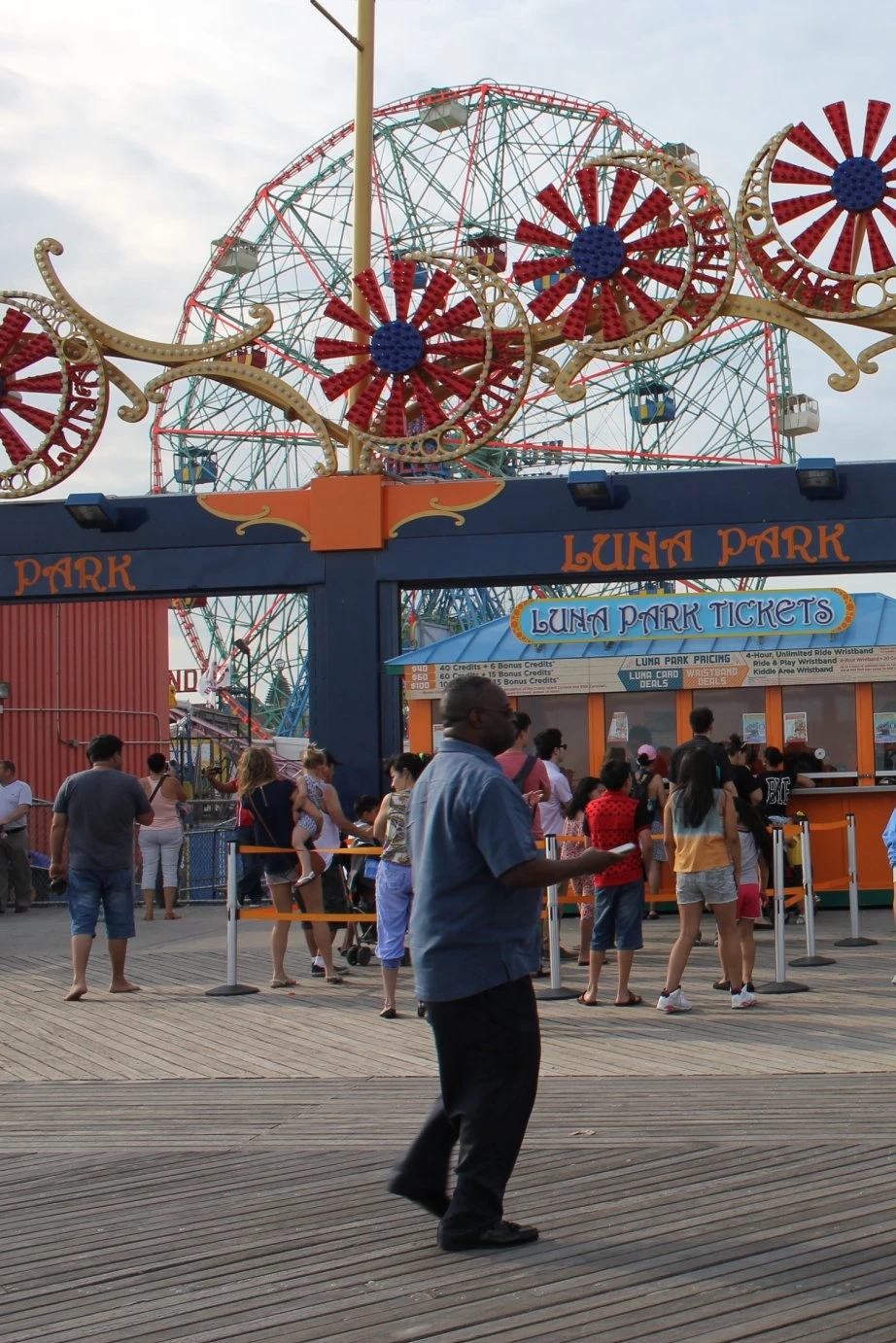
After the post–World War II years of decline, Coney Island became the subject of controversial redevelopment plans, some of which aimed to build luxury housing and risked erasing the area’s original, working-class identity.
In 2009, the revitalization of the area finally began, with the construction of new residential buildings and shops. The following year, Luna Park reopened, thanks to restoration efforts and the management of the “king of amusement rides,” the Italian entrepreneur Zamperla, known worldwide for creating amusement parks that bring joy to both children and adults.
If there is one defining feature of popular places, it is the crowds—and Coney Island is no exception. During summer weekends, it can be as crowded as Times Square at 6 PM.
Don’t miss this iconic place: immerse yourself in the beating heart of a city defined by its multicultural identity, its contradictions, and its layered history.
What to See Near Coney Island
Brighton Beach: New York’s “Little Odessa”
Just a short walk from Coney Island, Brighton Beach is widely known as New York’s “Little Odessa” due to its large Russian and Ukrainian community.
Strolling through the neighborhood, you’ll find Russian grocery stores, delicatessens, and cafés serving traditional dishes such as blini and borscht. The lively atmosphere makes you feel like you’ve stepped into another country—an excellent stop for travelers looking to explore New York’s multicultural identity beyond Manhattan
New York Aquarium
Located right next to Coney Island Beach, the New York Aquarium is the oldest operating aquarium in the United States.
Home to more than 500 marine species, it features sharks, sea lions, penguins, and many other ocean animals. It’s a perfect attraction for families and anyone wanting to spend a few hours discovering marine ecosystems and learning about ocean conservation.
The Parachute Jump
One of Coney Island’s most iconic landmarks is the Parachute Jump, a 76-meter-tall tower originally built for the 1939 World’s Fair and later relocated to Coney Island.
Although it no longer operates as a ride, it remains a striking historical structure and is beautifully illuminated at night, making it one of the area’s most recognizable visual symbols.
Surf Avenue & Coney Art Walls: Street Art in Brooklyn
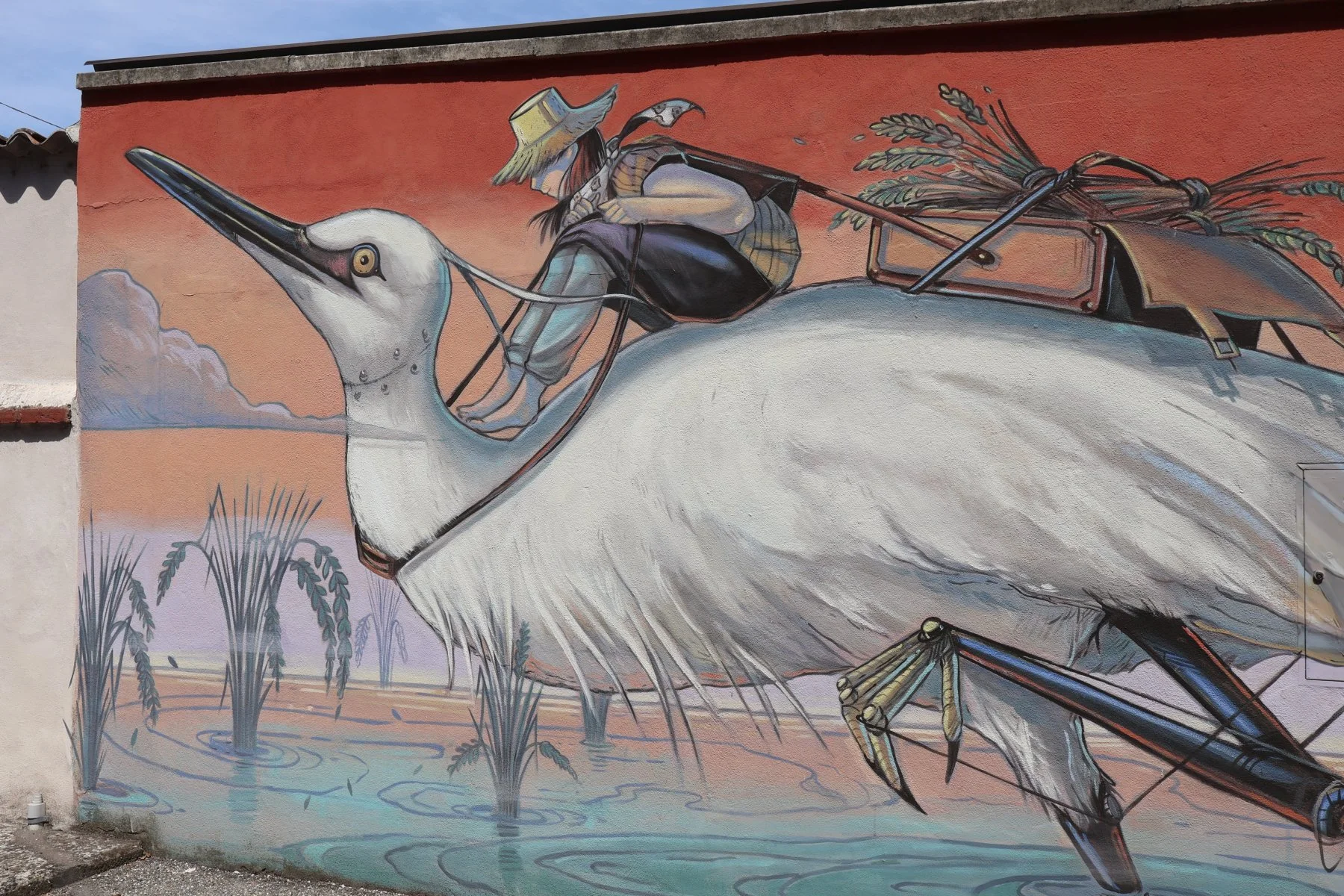
Street art lovers shouldn’t miss Coney Art Walls, an open-air gallery located along Surf Avenue.
This vibrant space features large-scale murals created by some of the world’s most renowned street artists. It blends contemporary art with community culture, offering a modern and creative side of Coney Island beyond its amusement parks and beach scene.
Sunset on the Pier: Best Views in Coney Island
The Coney Island Pier is one of the best places to end your day.
At sunset, the ocean and boardwalk are bathed in warm golden light, creating a peaceful and atmospheric setting. It’s ideal for a romantic walk, quiet reflection, or simply enjoying the unique seaside vibe that defines Coney Island.
From the colorful rides of Luna Park to Nathan’s Famous hot dogs and the hidden stories of its surrounding neighborhoods, Coney Island is a must-visit destination for anyone looking to experience a different, more authentic side of New York City.
The Mermaid Parade: Coney Island’s Most Iconic Summer Event
If you’re visiting New York in June and looking for a truly unique experience, don’t miss the Mermaid Parade—one of the most extraordinary events in the city.
Some might call it “quintessentially American,” but it’s also a perfect way to understand how New Yorkers celebrate creativity, identity, and summer itself.
First held in 1983, it is now the largest artistic parade in the United States. The event marks the beginning of summer with spectacular ocean-inspired costumes, featuring mermaids, tritons, and fantasy sea creatures.
In 2026, the Mermaid Parade is scheduled for Saturday, June 20, starting around 1:00 PM along the Coney Island boardwalk.
Attendance is free for spectators—just arrive early to secure a good viewing spot along the route.
If you want to take part instead of watching, you can register as a “mermaid” or performer (paid entry). Registration is available online or on the day of the event.





Leave a Reply