

It is hard to imagine that one of Piedmont’s most remarkable landscapes was shaped not by nature alone, but by centuries of human ingenuity.
In the province of Vercelli, this extraordinary scenery was created through an intricate water management system. Canals, irrigation ditches, and locks transformed the plain into a vast mosaic of rice fields, interrupted only by a small ancient woodland that has survived for centuries, carrying with it an incredible story of its own.
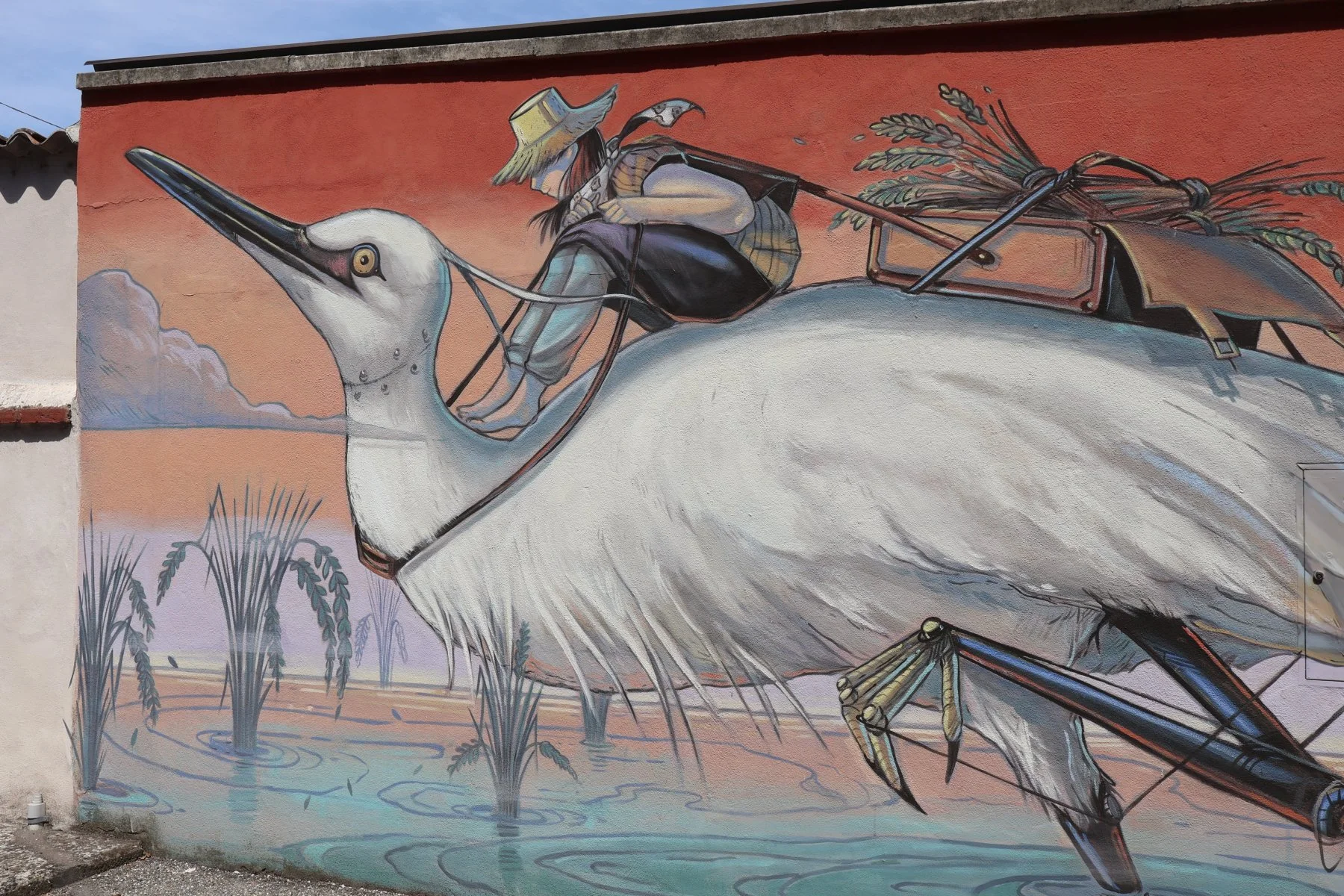
Every spring, these flooded fields become the famous “checkerboard sea” (mare a quadretti), where thousands of mirrors of water reflect the sky as far as the eye can see.
As the seasons change, so does the landscape. The shimmering water gives way to vibrant green shoots, then to golden fields ready for harvest, following the timeless rhythm of rice cultivation.
Yet there is much more to this landscape than the Vercelli rice fields.
Scattered throughout the countryside lies a network of small villages, medieval castles, historic farmsteads, and ancient monasteries, each preserving a strong local identity.
Together, they form the association known as The Waterway Villages (I Borghi delle Vie d’Acqua), created to promote one of the least-known yet most authentic areas of Piedmont.
If you are searching for authentic villages in Northern Italy, before deciding which one to visit, it is worth understanding what connects them all.handed down.
A Landscape Shaped by Water
Water is the thread that binds the entire Vercelli region together.
It does much more than irrigate the rice fields. For centuries, it has connected villages, farms, rural communities, and agricultural estates through an extensive network of canals and waterways. The famous Cavour Canal, together with countless smaller irrigation channels, did far more than supply water to the plains—they shaped a shared cultural identity that is still visible today.
This awareness inspired the creation of The Waterway Villages Association in 2022, bringing together 56 municipalities united by the same landscape, history, and agricultural heritage.
Its motto perfectly captures this shared vision:
“Together we achieve greater goals and create greater opportunities for growth.”
This is more than an organizational principle. It is the key to understanding the Vercelli countryside.
Rice farming alone can no longer sustain the local economy, but the region holds an extraordinary cultural heritage waiting to be discovered. No single village can tell the whole story of the Vercelli rice fields. Together, however, they create one remarkable cultural landscape where water connects nature, agriculture, architecture, and centuries of local traditions.
The Waterway Villages: A Community of Communities
The Waterway Villages are, above all, a community of communities.
They are united by the desire to preserve a heritage that lives not only in castles, churches, canals, or historic buildings, but in the people who dedicate their time to protecting the memory of the places they call home.
They are the volunteers who create small local museums filled with objects discovered in old cellars.
They are the people who open the doors of centuries-old monasteries every day to share their stories with visitors.
They are also the residents who organize historical reenactments, have period costumes tailor-made, and spend days preparing enormous traditional bean feasts for village celebrations.
To us, this is the true heritage of the Waterway Villages.
It is a living culture, not one displayed behind museum glass, but one that continues to thrive in the hands of the people who pass it down from one generation to the next.
For this reason, visiting the Vercelli rice fields is ultimately about meeting people.
People who chose to stay, who continue to care for their villages, and who are eager to share an identity shaped slowly over centuries, following the rhythm of water, the changing seasons, and life among the rice fields.


The Flavors of a Land Told Through Food
In the Vercelli countryside, food follows the same philosophy as the villages themselves: it is rooted in community.
These are not dishes created for tourists. They are recipes born in farmhouses and family kitchens, prepared to bring people together around the table and celebrate the simple pleasure of sharing a meal.
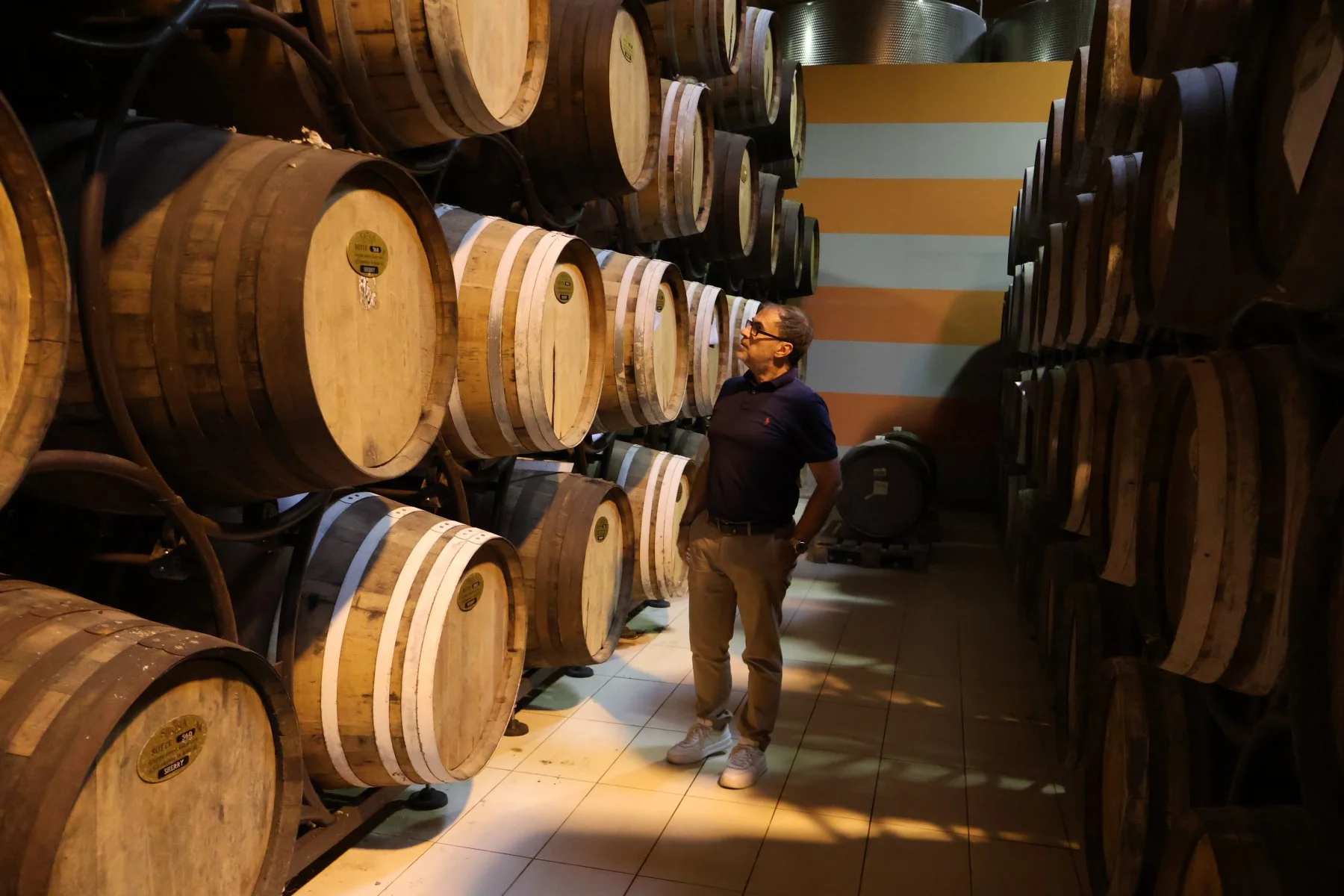
The region’s signature dish, Panissa Vercellese, perfectly reflects this tradition. Made with locally grown rice from the Vercelli rice fields, beans, salami, and red wine, it tells the story of a rural cuisine that learned to make the most of every ingredient.
Other local specialties are equally connected to the land. The renowned Saluggia beans, cultivated here for centuries, remain a symbol of the area’s agricultural heritage. In Moncrivello, organic blueberries flourish, while Maglione is famous for its peaches and for the annual Peach and Stuffed Peach Festival, a celebration that has become one of the highlights of the local calendar.
Every village has its own seasonal products, traditional recipes, and festivals, making each visit a little different from the last.
More often than not, a day exploring the Waterway Villages ends around a long communal table during a local festival or village fair. The people preparing the food are rarely professional chefs. They are neighbors, volunteers, and families who cook simply because they want to share a piece of their history with others.
These are uncomplicated yet unforgettable moments, where food becomes a universal language and visitors, even if only for an afternoon, are welcomed as part of the community.
Risò 2026: The International Rice Festival in Vercelli
Finding new ways to tell the story of a region that has long remained off the international tourism radar is neither simple nor quick.
It requires coordinated initiatives, local collaboration, and a shared vision for promoting the territory beyond its borders.
This is exactly the ambition behind Risò – The International Rice Festival, an event that has returned with renewed energy after its first editions and now has all the ingredients to attract visitors from across Italy and abroad.
Following the success of the 2025 edition, Risò 2026 will take place from September 11 to 13, with the city of Vercelli serving as the festival’s main hub.
During these three days, researchers, chefs, farmers, food producers, and experts from around the world will gather in the heart of Italy’s rice-growing region. At the same time, the festival is designed for curious travelers who want to experience the area through its people, traditions, and landscapes.
Visitors are invited to taste, listen, explore, and discover.
The program includes live cooking demonstrations, food tastings, cultural events, and guided tours across the countryside, offering the opportunity to understand how water shaped not only the famous Vercelli rice fields, but also the identity, economy, and traditions of the communities that have lived here for centuries.
Rather than being simply a food festival, Risò is an invitation to discover the cultural landscape behind Italy’s rice production—a place where agriculture, history, and local life remain deeply connected.
Discover More Waterway Villages
Every village along the Waterway Villages route has its own character, stories, and traditions. For this reason, we decided to dedicate a series of articles to the places we visited during our journey through the Vercelli countryside.
Together, these villages reveal a side of Northern Italy that many travelers have yet to discover—an authentic destination where history, agriculture, and local traditions continue to shape everyday life.


How to Book a Tour of the Vercelli Rice Fields
Exploring the Vercelli rice fields and the villages connected by their historic irrigation network is easy, especially during the Risò International Rice Festival.
A variety of guided experiences—from half-day excursions to full-day tours—will be available through Somewhere Tours, the tour operator organizing the official itineraries. Departures are scheduled from both Turin and Vercelli, making it easy to join whether you’re staying in the city or visiting Piedmont.
Simply choose the tour that best suits your interests, select your preferred date, and complete your booking online. Once your reservation is confirmed, you will receive an email with all the practical information, including the meeting point, departure time, and a detailed itinerary.
We recommend booking as early as possible, as places are limited and the tours often sell out quickly during the festival.
If you need further information, you can also contact the organizers via WhatsApp at +39 334 675 8551.
Plan Your Visit to the Vercelli Rice Fields
If you’re looking for an authentic destination in Northern Italy, away from the usual tourist routes, the Vercelli rice fields offer a unique opportunity to discover a landscape shaped by water, centuries-old farming traditions, and welcoming local communities.
Whether you come for the spectacular flooded rice fields in spring, the harvest season, a traditional village festival, or the Risò International Rice Festival, you’ll find much more than beautiful scenery.
You’ll discover a place where history, agriculture, and everyday life are still deeply connected—and where every village has a story waiting to be shared.




Leave a Reply