
We chose beauty.
The kind of beauty you find in places, stories and people who preserve a tradition.
To tell the story of Piedmont, this time we stepped inside a distillery, in the heart of the Roero, to discover the world of Piedmontese grappa and learn the story of Distilleria Sibona.
The first thing you remember from a visit to Distilleria Sibona is a scent.
An intense, warm, almost intoxicating scent that welcomes you as soon as you walk in and becomes more enveloping as you move deeper into the distillery. There is a whole world in that scent, one that inevitably stays with you.
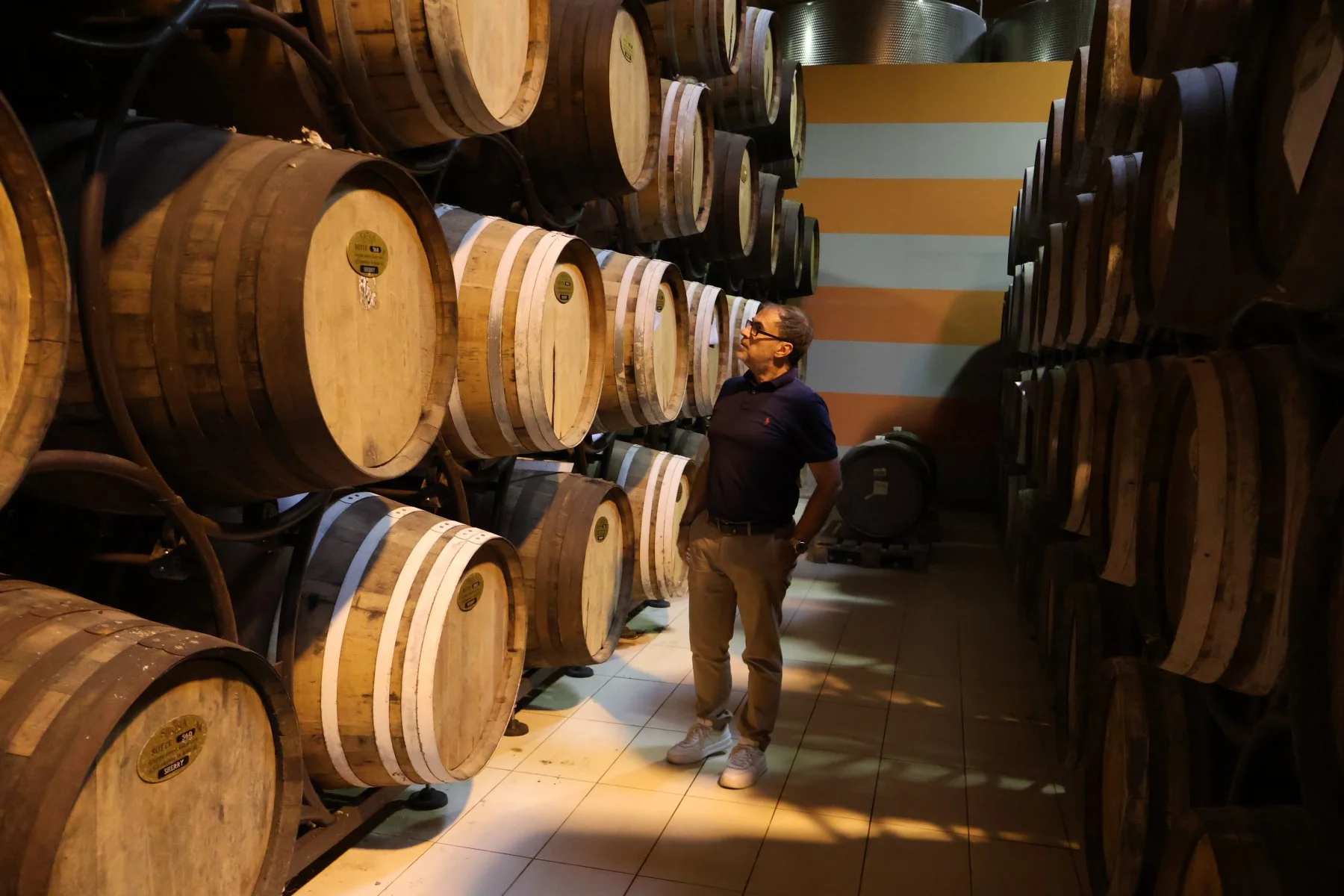
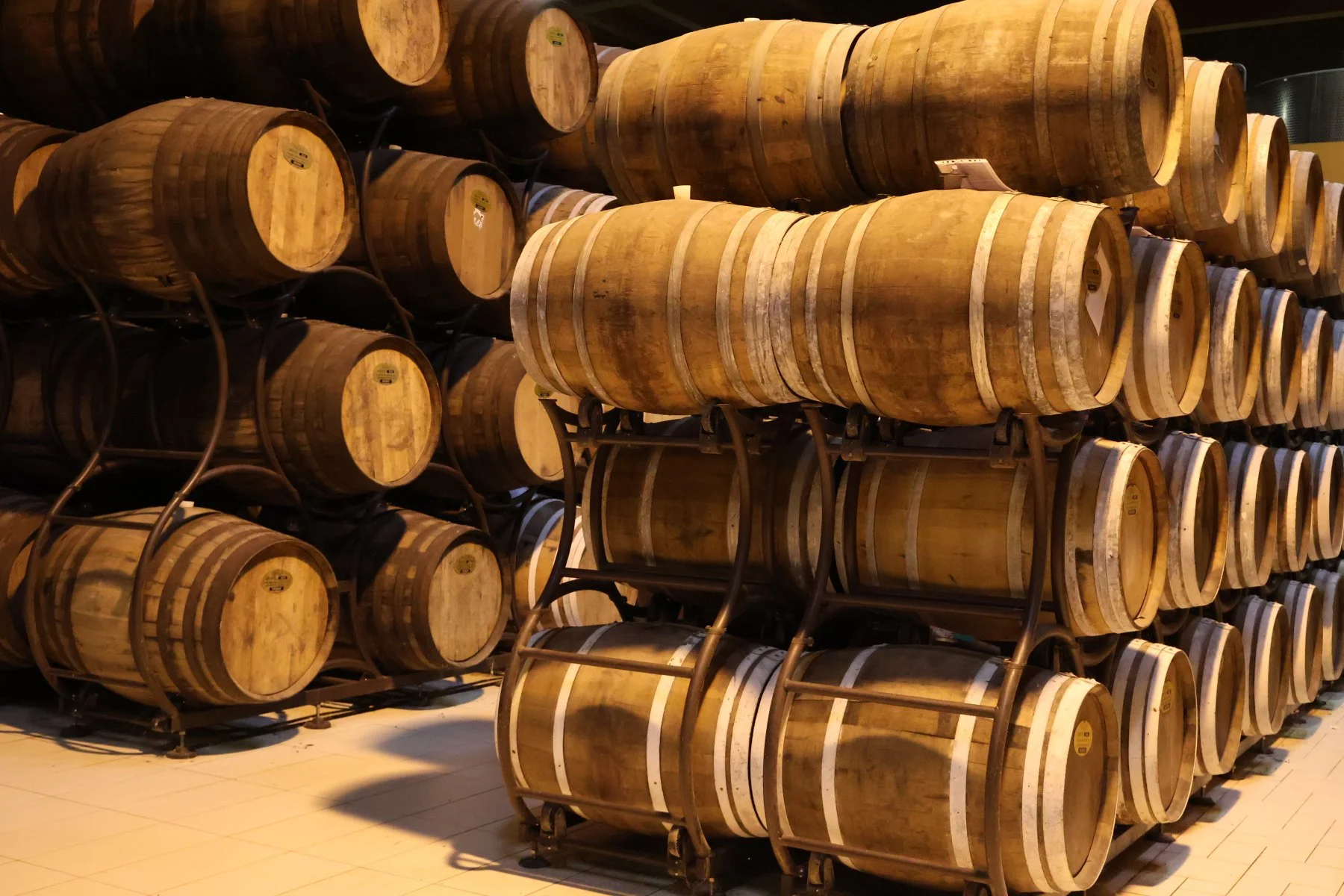
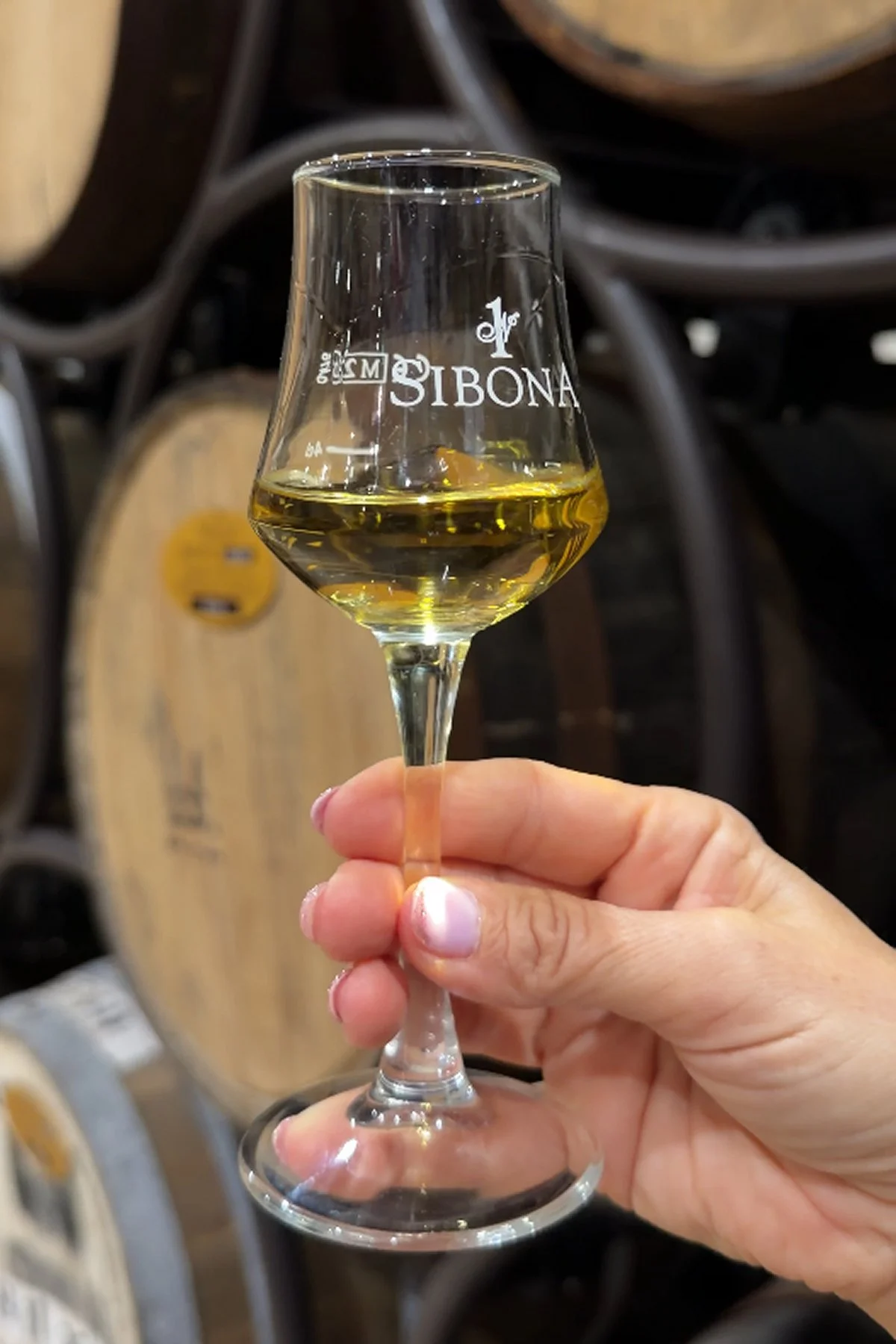
Then come the barrels: rows that seem to stretch endlessly, standing side by side, one above another, like cathedrals of time, holding a liquid that has not yet completed its journey.
Inside those barrels, something is waiting.
Time will do its work. The wood will leave its mark. The spirit will slowly change.
And as you walk, your eyes and nose collect impressions while your imagination begins to wander.
You imagine yourself sitting in front of a fireplace, a glass of grappa in your hands. Or around a table with friends, playing cards, having a conversation that stretches on because nobody feels like looking at the clock.
And that glass in your hands is no longer simply part of a convivial moment. Now you understand how it came to be there.
Perhaps that is what we brought home from our visit to Distilleria Sibona, in the Roero: the certainty that there is much more inside a bottle than a spirit.
There is a land.
There is the work of people who know how to transform its fruits.
There is time: time spent waiting, measuring, balancing, testing, making mistakes and trying again, until the final product becomes what was first imagined.
And, why not, there is also a little bit of magic.
Because you are not simply visiting a distillery.
You are experiencing a piece of Piedmont through something born from its wine culture.
Outside, the vineyards. Inside, the alchemy
We are in the Roero, one of the Piedmontese lands most deeply connected to wine culture.
Outside the distillery there are hills, rows of vines and vineyards.
Those vineyards produce some of the most important grapes in Piedmont.
And at a certain point, that same raw material takes another path.
After the harvest, it arrives at the distillery in the form of grape pomace: what remains of the grapes after wine production.
And that is where a new journey begins.
Because farming culture has always known a form of ancient alchemy: transforming what remains into something new.
Inside the distillery, the pomace still contains something left behind by the wine.
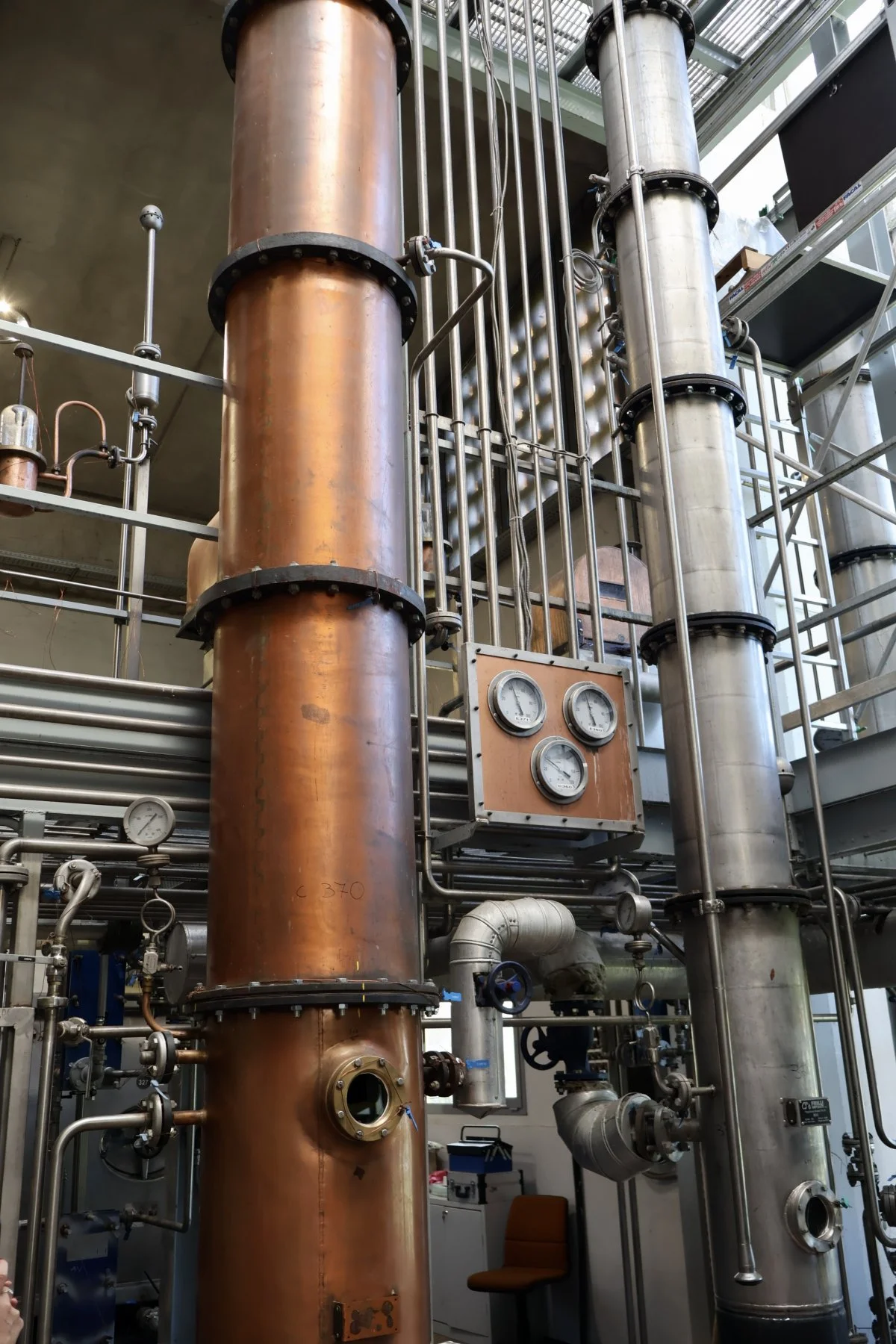
Heat causes the volatile components to evaporate. Steam carries them upwards and, through distillation, they are separated once again.
It is a precise process, governed by timing, temperatures and choices.
Because not everything that rises from the still will become spirit. The different fractions have to be recognised and separated until reaching the most precious part: the heart of the distillation.
But the journey of the raw material does not end there.
Even after distillation, what remains of the exhausted grape pomace still has something to give.
At Sibona, the grape stalks from the spent pomace are used to produce energy, giving the same material another life.
Distillation is not something you can improvise
Behind what might look like alchemy, there is above all expertise.
Knowing the raw material is the first step.
The rest comes from experience, precision and, perhaps more than anything else, the ability to listen to what is happening inside the still.
It takes experienced eyes, but also noses capable of recognising every nuance: knowing what needs to be discarded and what deserves to be kept.
Recognising the right moment.
Following the evolution of aromas.
Understanding when the raw material has reached its best expression.
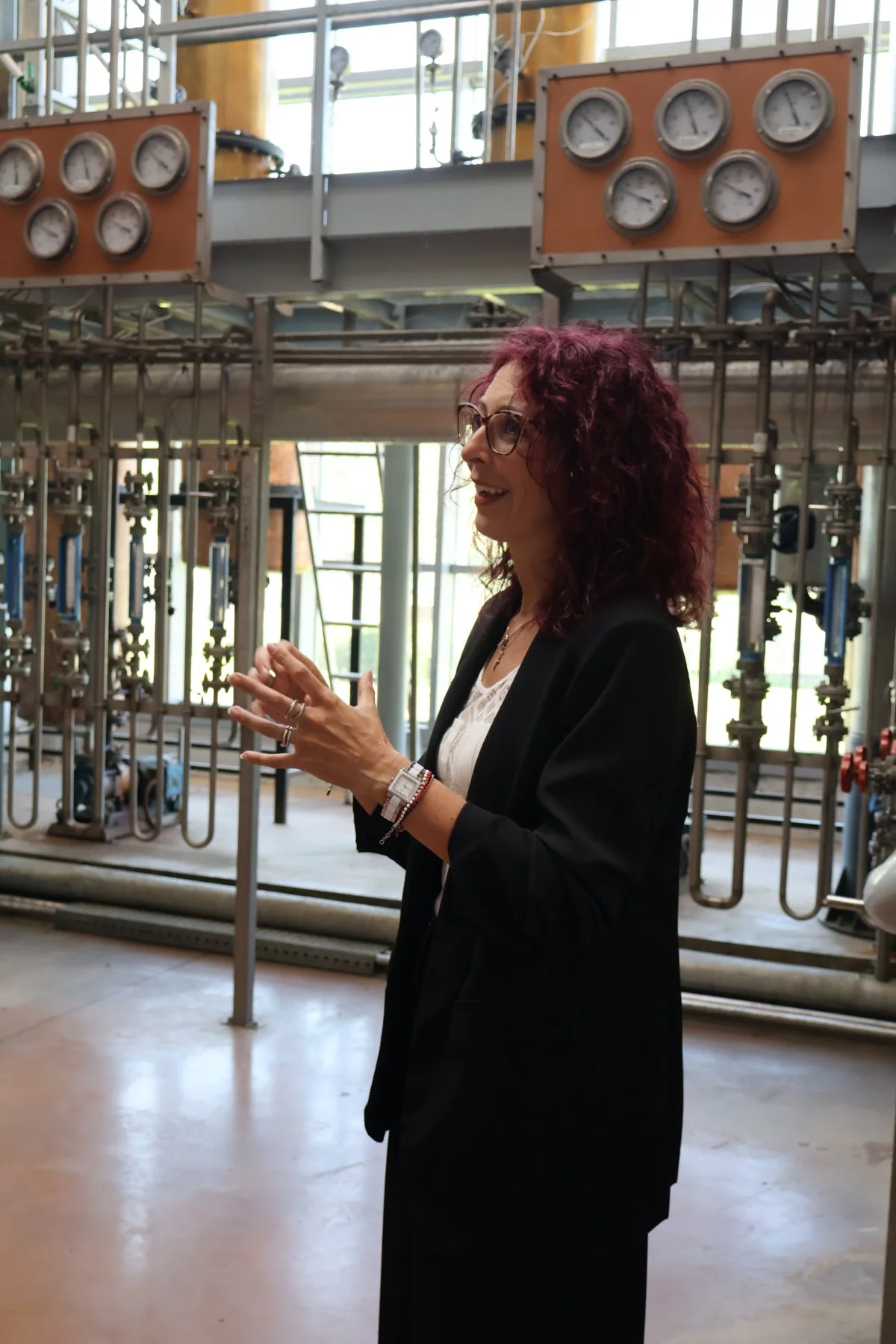
At Distilleria Sibona, this knowledge comes from the meeting point between wine culture and distilling tradition. Enologists and master distillers bring their experience and sensitivity to a raw material they know deeply.
Because a good grappa does not come only from what happens inside the still.
It comes from knowing how to interpret it.
And there is a fascinating detail that tells you just how closely grappa is connected to its country of origin.
“Grappa” is an exclusively Italian name.
A spirit made from grape pomace outside Italy may be produced using the same principle, but it cannot be called grappa.
That word belongs to our culture, our history and our distilling tradition.
A story that began more than a century ago
Distilleria Sibona has its roots in the early 20th century.
Its story began here, in the Roero, at a time when distillation was still deeply connected to agriculture and the grape harvest.
The first distillery stood on the site of an old brickworks and, during the early years of its activity, even a steam locomotive was used.
More than a century has passed since then.
The brand founded by the Sibona family later changed hands without interrupting its story.
Acquired by Luigi Barbero, who is still its owner today, the distillery grew and evolved. In 2003, it moved to its current location at Via Castellero 5, still in Piobesi d’Alba.
Yet its connection with the land has remained the thread running through its history.
And perhaps that is precisely what makes the visit so interesting.
Because here, the story of the distillery is not something separate from the landscape around it.
It is a story that begins with the native grape varieties of the Roero and Langhe.
And then there is that number: 1
There is one detail that makes Sibona’s story even more remarkable.
A number: 1.
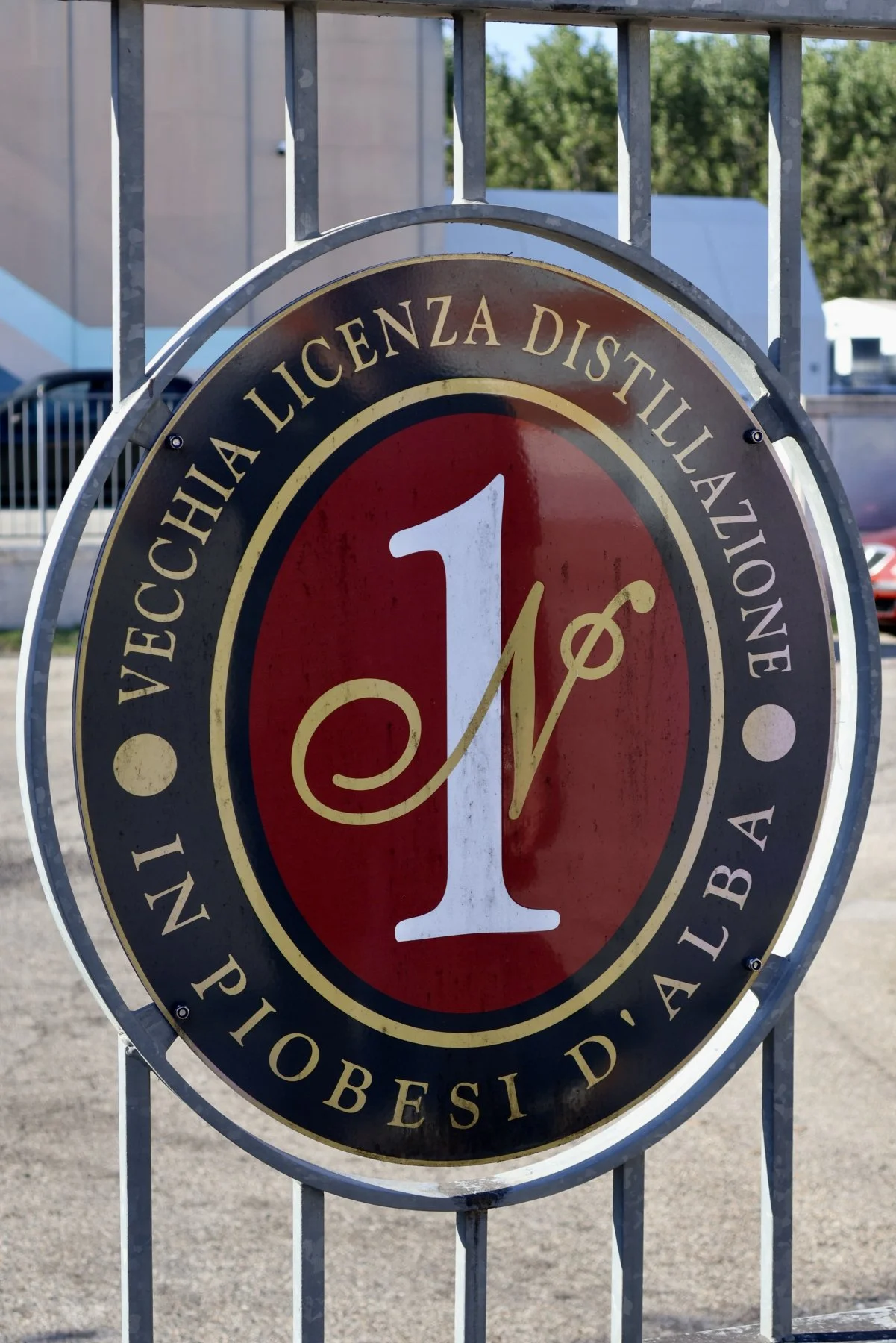
The distillery still holds the historic distillation licence No. 1, issued by the UTF, Italy’s financial technical authority.
Over time, that number has become part of the identity of the distillery and has given its name to one of its most representative grappas: La Numero 1.
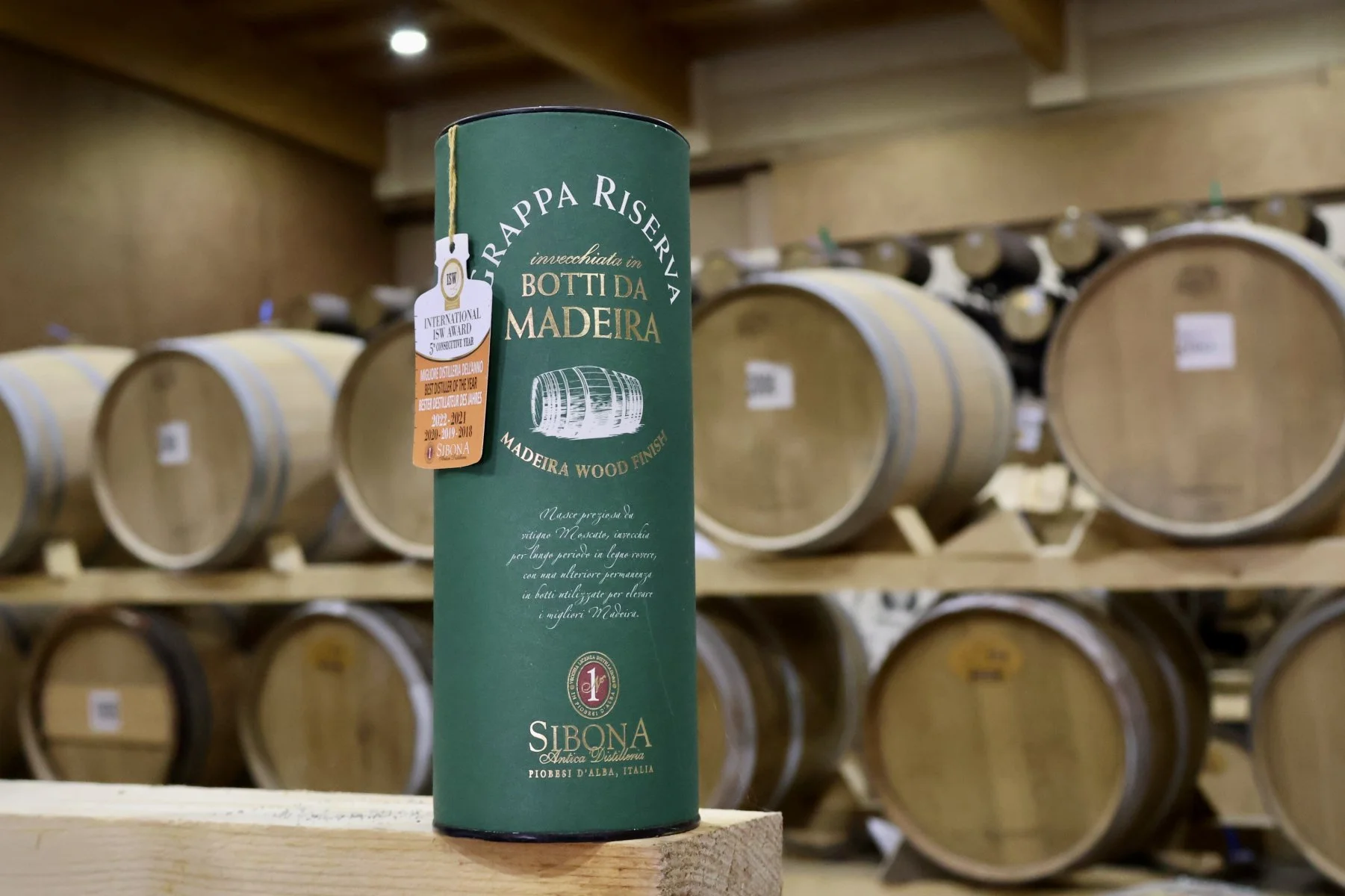
The Sibona Grappa Riserva “La Numero 1” is one of the most prestigious expressions of the distillery’s ageing process. It is a grappa designed to tell the story of time, wood and the work that takes place after distillation.
At Sibona, distillation is only the beginning
The real ingredient is time.
It is in the cellar that the visit changes pace.
After the heat of the stills come silence, wood and waiting.
Barrels stretch out in long rows, holding grappas that are experiencing another stage of their story.
Some mature in steel.
Others are entrusted to wood for longer periods.
Sibona also uses barrels that have previously held other products: Port, Sherry, Madeira, Rum, Tennessee Whiskey and Sauternes.
Because wood carries a memory.
And that memory slowly passes into the spirit.
It is a process that cannot be rushed.
Here too, the expertise of the master distiller is essential: choosing the wood, following the evolution of the grappa and understanding when the ageing process has reached the right point all require sensitivity, experience and knowledge.
Time does its part, but it does not work alone.
And perhaps that is exactly what is so fascinating when you stand in front of those barrels.
You are not simply looking at a warehouse.
You are looking at something that is still becoming.
Piedmont has many ways of telling its story
One of the things we discovered during the visit is that grappa also has its own way of telling the story of Piedmont.
It does so through the grapes from which it is made: Nebbiolo, Barbera, Moscato, Dolcetto, Arneis, Brachetto and Chardonnay.
And then there are the grappas made from the pomace of Barolo and Barbaresco.
Every grape brings a different character.
The aromas, nuances and structure change.
And learning to recognise them means, in a way, getting to know again the land they come from.
This is precisely the variety that Sibona has chosen to share by opening the doors of its distillery to the public.
It is not a museum, nor is it a space created specifically for visitors.
It is a fully operational industrial site, where production processes and working schedules have to be respected.
For this reason, visits are available only on selected dates.
And that is exactly what makes them authentic.
For a few hours, you really enter the place where Sibona produces its spirits.
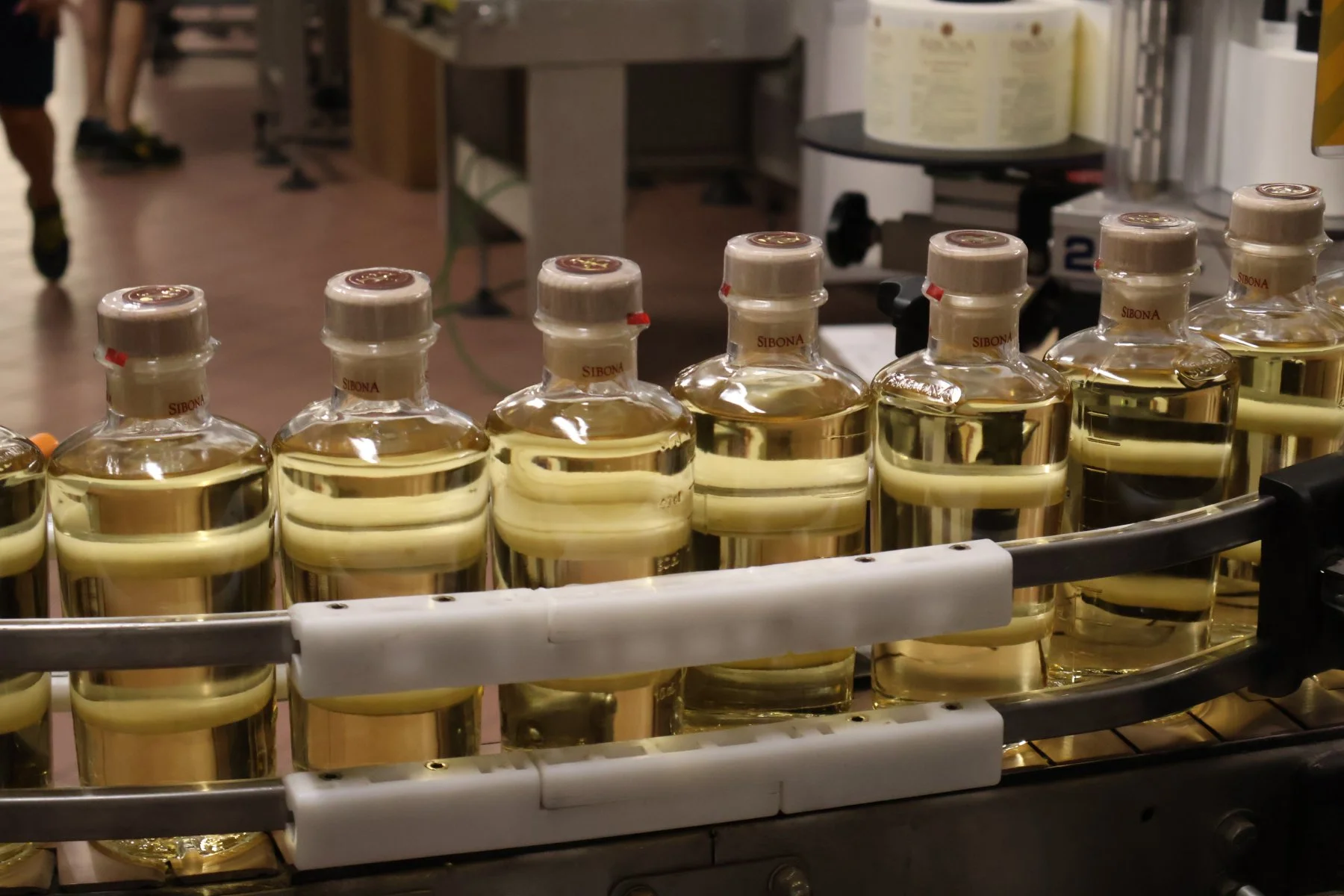
You observe the production process, listen to people who know and work with this raw material every day, and understand what happens to grape pomace after wine production.
And then, almost naturally, comes the moment to taste the result.
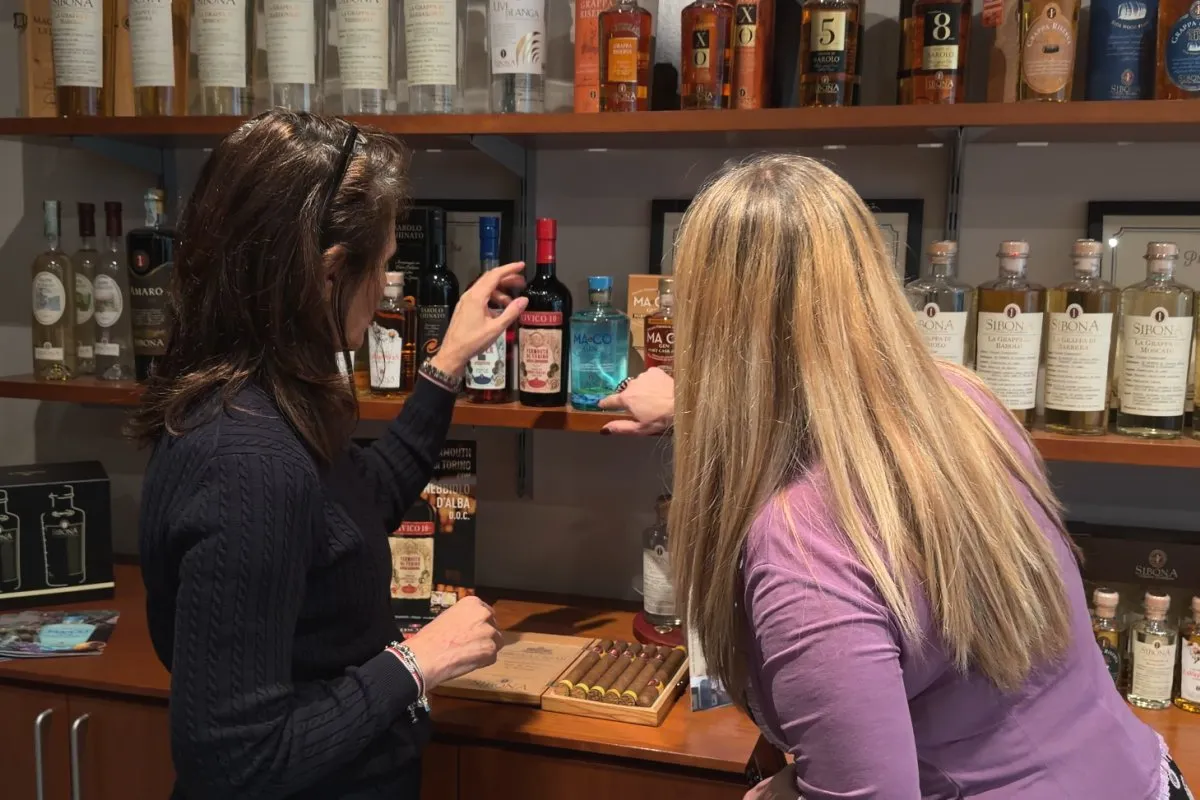
The visit ends with a guided tasting of Sibona’s finest products: from prestigious single-variety and Riserva grappas to amari and the elegant Vermouth di Torino.
It is not simply a tasting.
It is the moment when everything we have seen also takes shape through taste.
First, you smell.
Slowly.
One nostril at a time, allowing the aroma to meet the air and giving every nuance the chance to emerge.
Then you taste.
Small amounts. Small sips.
Because grappa is a spirit to be savoured and contemplated.
It is not a shot to knock back while waiting for the next one.
It is something to enjoy slowly, when you feel like stopping for a moment, listening to what you are experiencing and allowing the flavour to linger.
A small exercise in attention.
And perhaps this is what makes an experience like this so interesting:
it asks us to slow down.
To simply allow ourselves a moment of beauty.
From September 2026, Distilleria Sibona opens its doors
We were lucky enough to be invited to the inauguration of this new experience on September 4, 2026.
From September 2026, however, Distilleria Sibona is opening its doors to the public with a programme of guided visits designed to introduce visitors to this world of aromas, technique, tradition and waiting.
The first confirmed dates are:
- September 26, 2026
- October 17, 2026
- November 14, 2026
The guided visits will be available in Italian and English, both in the morning and afternoon.
They will be organised by Somewhere Tours&Events, with meeting point at Distilleria Sibona in Piobesi d’Alba.
The experience includes a guided tour telling the story of the distillery, a visit to the ageing and maturation areas and a final tasting of Sibona’s products.
Information and bookings
Somewhere Tours&Events
334 6758551 / 011 6680580
BOOKING: Sibona Distillery A Journey through copper stills, oak casks and the art of time – HOME


Leave a Reply