
A single day in Tropea is certainly not enough to fully experience this iconic Mediterranean village, but it is enough to leave you wanting to return. We are in the province of Vibo Valentia, about an hour and a half from Reggio Calabria Airport, making Tropea a perfect destination for a long weekend in Calabria.
We visited in spring, but according to local insights, September is also an ideal month, as the crowds of summer fade and the town returns to a calmer atmosphere.
The late May weather is perfect: the air is already warm, the sun lights up the historic buildings without being too intense, and, most importantly, there are still very few tourists. The beaches are not crowded, and the atmosphere is relaxed—ideal for a first impression.
We are not here to visit every church or palace like a traditional guidebook, but to breathe in the essence of the village and experience all those first-time emotions shaped by high expectations.
| Quick Guide | Tropea in 1 day |
|---|---|
| Location | Calabria, Costa degli Dei (province of Vibo Valentia) |
| Distances | From Lamezia Terme (about 1 hour) From Reggio Calabria (about 1 hour 30 minutes) |
| How to get there | Car (recommended), train (Tropea station), nearest airport: Lamezia Terme |
| Average cost | Low to medium (free historic center, meals, parking) |
| Visit duration | Full day |
| Best period | May – October (best: June and September) |
| Who it’s for | Couples, families, sea lovers, and historic village enthusiasts |
| Main highlights | Tropea Cathedral, historic center, scenic viewpoints, Sanctuary of Santa Maria dell’Isola |
How to get to Tropea and where to park
We reach Tropea from Capo Vaticano, where we stayed overnight, enjoying an experience that truly won us over at Capo Vaticano Resort.
It only takes a 15-minute drive and we are already there.
Tropea sits on a promontory stretching between the Gulf of Gioia Tauro and the Gulf of Sant’Eufemia, so you should expect a continuous series of uphill and downhill streets.
The historic center is a restricted traffic zone (ZTL), but we found a convenient paid parking area right below the cliff that hosts the Sanctuary of Santa Maria dell’Isola, near the calisthenics park on Via Lungomare.
From here, a path leads up to the sanctuary itself, offering spectacular views over the sea and the village. On the opposite side of the road, a staircase climbs toward the old heart of the town.
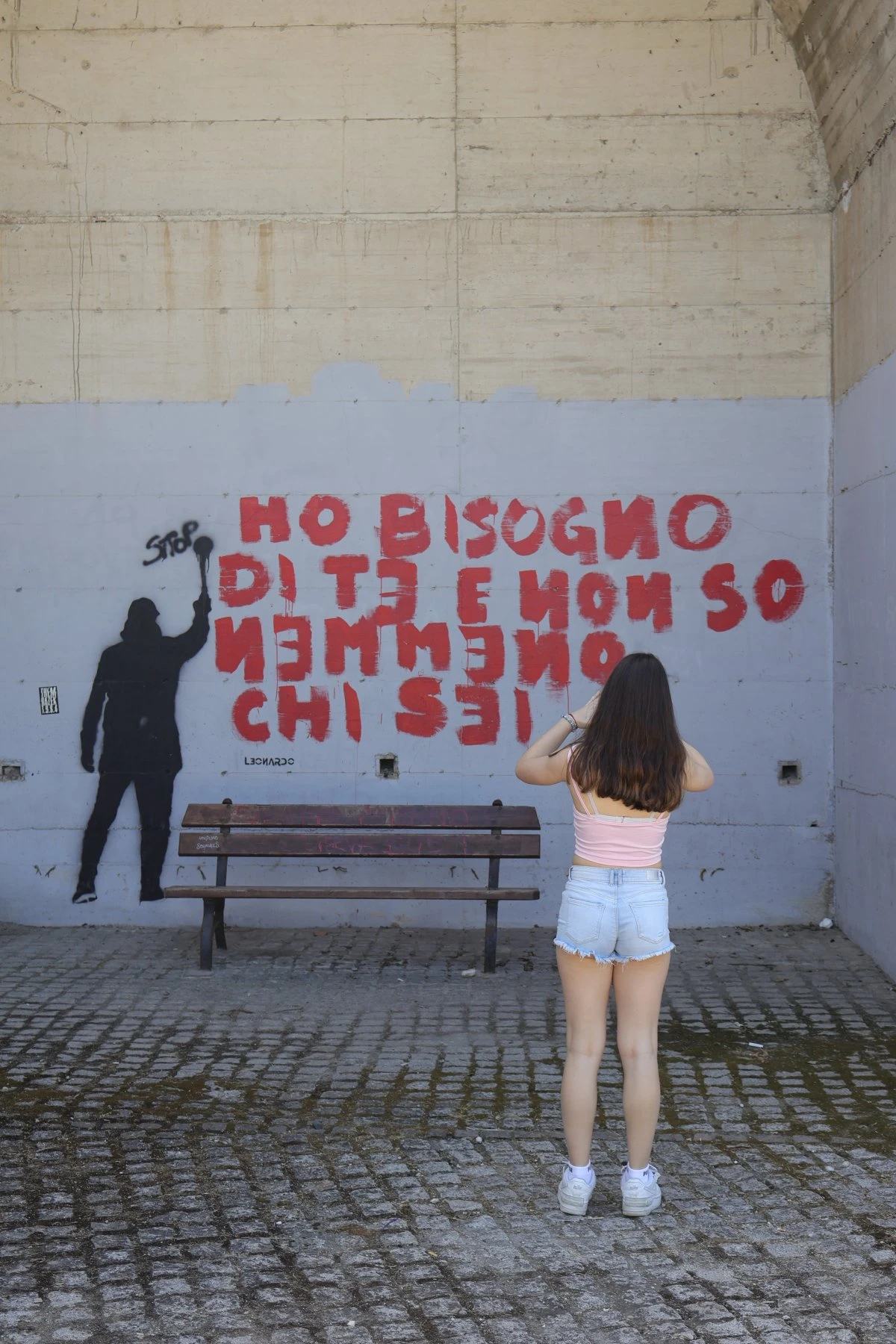
We are immediately struck by a mural that reads:
(Ho bisogno di te e non so nemmeno chi sei)
I need you, and I don’t even know who you are
What can I say—an ode to such pure love that it doesn’t even need a target to strike, loving for the simple need to do so. And yet Maslow placed it only halfway up his hierarchy!
A brief history of Tropea
The origins of Tropea blend myth and history: according to legend, it was founded by Hercules on his return from his labours.
In Roman times, Tropea was an important commercial and maritime hub, as evidenced by the “Portus Herculis” mentioned by Strabo and Pliny. Remains of villas with thermal baths and nearby necropolises have been found, indicating a thriving economic and cultural activity.
During the Middle Ages, under the rule of the Normans, Swabians, Angevins, and Aragonese, Tropea flourished even further. Today, traces of this period are still visible in the town’s architectural and urban heritage.
Walking through its streets today, you can still feel the echoes of centuries of history that have shaped Tropea’s unique identity..
The main street of Tropea: Corso Vittorio Emanuele
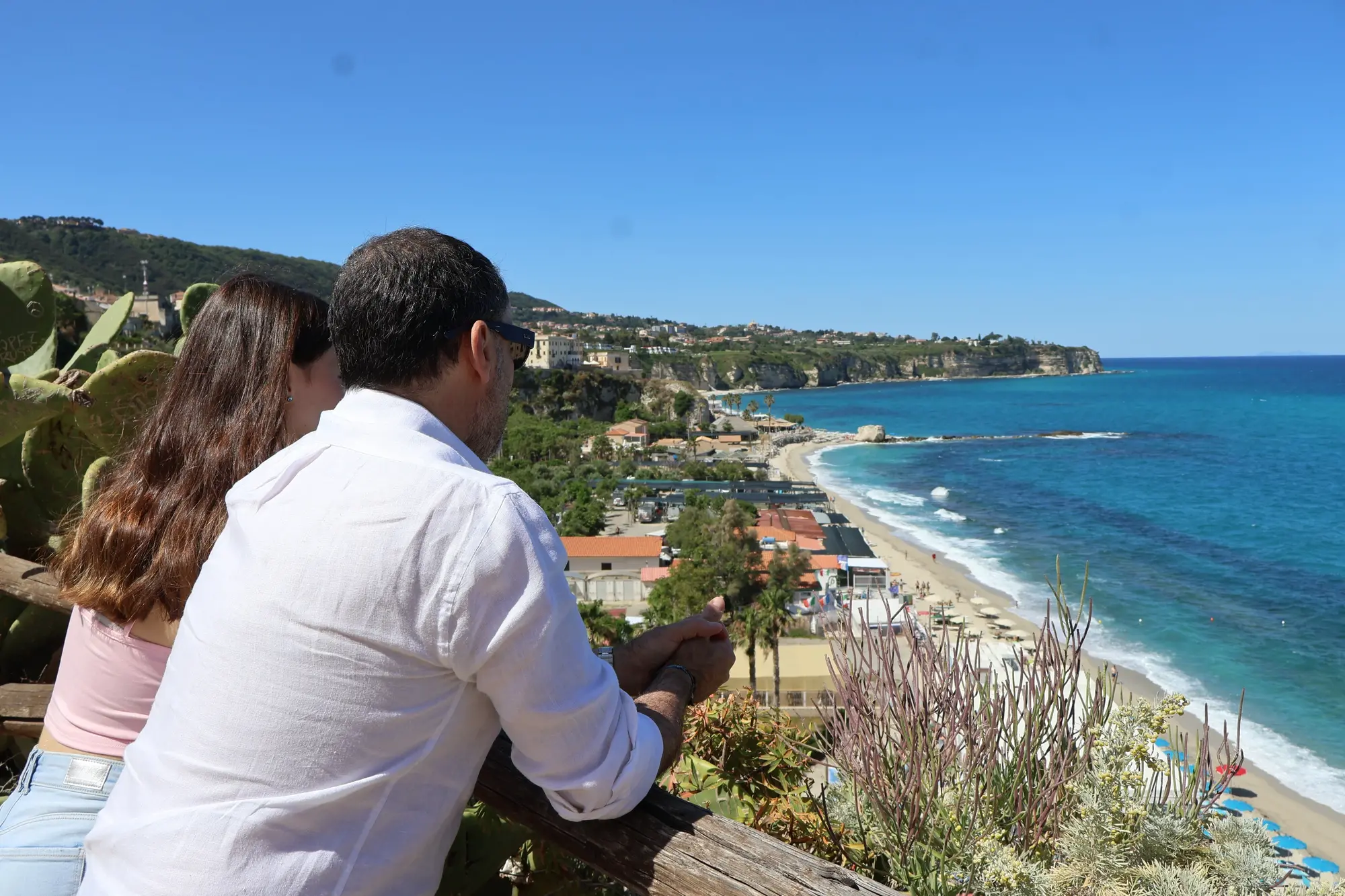
Walking up from the staircase, strolling along Corso Vittorio Emanuele is an unmissable experience in Tropea. The main street comes alive with shops, restaurants, and local boutiques, eventually leading to its famous panoramic viewpoint over the sea. Here, the wind gently tousles your hair as your gaze gets lost in endless shades of blue.
On the horizon, unmistakable, stands the dark silhouette of Stromboli, the volcanic island of the Aeolian archipelago.
What to see in Tropea
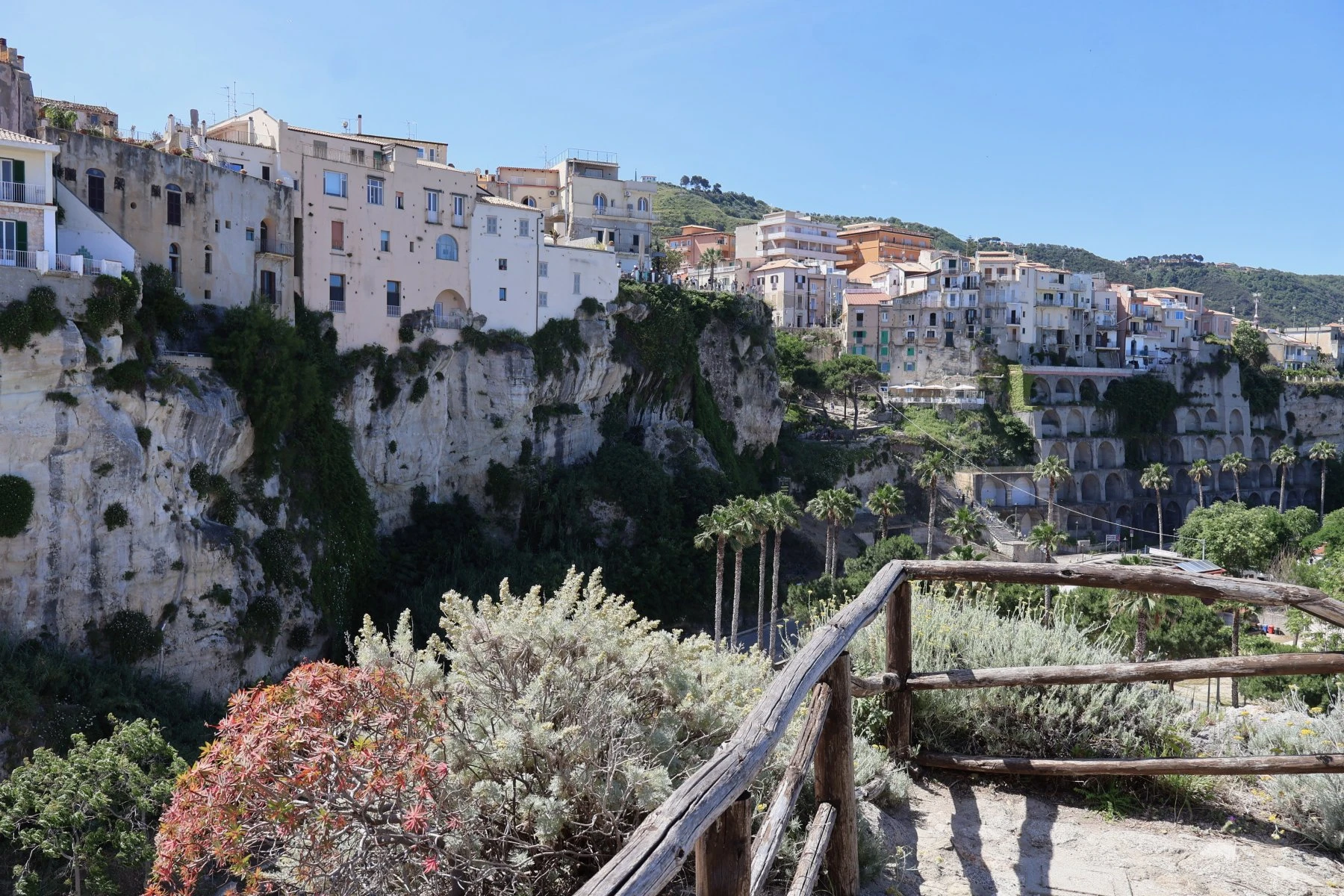
The cliff with the Sanctuary of Santa Maria dell’Isola is a must-see in Tropea—there’s really no need to say more. The building appears suspended between sky and sea, perched on a rocky promontory that was once completely surrounded by water, making it an ideal place for contemplative retreat.
According to historical sources, Robert Guiscard donated the church to the Abbey of Montecassino. In fact, on the bronze doors of Montecassino Cathedral—where 36 panels depict the Abbey’s possessions—you can also find Santa Maria di Tropea among them.
The sanctuary stands out for its compact and harmonious structure: white façades, elegant arches, and small side chapels tell the story of centuries of renovations blending Gothic and Baroque styles.
Tropea’s vegetation
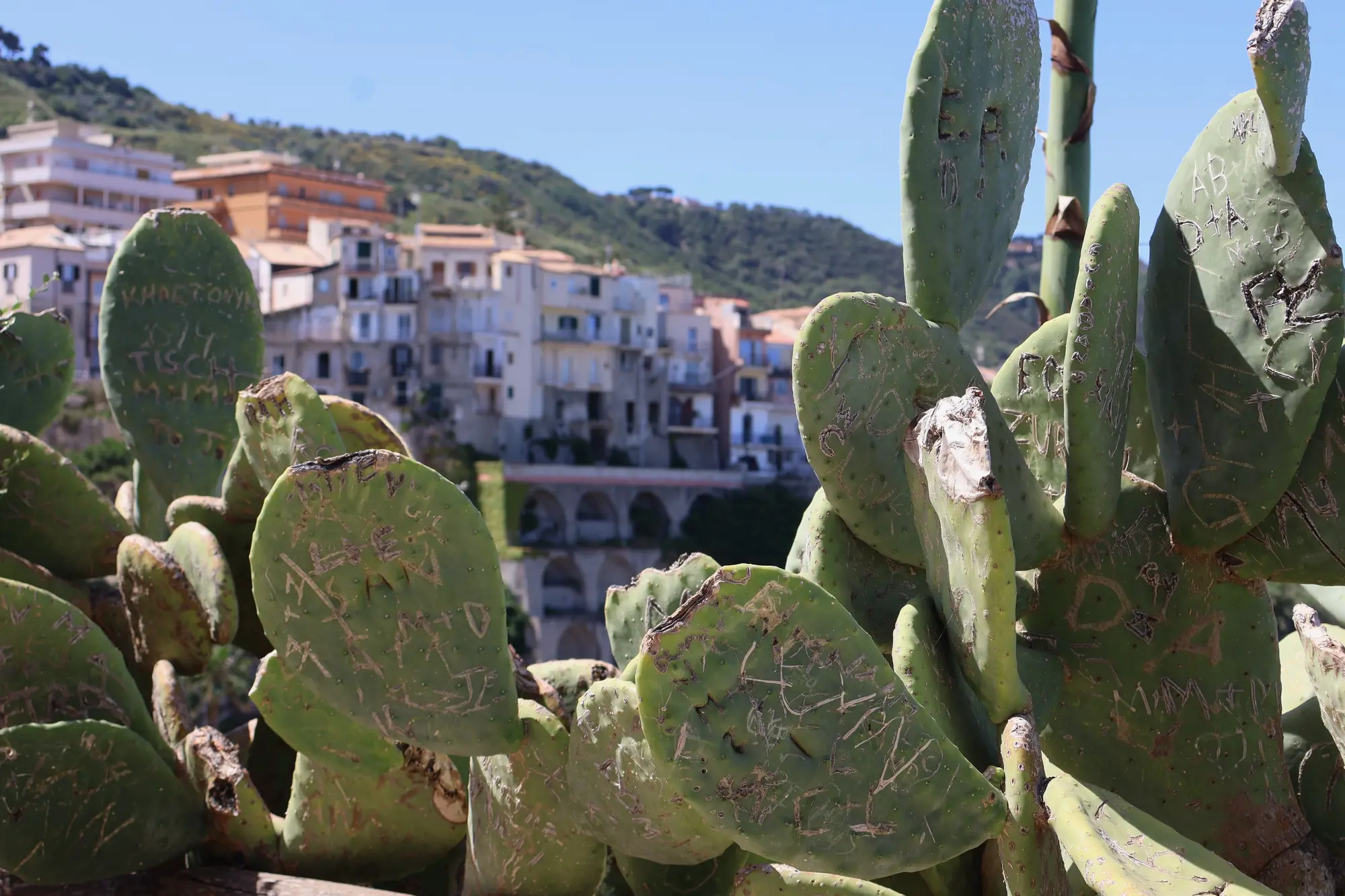
The surrounding garden offers an oasis of colors and scents that guides the eye toward the deep blue of the Tyrrhenian Sea. Tropea’s vegetation is typical of a landscape shaped by high summer temperatures and rocky soils: ancient olive trees, fragrant citrus groves, and Mediterranean scrub dominate the scenery. Among the most iconic plants are the cacti.
Unfortunately, these cacti—known for their fleshy and often spiky leaves—are sometimes subject to vandalism: many tourists and locals carve initials, symbols, or drawings into them, showing a lack of respect for the plant. The absence of environmental awareness is evident and truly regrettable.
Beyond the Sanctuary
Beyond the Sanctuary and its panoramic sea views, Tropea hides a picturesque historic center made of narrow alleys, small squares, and ancient buildings with a slightly decaying charm. Wandering without a fixed destination is one of the best things to do, allowing yourself to be surprised by everything that can stir emotions along the way.
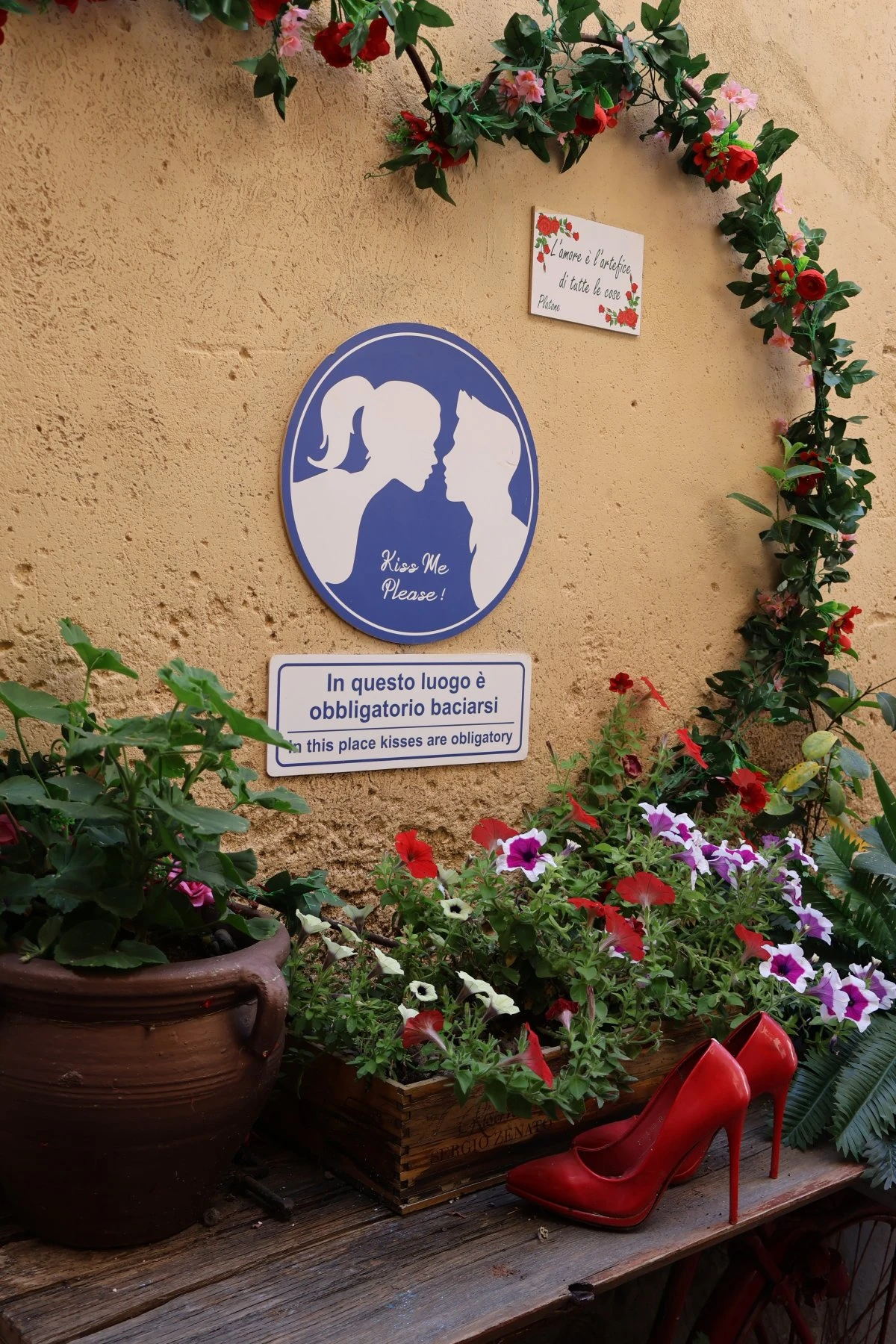
Following this invisible thread, we found ourselves in a narrow alley, drawn to a red high-heeled shoe placed on what looked like a small altar. Once again, the theme of love returns, as in the mural beneath the staircase. In this flower-filled corner, kissing is almost a must, as the sign reminds visitors: love is the creator of everything.
And if your wandering also calls for a touch of high culture, then don’t miss:
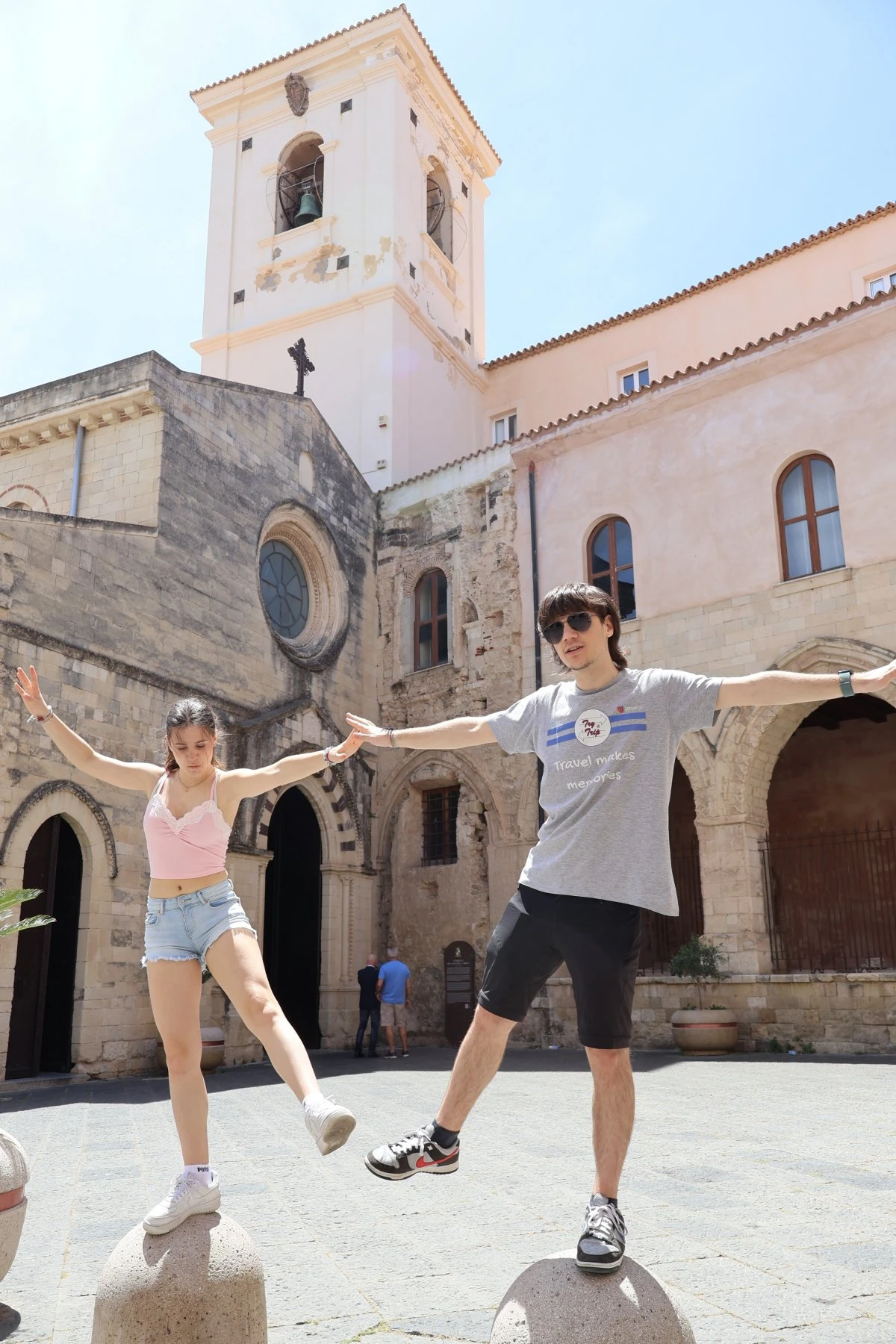
- The Norman Cathedral, dating back to the 12th century, is officially the Cathedral of Maria Santissima di Romania, the Duomo of Tropea and one of the city’s main places of worship.
- The title “di Romania” refers to Tropea’s Byzantine roots, highlighting the historical and religious link with the Eastern Roman (Byzantine) Empire, from which the revered icon of the Madonna originates.
- Palazzo Toraldo, a historic noble residence dating back to the late 17th century, is one of Tropea’s architectural landmarks. In its underground areas and surrounding spaces, a Paleochristian necropolis was discovered; a collection of the recovered tombstones is preserved inside the palace itself. Today, Palazzo Toraldo di Francia houses a bed & breakfast offering elegant rooms and accommodation in the heart of Tropea.
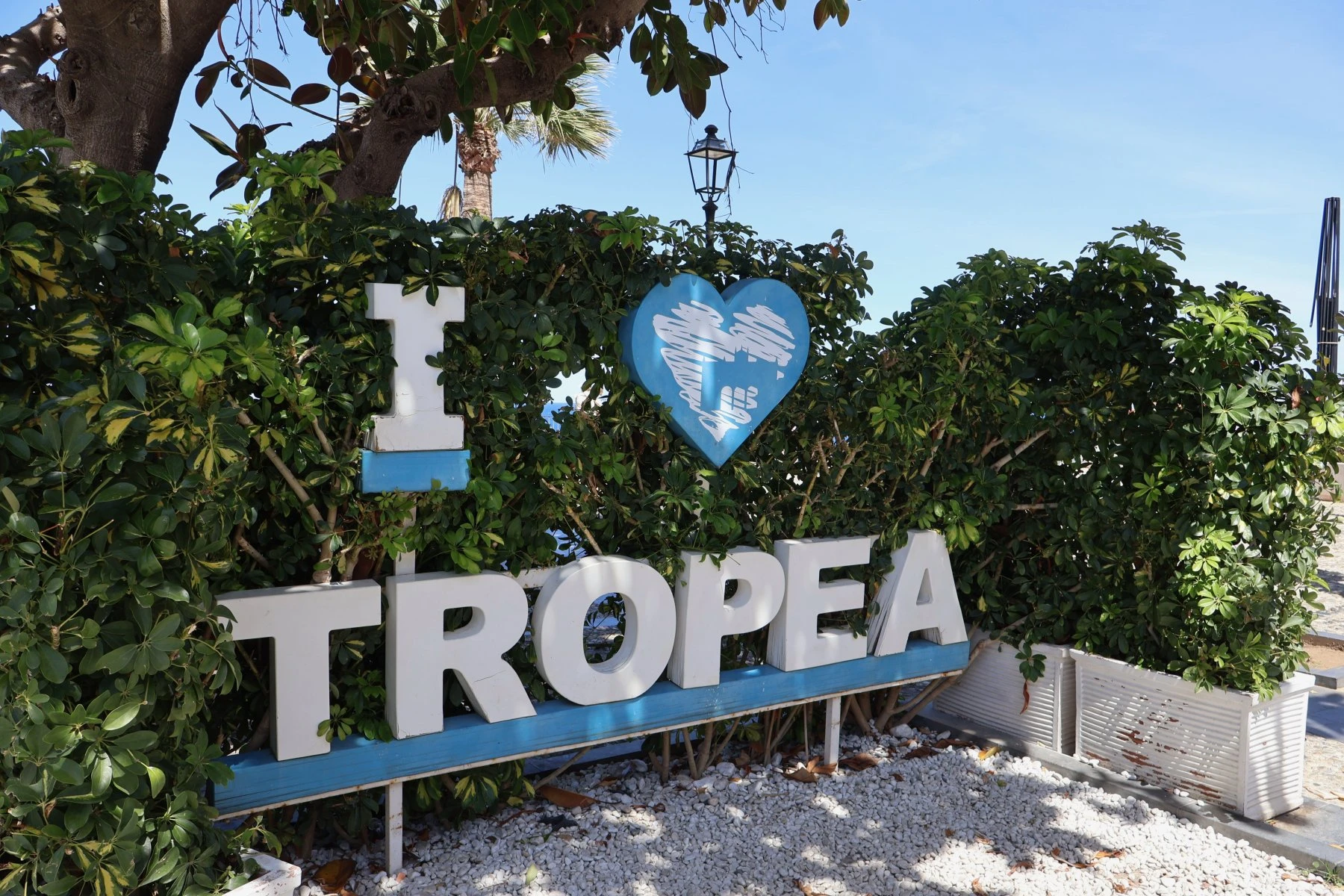
- The most famous panoramic viewpoints include Piazza del Cannone, where you can also find the 3D “I Love Tropea” sign—perfect for souvenir photos (even if our kids laugh every time we stop, saying we’re “boomers”).
The square takes its name from an ancient stone cannon, a reminder of the city’s historic fortifications built to defend Tropea from pirate raids and invasions over the centuries. In the past, Tropea was surrounded by defensive walls, although no visible remains are left today.
For lovers of giant benches, Tropea has its own as well. The bench was designed and donated to the municipality of Tropea by the local company Sud Edilferro and is located on the seafront, right at the entrance of Mare Piccolo Beach.
However, this bench is not part of the official Big Bench Project, so there is no stamp for the passport. If you’re looking for an official Big Bench nearby, you’ll need to go to the nearby town of Palmi.
Excursions to the Aeolian Islands and the “Sunset Kiss”
Tropea is also a popular starting point for boat excursions to the Aeolian Islands. These full-day trips last on average 8–9 hours, with morning departures and evening returns, and typically cost between €40 and €70 per person, depending on the chosen itinerary. Visitors can explore Stromboli, Panarea, Vulcano, or Lipari, enjoying a unique taste of this UNESCO-listed volcanic archipelago.
Those lucky enough to be in the area on May 28 or July 16 may witness a striking natural phenomenon known as the “Sunset Kiss” on Stromboli, when the setting sun appears to rest perfectly on the summit of the active volcano, creating an unforgettable experience.
From fritters to onion ice cream: where to eat in Tropea
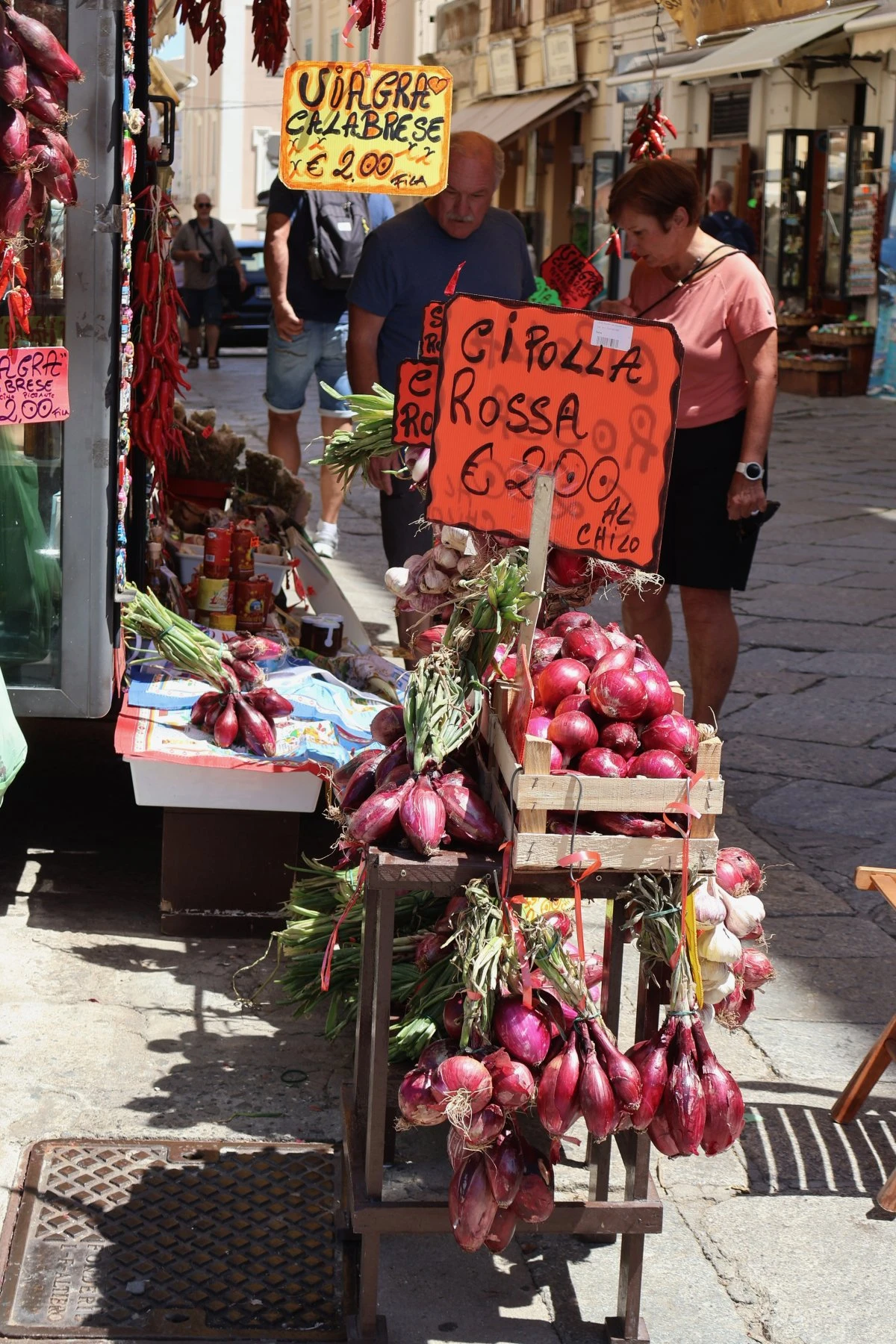
Talking about Tropea inevitably means talking about its culinary specialties. The undisputed star is the Tropea red onion, sweet and versatile, featured in countless traditional recipes.
The Tropea red onion is one of Italy’s most renowned horticultural excellences, widely recognized abroad. Its fame comes from a combination of factors, including its unique flavour and its deep, inseparable connection to the local territory.
Unlike many other varieties, it is not sharp or overpowering, which makes it enjoyable even when eaten raw. The explanation is scientific: it contains a higher percentage of sugars and a lower amount of sulfur compounds, which are responsible for tearing and the strong taste typical of common onions.
Its uniqueness is also confirmed by its Protected Geographical Indication (PGI) status, which safeguards not only the product’s quality but also its strong link to the Calabrian environment.
In town, you can even try onion gelato: an unusual flavour that surprises even the most demanding palates. When we bought it, we were recommended to pair it with pistachio, and I have to say it was actually quite good. But of course, we didn’t stop at gelato alone.
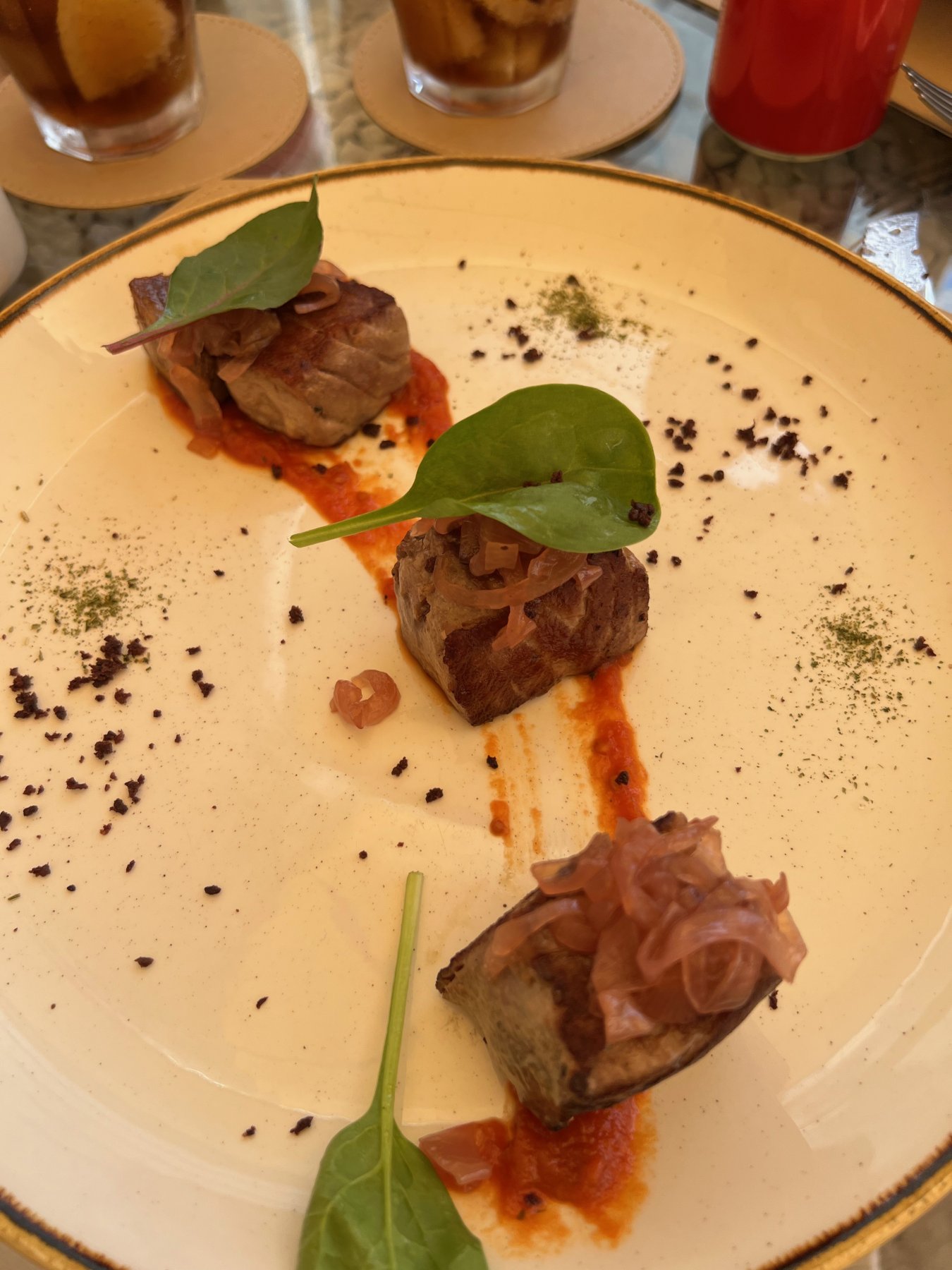
We had lunch at That’amore, along the main street, drawn in by a menu featuring authentic Calabrian cuisine with a variety of dishes to suit every taste.
There are both seafood and meat options, as well as pizza with long-fermentation dough and variations featuring ‘nduja and Tropea red onions.
You can sit in the covered outdoor seating area directly on the main street and enjoy the lively atmosphere, enhanced by a very busy but friendly staff.
Each of us chose a different dish, but we couldn’t resist starting with the onion fritters.
Even Luca, who is usually not a fan of this kind of food, really enjoyed them.
Awards and international tourism
In recent years, Tropea has repeatedly been ranked among the most beautiful destinations in Italy and Europe.
Notably, in 2021 it was awarded the title of “Borgo dei Borghi.” Its beaches, including the famous “Spiaggia della Rotonda,” are considered among the most stunning in the Mediterranean and regularly appear in global rankings.
International visitors—especially from Germany, France, and the United States—choose Tropea for its unique combination of crystal-clear sea, Mediterranean climate, rich history, and traditional cuisine.
Tropea is undoubtedly one of those destinations that captivates first-time visitors and keeps drawing back those who have already been there.
Leave a Reply